The old order is gone; what now?
Canada must choose coherence over drift and treat values as strategy
Prime Minister Mark Carney is right. The old global order is not coming back. The only thing worse than living through that reality is pretending we can wait it out.
For decades, Canada has benefited from a world that felt stable by default. Rules mattered. Trade was treated as a bridge. Even powerful states acted as if they owed something to the system. That era is thinning out. Power is moving back to the centre, and the cost of denying it is rising.
At the World Economic Forum, Carney said plainly what many leaders avoid: the old order is not returning. Even those who resisted Carney's framing acknowledged the direction of travel. Countries are talking about autonomy, resilience and hard choices, not restoration. The disagreement feels more semantic than substantive.
As global order becomes less predictable, countries begin treating values as optional. Principles become slogans. Integrity becomes something you perform when it is easy and postpone when it is inconvenient. “National interest” stretches to justify whatever works at the moment.
Canada cannot afford to fall into that pattern. Not because moral language is fashionable, but because our credibility depends on something fragile: the belief that we still draw lines when it would be easier not to.
That pressure is already economic. Donald Trump has threatened 100 per cent tariffs on Canadian goods entering the U.S. if Canada “makes a deal with China.” Trade is no longer neutral ground. It is a tool of leverage, used to narrow a country’s choices and force it into a posture of compliance.
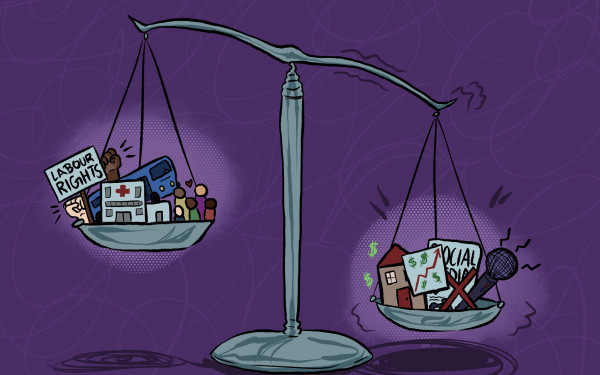
In the next era, Canada will be judged less by what it claims to believe and more by what it is willing to carry. It is easy to sound principled when the cost is low. It is harder when the trade-offs are real, when a decision has consequences for jobs, security and alliances. A serious country is not one that always feels morally clean; it stays accountable for what its choices produce.
This is where Canada’s relationship with China becomes a real test.
Canada has already seen what pressure-based relationships can look like. After the arrest of Huawei executive Meng Wanzhou, two Canadians were detained in China, and economic pressure followed. That history matters because it demands clarity.
Engaging the Chinese government is not the same thing as trusting it. Diplomacy is not friendship. Engagement without boundaries becomes drift, quiet trade-offs and public virtue paired with private improvisation. And eventually, it becomes dependency disguised as pragmatism.
If Canada engages with China, it should do so with clear conditions and public reasoning: trade where necessary and protection where it is essential. The goal is not severance, nor denial of risk, but control over the terms of engagement.
Canada’s public inquiry into foreign interference exists for a reason. The threat is not a dramatic takeover, but a slower erosion. It's pressure on institutions, manipulation of information and the gradual weakening of trust.
Freedom is not just the absence of invasion. It is the ability to make decisions without being cornered, without being coerced by markets you cannot afford to lose, by technology you cannot verify or resources you cannot access when the world turns unfriendly.
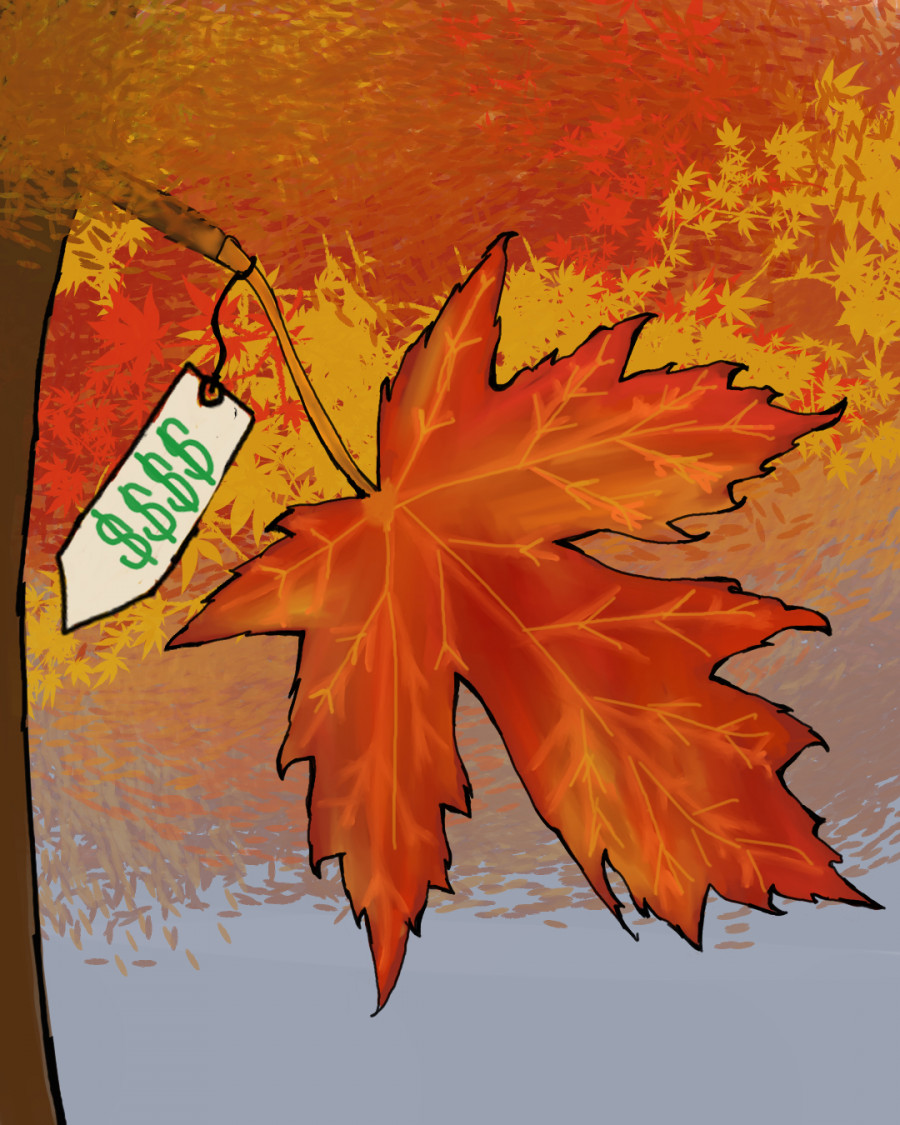
That is why trade is now national security. But strategy only matters if it begins with realism.
Canada’s economic room to manoeuvre is narrower than our rhetoric often suggests. Continued access to the U.S. market remains essential, which makes the Canada-United States-Mexico Agreement a necessity rather than a preference.
Diversifying trade toward Asia and Europe is important, but it does not replicate the scale or integration of the American economy. Canada’s leverage still rests primarily on natural resources and services. This is the terrain Canada must govern on. Coherence, in this context, means reducing vulnerability without pretending dependency can be wished away.
The next era will tempt Canada to become smaller, to be moral when it is easy, transactional when it is profitable and silent when it is afraid. But if the old order is gone, then Canada’s responsibility is not to abandon liberal values. It is to prove they were never just branding.
The task now is not perfection. It is coherence. It is security without paranoia, engagement without surrender and values without performance.
That is what it would mean to stand for something when the world stops making it easy.
This article originally appeared in Volume 46, Issue 9, published February 10, 2026.