Young Canadians: Fix the system, don’t ‘Axe the Tax’
Right-wing populism isn’t the answer for Canada’s next generation
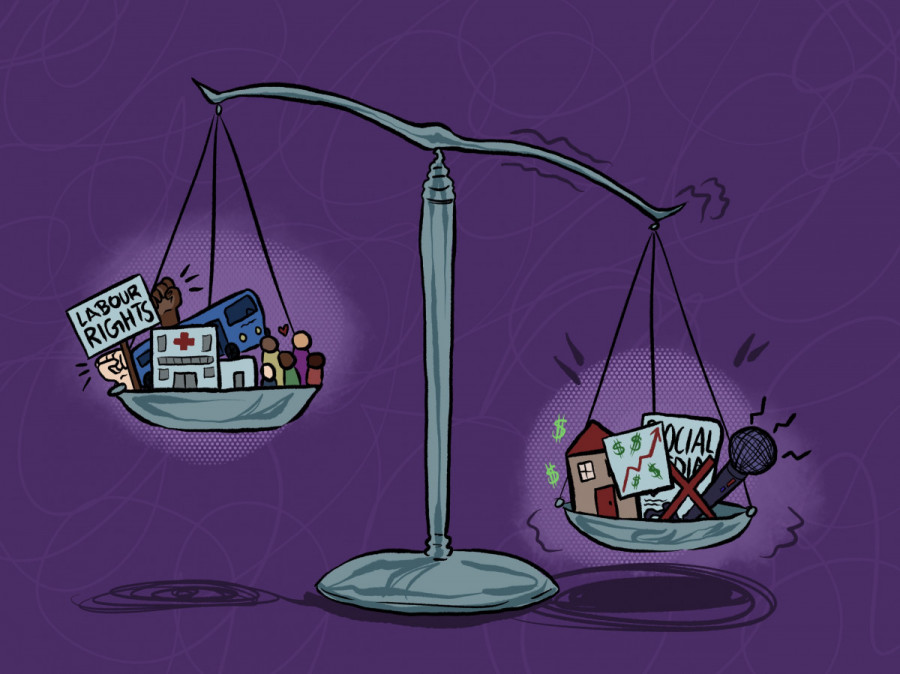
A global trend towards conservatism has emerged among young voters, who feel economically and politically marginalized.
This frustration has made many young voters receptive to populist messaging that frames complex problems as simple, immediate solutions.
In Germany, Sweden and Japan, extreme-right populist parties have gained more power in their legislatures. Meanwhile, in the U.S. and South Korea, conservative candidates using polarizing rhetoric have won office, raising concerns amongst citizens about democratic stability.
Here in Canada, millennials and Gen Z have been losing trust in the current system amid rising housing and living costs, unstable labour conditions and insufficient social safety nets. As a result, right-wing populist politicians have capitalized on this frustration, gaining more support from young people through social media by using provocative slogans and sensational language that often target marginalized communities.
However, these policy debates are more than abstract—they shape the narratives that populist politicians use to win support among young voters.
At first glance, conservative proposals like easing real estate regulations and increasing private housing supply may seem reasonable. Yet, these measures are often much less effective than they may appear. In fact, as recent trends in Seoul, Toronto and various European countries suggest, these tactics can unintentionally drive up housing and land prices.
This example reflects a broader pattern: conservative policies are often framed as simple, “common-sense” solutions, but young people may misinterpret them without realizing the potential downsides. It shows why we need to critically examine these proposals and focus on approaches that genuinely address the challenges millennials and Gen Z face.
The younger generation needs to pay more attention to enhancing the social safety net and implementing measures to increase tax revenue, while thoroughly considering the fairness of income distribution. The conservative “Axe the Tax” slogan—popular on social media—risks defunding health care, education and social services by cutting tax revenue.
Instead of broad-scale tax cuts, the government needs to provide targeted tax benefits and eliminate interest payments on essential living costs, medical expenses and education.
For example, in 2025, the Canadian Dental Care Plan expanded coverage for people aged 18 to 34 who earned less than $90,000 per year. The Canadian government also eliminated the accumulation of interest on all federal student loans in 2023, though not in Quebec.
Labour agendas regarding minimum wage and employment insurance are among the most critical issues for millennials and Gen Z. When governments fail to address these issues, populist slogans promising “quick fixes” become more persuasive, even if they threaten long-term stability.
In particular, the government must protect the rights of unionization and collective bargaining for gig workers and independent contractors, providing opportunities to improve working conditions for young people.
For instance, British Columbia implemented a law for gig workers in 2024, including minimum wage measures and basic protections. Uber drivers in Victoria were granted union certification under provincial labour laws for the first time in Canada in July 2025.
Ultimately, solving the economic and political challenges facing millennials and Gen Z requires more than short-term solutions or ideological gestures. Governments must invest in affordable housing, strengthen social safety nets, protect labour rights and ensure fair taxation. Equally important is reforming political structures—improving representation, reducing online misinformation and giving young people a real voice in decision-making.
Without meaningful reform, disillusioned youth remain vulnerable to populist messaging that oversimplifies complex issues. Only by combining economic, social and political reforms can we prevent further polarization and empower younger generations to participate fully in shaping Canada’s future.