Montrealers honour veterans at Place du Canada
Annual ceremony brings attention to the lasting impact of military service
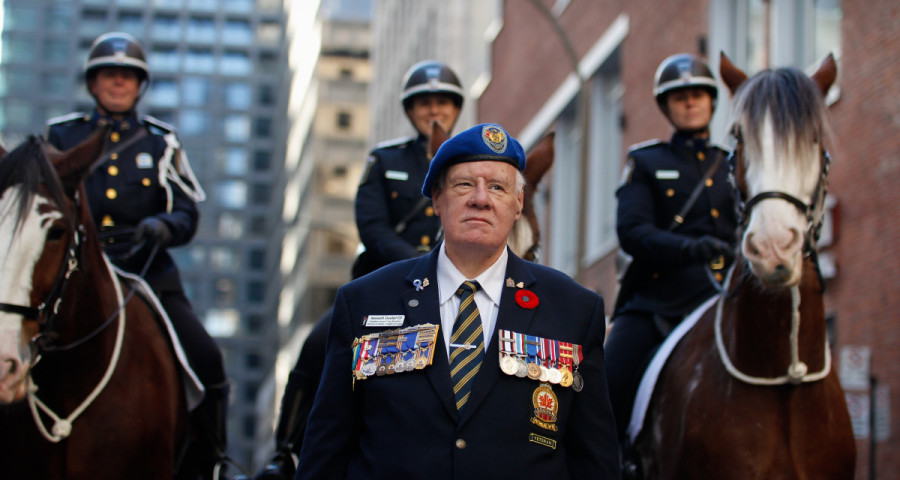
Montrealers gathered at Place du Canada on Nov. 11 for a Remembrance Day ceremony honouring fallen soldiers, veterans and serving members of the Canadian Armed Forces.
“[Remembrance Day] is a way of keeping people alive, their memory alive and [understanding the] sacrifices that they made,” said Sterling Downey, a city councillor for Verdun who decided to enlist in the army at 51 years of age.
Downey explained his service as a way to follow his father’s footsteps, who fought in both the Korean War and the Second World War. He explained that events like these are the only way for his nine-year-old son to know who his grandfather was.
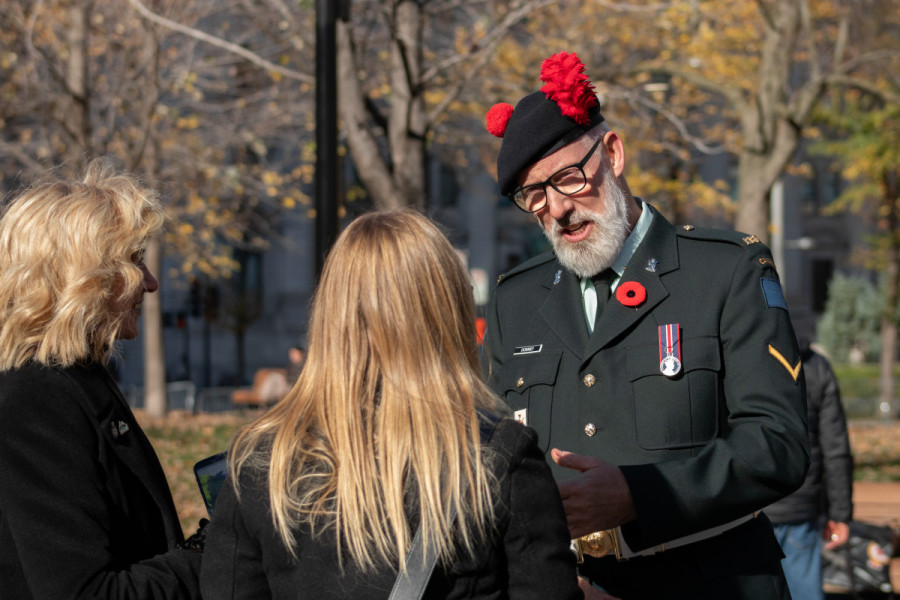
Kenneth Ouellet, who served two terms as president of the Royal Canadian Legion’s Quebec Provincial Command, expressed pride in seeing the city, the Canadian Armed Forces and the public come out “to honour us veterans.”
He said the hardest part of the job was keeping members' morale up and keeping the tradition going. Every event meant negotiating with the city and the police.
Ouellet also spent 30 years as a suicide prevention first responder, working with veterans and with members of his local community. He said many former service members struggle to find their footing after leaving the military. Part of his work is pointing them to Veterans Affairs Canada, the Legion or local health services.
“You know, when they tell you everything is ok. That’s the sign that it is not okay,” Ouellet said.
He remembered one veteran who had to choose between paying rent and eating. The Legion helped him get support from Veterans Affairs, and once the money came through, the man donated some of it back to the branch.
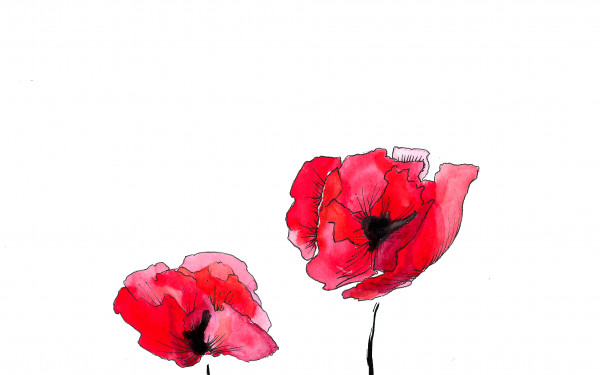
Ouellet said that, as provincial president, he worked with the government on a new veterans’ licence plate that better reflects today’s Forces, unveiled in 2019. It shows a man in a First World War helmet and a woman in a modern Canadian headdress, against a field of poppies.
His message to Concordia students:
“Volunteer. Get involved. It doesn’t matter if it’s politics; it doesn’t matter if it's a local soup kitchen,” he said.
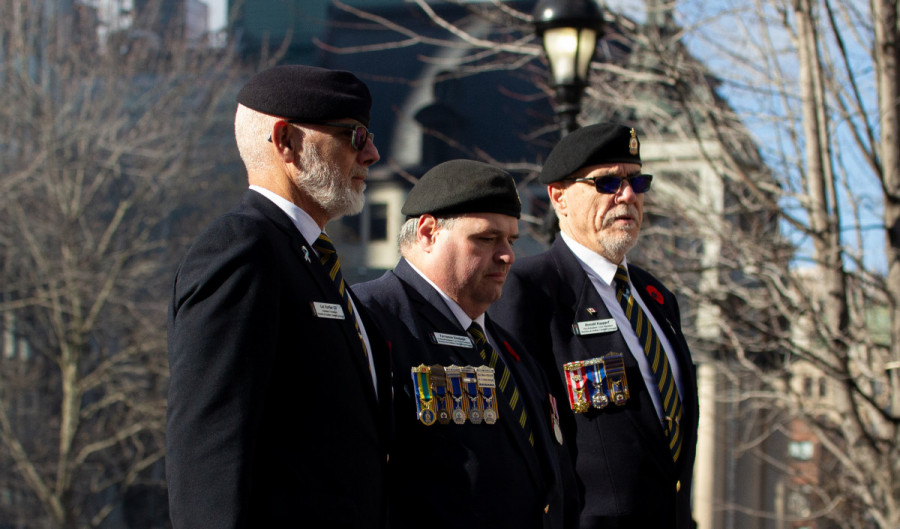
Terrance Deslage has been part of the Royal Canadian Legion since 1999 and now serves as the first vice-president of the Quebec Provincial Command. While he never served in the military, Deslage said he still plays an important role supporting veterans and those living through the uncertainty of when their loved ones will come home from battle.
“Remembrance Day is not just about the fallen; it’s also for our comrades that are at home that are suffering in silence with non-visible wounds for PTSD [post-traumatic stress disorder],” Deslage said. “That’s not only one day a year, we do it all year long [as] the Legion.”
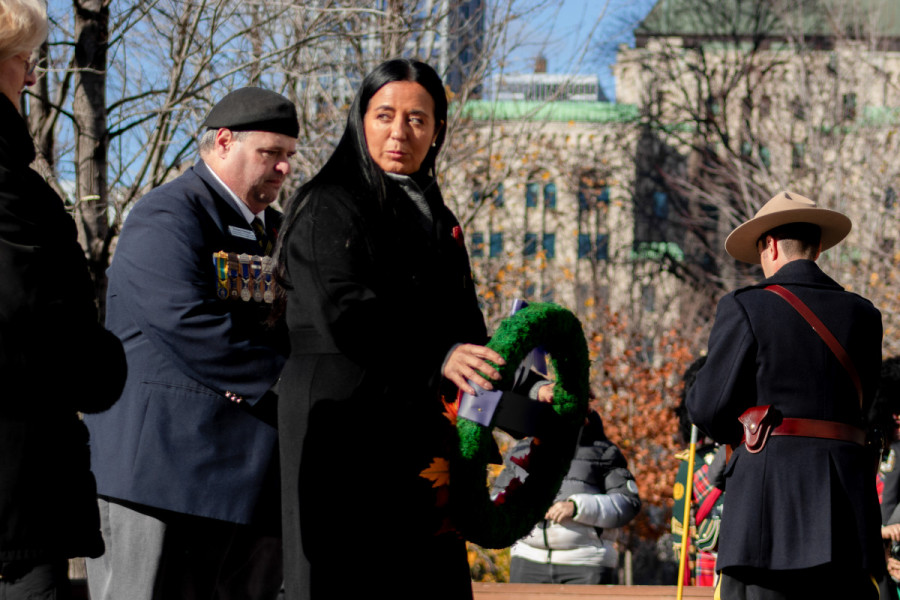
Among those present at the commemoration was Montreal Mayor Soraya Martinez Ferrada, who acknowledged that Remembrance Day not only commemorates the fallen, but honours Canadians who volunteer in the reserves and who help the community in times of need.
“Many of these volunteers will help out when we have floods in Pierrefonds-Roxboro, for instance, and during COVID, they helped vaccinate people,” Martinez Ferrada said. “So it’s not only when we’re at war. It’s also when we need them that they are there [throughout] the year.”
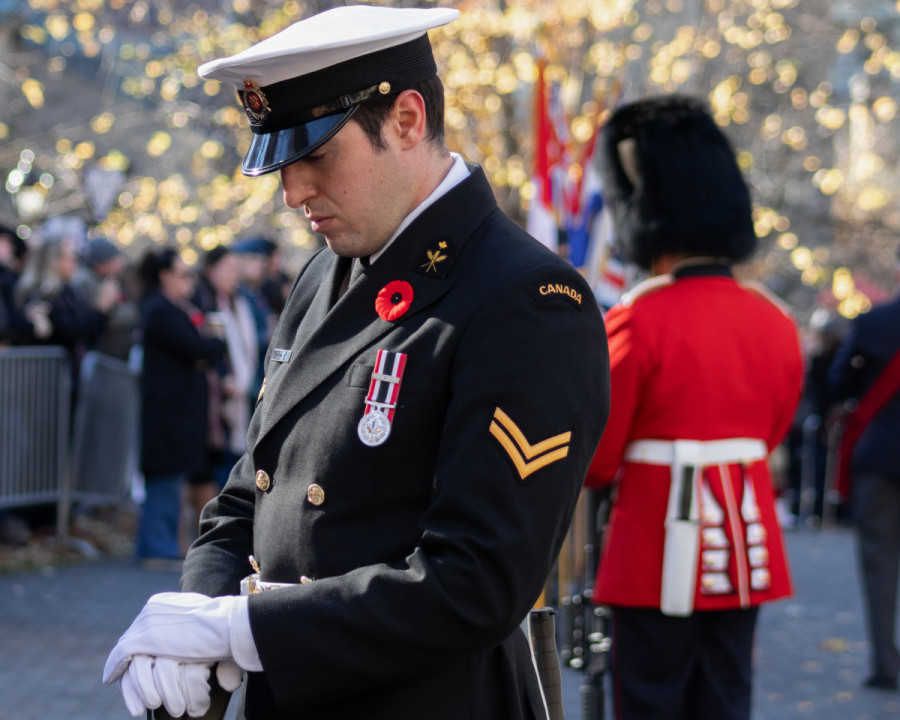
Hugues Vanden Abeele has served in the Canadian Armed Forces reserve for more than 20 years and is the drum major of The Black Watch (Royal Highland Regiment) of Canada.
He thinks of Remembrance Day as something more personal, especially when thinking of his time overseas doing remembrance services in France and Belgium.
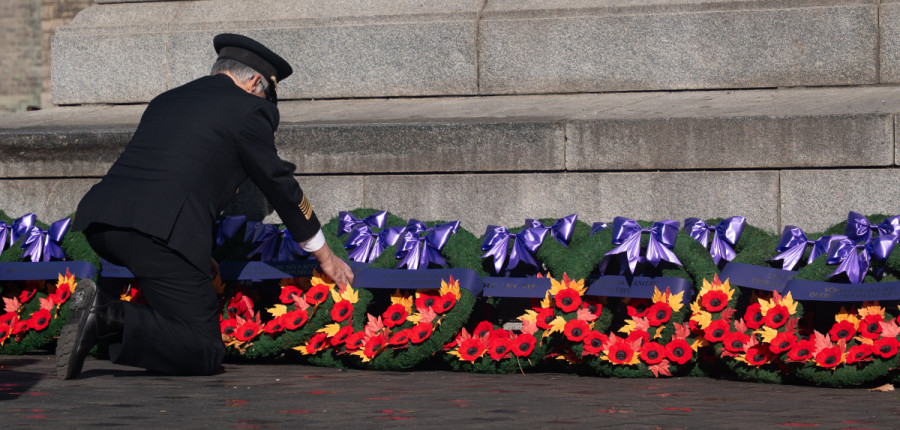
“Remembrance Day is a moment of silence. It's a moment of remembering all my friends who I served with,” Vanden Abeele said. “It's quite a peaceful moment when you're standing [by the poppy wreaths], and you're just closing your eyes, and you're thinking about all those people that passed away.”
While he emphasized how much of an honour it is to serve Canada, Vanden Abeele said the hardest part of his duty is finding the time to do it right.
“You're working sometimes full-time, 40 hours, 50 hours a week on your full-time job, and you have to give maybe 20 hours a week for your reserve,” Vanden Abeele said, adding that he wouldn't leave the army unless he was seriously injured.
Last month, originally a contained fire turned into a massive blaze killing five and injuring dozens more soldiers on base in Wainwright, Alberta, as reported by La Presse. Deslage reiterated the importance of remembering every day, rather than just on Nov. 11.
“We are supporting right now, Wainwright. We released $250,000 in support funding for victims of Wainwright,” he said.
Nearby, anti-war demonstrators held signs reading “War Kills” and drawing attention to deaths caused by the conflict in Congo.
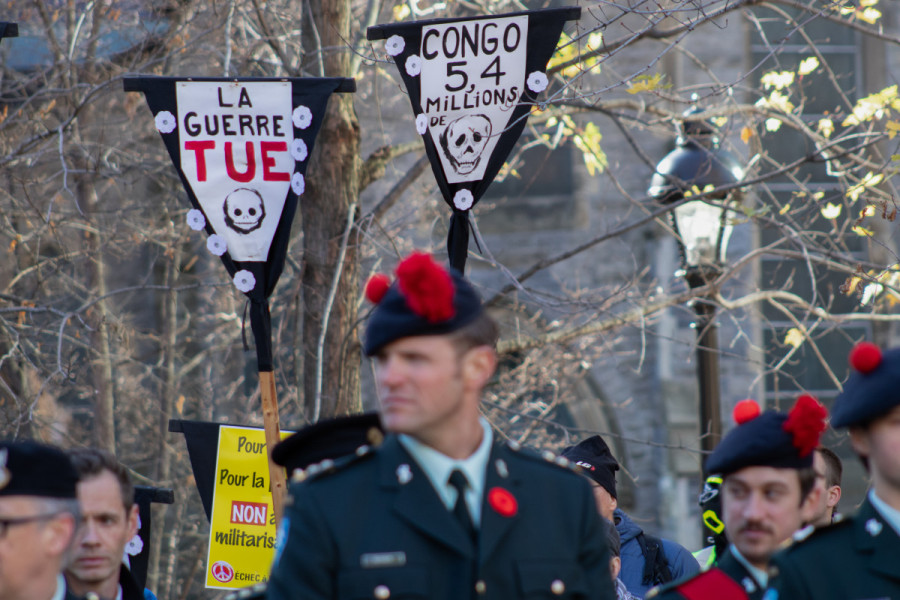
“[Remembrance Day] is not about glorifying war. It's about understanding that standing up to do the right thing is important,” Downey said. “Wars are horrible. There's no other way to put it. They're not good.”
Deslage reiterated Downey's point, saying,
“Our duty as Canadians is to try to avoid conflict and to rectify situations peacefully first so we don't end up having to go into conflict.”