Nostalgia Nook: Once upon a CD
Was the change from CD/ DVDs worth it?
One of my favourite childhood memories is movie nights. Every Saturday, the whole family would gather around the TV with popcorn and hot chocolate, then choose a movie to watch from our CD/DVD binder.
I have fond memories of going to the CD/DVD store with my parents. They would purchase any movie I found interesting, and we would spend evenings organizing the CDs in the binders by collection and genre.
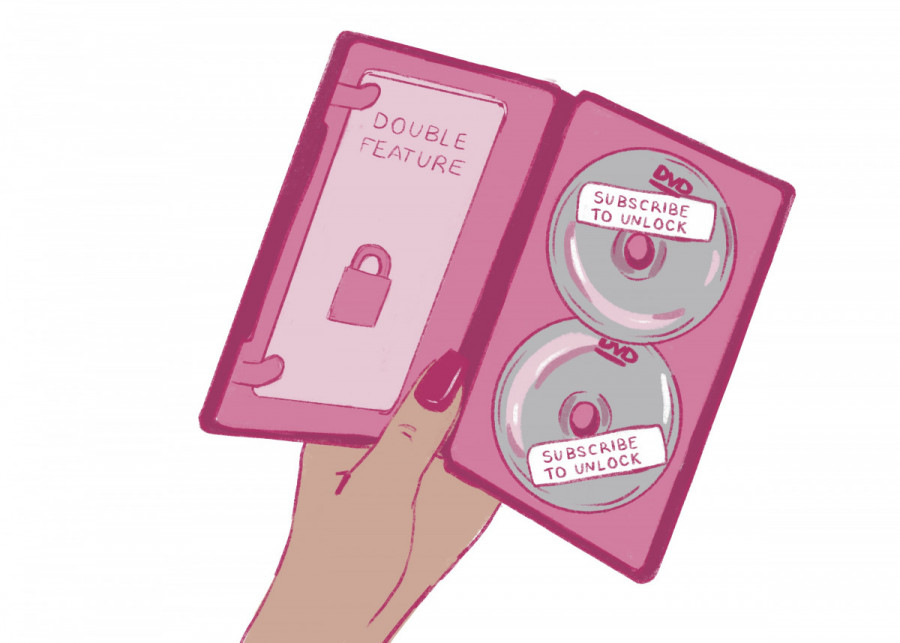
Technology became more advanced as I grew up. We discarded CDs and DVDs, and our big collection turned into arts-and-crafts projects. Now everything is on streaming subscription-based platforms. We pay more across platforms than what we did to build our collections, and we don’t even own the physical media anymore.
I hadn’t felt nostalgic towards CDs and DVDs before. After all, I grew up in an era of easy access to digital media. I can watch anything anywhere I want: on my phone, laptop and tablet. Our family movie night still went on every Saturday.
It wasn't until recently that I had a show I was hyped about. To my chagrin, when I opened the streaming platform hosting the show, it wasn’t there. To add salt to the wound, it wasn't available on any streaming platform. The only way to watch it was to rent each episode individually, which would add up to what I pay for all my streaming platforms each month.
CDs and DVDs are more than just round discs that hold information. They represent a time when we actually owned what we paid for: a time when every service didn’t come with an app and a list of terms and conditions you need to agree to.
This incident made me nostalgic for DVDs and CDs, but more than that, it made me reflect on how the ownership of the media we consume stays with the production companies.
Even though we pay to watch media pieces, we don’t own them. To explain this better, we need to define license agreements. They are contractual agreements addressing essential legal points like copyright law and exclusivity terms. The license agreement grants the platform the right to host and distribute the content but not the ownership. Now, when the agreement comes to an end, the content is removed from the platform, and we lose access to it.
We shifted from a one-time purchase to a lifetime subscription under the streaming service's terms and conditions. This shift leads to price gouging and “stream-flation.” According to Global News, the top 10 leading streaming platforms charged Canadians 7 per cent more in 2025 than in 2024.
The lack of physical ownership of our own media presents us with another challenge. It’s harder to preserve the media. Because consumers don’t hold any rights to the media, rights holders can edit or delete it. For most of the last century, if you owned a CD/ DVD, it couldn’t be changed or taken from you. That way, even the most controversial piece could still be preserved.
Unlike the CD/DVD era, we don’t have any backups now. If the cloud collapses or the server goes down, we can’t do anything about it. Sure, the platforms have measures in place. But if that takes days, weeks or even months, we will lose access to the media for that period.
CDs and DVDs are more than just round discs that hold information. They represent a time when we actually owned what we paid for: a time when every service didn’t come with an app and a list of terms and conditions you need to agree to.
I think, at the heart of it, that it’s not CDs and DVDs I feel nostalgic about. Rather, it's a yearning for the return of a time when I paid only once for a product.
This article originally appeared in Volume 47, Issue 5, published November 10, 2026.