
Quebec election information distributed solely in French
Anglophone communities have raised concerns, quickly becoming a court matter
_900_675.png)
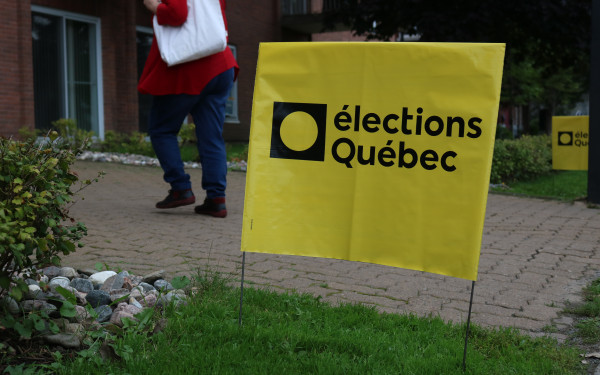
With the Quebec provincial elections approaching, Élections Québec announced that due to Bill 96, all voting information would be presented only in French.
Every election, Élections Québec mails the provincial election guide, the notice of entry and the reminder card to make elections simple for voters. This year, it announced that all three would be in French only, with English information available exclusively online.
However, on Sept. 16, a Quebec civil court ruled that this would infringe on the rights of anglophone Quebecers, and ordered the reminder cards to be mailed in English and French.
According to the court, ordering the mailing of the provincial election guide and notice of entry in English this close to the Oct. 5 election would be unrealistic and expensive; thus, these documents will remain solely in French.
Since its announcement in 2022, Bill 96, which aims to reform the Charter of the French Language, has had its fair share of visibility across the province. Montreal has been at the centre of the conversation, with historically prominent anglophone communities growing concerned about how this might affect them.
In simple terms, the bill declares French as the province’s only official language. Among the wide range of changes, the bill has affected the current elections, with Élections Québec, an independent organization, announcing it would release information only in French to comply with the bill's new demands.
Premier of Quebec Christine Fréchette, in response to the announcement, affirmed that the rights of the English-speaking community are being respected. However, many seem to disagree.
The Parti communiste du Québec was very clear in its opposition to Bill 96. Ivan Byard, Notre-Dame-de-Grâce candidate and secretary general of the Ligue de la jeunesse communiste du Canada, affirmed its position.
“We’ve been clear in denouncing it, but also trying to make the links beyond English-speaking communities, looking into the rights of students, parents and also workers,” Byard said.
Many of their policies centre around education, also a target of Bill 96, and according to the candidate, Byard's party’s focus on education is not random. According to its constitution, free and accessible education for all is more than important, no matter the language or the age.
“English education is an easier target,” Byard said when asked why Bill 96 was so impactful on education.
Byard primarily blames the Coalition Avenir du Québec (CAQ) and the attacks it made on democratic rights.
“We've seen them go after the rights of unions and school boards," Byard said. "The main reason for these attacks is to weaken the ability of the people to fight back.”
After working the Montreal elections last year, Concordia University political science student Julia Miller had direct contact with voters, furthering her concerns about language equality.
Miller said her experience with language was small but noticeable. She said no one mentioned accommodation or the need to speak English during her training, despite the 13 per cent of Montrealers who are anglophones.
During the online training, there was no mention of English at all.
“It was implied that everything was in French,” Miller said.
Her main coworker that day was an anglophone, but she only heard him speak French.
According to Miller, when compared with the past, this is a huge difference, and the lack of English information, or even accommodation for other languages, is somewhat to blame.
“I understand why they have this bill, but I don’t think it should be as strict and as implemented,” Miller said.
Miller noted that with Montreal being such a big international student centre, and Canada being a bilingual country, Bill 96 pushes too far.
For residents who grew up in Montreal, Bill 96 was disappointing but not surprising.
Stuart McDonald, who lived in Montreal over 50 years ago, grew up within a tight-knit anglophone community in the Anjou borough.
“It was like being on an island of English in the French community,” McDonald said.
But as he grew older, his English-speaking high school introduced francophone students, and at his work, both languages were spoken.
“Montreal at that time was very bilingual, very open, very relaxed; people talked the language they wanted to,” McDonald said.
It was only when he moved away in 1982 and came back from Toronto to visit some time later that he noticed the first big changes.
According to McDonald, the island was not as he had known it all his life. Montreal’s slow descent into restrictive laws, such as Bill 96, was not unexpected, to say the least, but for many, it still taints their memories of the city.
“Montreal had died,” McDonald said.
Voters must check if they are registered. If they aren’t, online registration was cut-off on September 21st so voters must register by Oct. 1 in person at their riding’s office to vote. The Quebec provincial election will take place on Oct. 5, 2026. Polling stations are open from 9:30 am to 8:00 pm. The Election Quebec website showcases the different candidates running in every electoral division.
This article originally appeared in Volume 47, Issue 2, published September 22, 2026.




1_600_375_90_s_c1.jpg)
_1_600_375_90_s_c1.jpg)