Concordia food groups struggle to meet demand
The People’s Potato and the Hive Free Lunch say they are at capacity as more students face food insecurity
.IMG_1928_900_600_90.jpg)
Free campus food programs at Concordia University, including The People’s Potato and the Hive Free Lunch, say they are struggling to keep up with growing student demand as higher living costs push more students into food insecurity.
A 2023 study conducted by the university found that more than half of Concordia students reported experiencing some level of food insecurity. Another study conducted by Moisson Montreal showed that the proportion of student food bank users has reached 14.1 per cent in 2024.
Since then, the cost of groceries has continued to rise, increasing the pressure on on-campus food programs.
“The demand for our services is so high that we are not physically able to meet the demand ourselves,” said Simona Bobrow, a member of The People’s Potato collective.
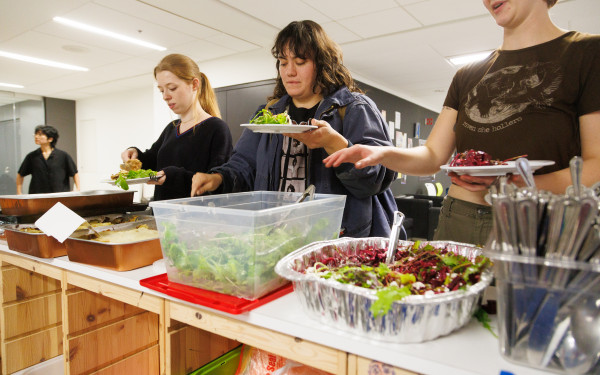
The Potato operates a community garden at the Loyola campus, an emergency food basket program for people in need, and a free lunch service during the school year on the downtown campus.
According to Bobrow, these programs excel, with the lunch program feeding up to 500 people on a good day. Concordia student Marissa Guthrie is one of these students.
“Our projects are successful, but they’re always gonna be a band-aid solution when the system is creating this problem of not being able to meet basic needs.” — Simona Bobrow
“I go to The People’s Potato every day it’s open, regardless if I have a class that day,” Guthrie said. “My experience has been really positive; the food is always good.”
The Hive Café Solidarity Co-op runs a similar program on the Loyola campus. The Hive Free Lunch sees around 200 people a day for free breakfast and between 2 to 500 people for free lunch, according to program coordinator Alanna Silver.
Whatever food isn’t used gets put in a community fridge, so nothing goes to waste, said Silver.
Concordia Student Union (CSU) Loyola coordinator Aya Kidaei said the Hive Free Lunch program is one of her go-tos on campus.
“I eat there every day,” Kidaei said. “It's a very beloved service at Loyola; everyone I know goes there to eat.”
Silver said she hopes to be able to serve free dinner in addition to breakfast and lunch, in order to give students with evening classes a more affordable food option.
“Success to me would be getting enough funding to do the dinner program,” Silver said, “but also being able to give away free groceries, to fully eliminate food insecurity on the Loyola campus.”
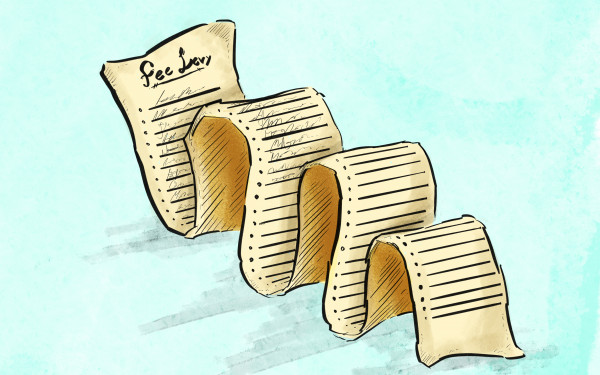
Both groups have had fee levy increases in the last few years, allowing a bigger budget to provide more food for Concordia students.
However, they say budget constraints remain one of their biggest obstacles.
“If we could, we would feed thousands of people every day,” Silver said, “but we have certain budget and kitchen constraints.”
The program coordinator said all the money currently distributed from the CSU and from the Arts and Sciences Federation of Associations (ASFA) fee levies is in use, and more funding would be needed to expand services.
At the same time, the Potato has received requests from students interested in starting similar groups. But Bobrow said kitchen space is limited.
“The kitchen space is one of the things that makes the Potato possible,” Bobrow said. “The university was never forthcoming about providing kitchen spaces like that for students because the corporate food supplier is prioritized.”
This food supplier, Aramark, partners with Concordia and currently operates the university cafeterias on both campuses.
According to Silver, the Hive free lunch program currently receives around 150 thousand dollars of funding per year.
“Budgetwise, I don’t know if it’s possible to expand [the Hive’s budget],” Kidaei said. “There’s so much bureaucracy, but I think it’s doable.”
The Potato, though not currently working on introducing any new programs, aims to expand its current services.
With the fee levy increase of 16 cents per credit it put in place last year, the collective was able to hire an extra member and run their emergency food basket program throughout the summer for the first time.
Guthrie said this made a real difference in her expenses.
“It does help me save on groceries—probably about a third of my budget,” Guthrie said. “Everything I eat there is stuff I’m not buying.”
Despite these efforts, coordinators say food insecurity among students is a structural issue.
“Our projects are successful,” Bobrow said, “but they’re always gonna be a band-aid solution when the system is creating this problem of not being able to meet basic needs.”
With future initiatives put into place, both groups say they hope to continue making food accessible to the student population.
“No one should ever have to choose between paying tuition and paying for groceries,” Silver said. “A lot of students pay tuition, they pay their rent, they pay everything else, and then food comes in last place. You shouldn’t have to put yourself in that position.”
A previous version of this article stated that the Hive receives 150 thousand dollars of funding per year. This is incorrect, this funding is exclusively for the Hive free lunch program. The Link regrets this error.
This article originally appeared in Volume 46, Issue 1, published September 2, 2025.