Webster Library exhibitions bring some light onto the Concordia campus
Exhibitions at the library are part of a visual landscape on campus that encourages reflection, belonging and connection
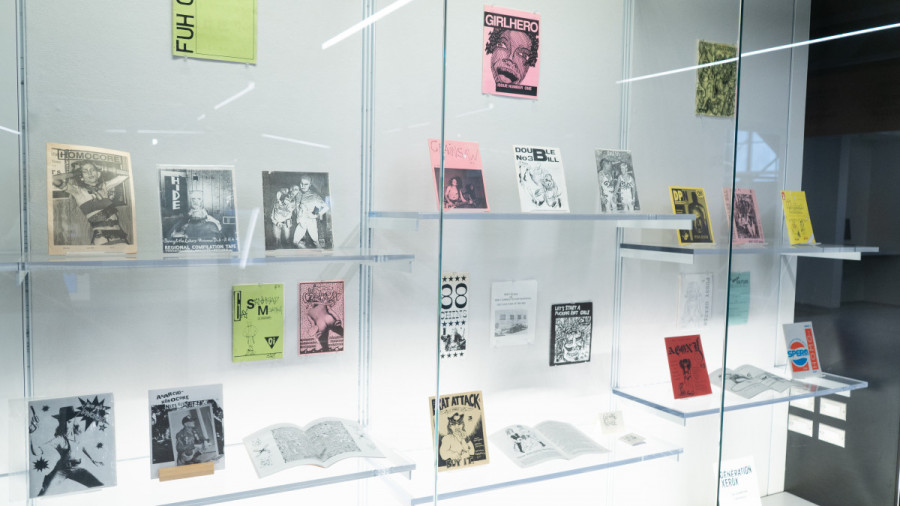
Concordia University’s Webster Library hosts various exhibitions on the second floor beside the printing section, directly across from the stairwell leading to the third floor. Students can come in and explore different topics through these showcases.
Although the glass vitrine wall is fairly small, the high-traffic area allows fast-moving, rushed passersby to quickly pause, take a look and take away whatever they wish from what they see.
John Latour has been chair of the Library Exhibition Committee (LEC) since its establishment in 2017.
He described how the exhibitions provide “a unique venue” for the “great research taking place at Concordia.” Ultimately, it offers a space to show how people from a variety of backgrounds and with a wide range of interests express themselves as they explore the world and the communities around them.
“[It's] part of the library's multi-year renovation project,” said Latour.
The committee was created with the intention to both “enrich and extend student learning by providing a showcase for a variety of art and cultural experiences to the Concordia community and beyond,” according to the library’s website.
The committee has hosted between four and five exhibitions annually within the past few years.
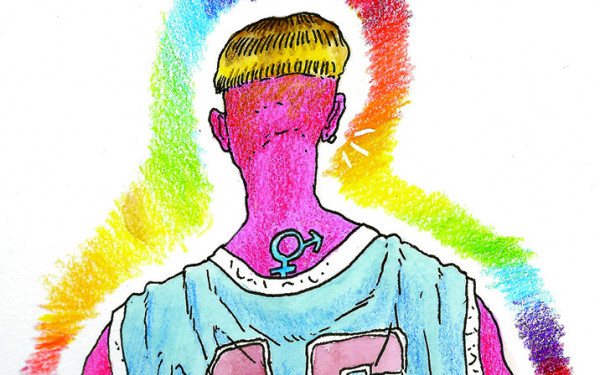
The current exhibition, GÉNÉRATION XEROX, illustrates the LEC’s goals perfectly, with curators Simone Beaudry-Pilotte, August Klintberg and Mark Andrew Hamilton collecting a diverse range of zines that offer a particularly rich way to explore academia, art, community and social issues.
The exhibition explores relationships between 2SLGBTQI+ people and self-expression through self-publication.
Hamilton noted that all the curators have always been fascinated with zines and self-publishing, especially in relation to queerness.
Zines are largely associated with punk shows and, in recent decades, are often disseminated through mail. They have long held an important place in queer communities, allowing queer people, groups and communities to share information, according to the Webster Library’s page on the exhibition.
The exhibition has been on display since July 2. It is part of a larger collection of materials that are accessible at the Archives gaies du Québec (AGQ).
Hamilton said that he and his colleagues hope that people “will see the exhibition and realize that they can actually go to the archives and look at them and consult them.”
The exhibit is largely built on one individual’s collection, with some additions. Hamilton said a majority of the zines are from the 1980s. A few of them are from the 1970s, while others were published within the last few years.
Some zines display fun, light-hearted illustrations, discussing topics such as sex and relationships, while others have a more serious tone with plainer designs.
One major goal of the display was to document “how people were expressing themselves,” Hamilton said. As a result, the zines touch on a wide variety of topics, ranging from social activism, HIV/AIDS, gender, sexuality and erotica.
Stefan Christoff curated the exhibition “Montreal social justice activism in print 2000-2025,” which displayed a variety of print material related to grassroots organizing in Montréal. The exhibition was on display from Jan. 19 to March 25, 2026.
This exhibition displayed activist material, particularly posters.
“I also chose pieces based on aesthetics. I wanted to illustrate different styles. You can see in the different materials that there are very different types of printing: silkscreen, photocopy, risograph,” Christoff said.
The posters made with a risograph, which can be described as a digital screen printer, along with the variety of other styles used, resulted in a creative exhibit with a particularly unique feel.
Christoff said he entered the curatorial process aware that thousands of students would see these posters, allowing him to draw attention to the things he found meaningful and to articulate a message he feels often goes unnoticed.
He was able to draw attention to the ways in which the organizing process brings people together and is itself a creative process.
He also highlighted that the “demands of organizing, whether it’s a community group or a broader campaign, often register with people through an artistic expression;” whether that be through poster art, banners or music.
“[It's important] to get the exhibition over the line and to show those posters in a public space, [allowing people to] engage with it, and draw from it whatever they liked, and hopefully learn from it,” Christoff said.
Both Christoff’s work and the work of Beaudry-Pilotte, Hamilton and Klintberg reveal how the gaps between the arts, identity, activism and academia can be bridged.
By focusing on various community matters and activism that impact a wide range of people, these two exhibitions demonstrate how the Webster Library is attempting to follow through on its goal “to provide visual enrichment and a welcoming environment to Concordia students, faculty, staff, and the general public.”
The LEC has paused accepting new proposals as its programming is fully set up through 2027, according to Latour.
This article originally appeared in Volume 47, Issue 1, published September 8, 2026.