Concordia’s Solidarity Brunch goes monthly
The demand for free campus meals is growing, but the Concordia Food Coalition says brunches alone won’t fix food insecurity
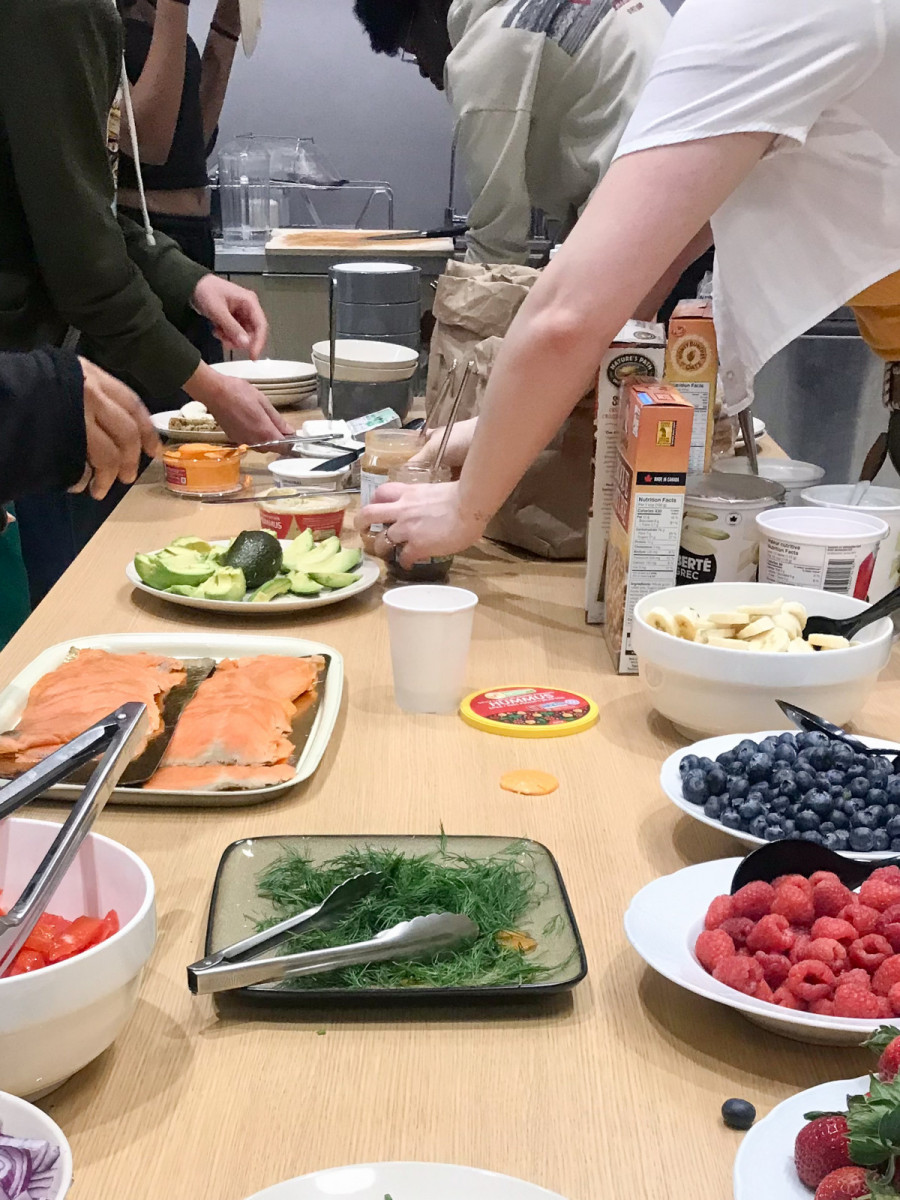
The Concordia Food Coalition (CFC) served free do-it-yourself bagels and loaded parfaits at the SHIFT Centre for Social Transformation on Oct. 5.
The brunch ran from 10 a.m. to 12 p.m. and was open to all students with no registration required.
For a year and a half, the CFC held its solidarity brunch only during exam period. Since September, it has run monthly and doubled as a space to discuss the campus food system.
Sheena Swirlz, the CFC's education and engagement coordinator, said the coalition's surveys last year showed students want more free food. While free lunch programs like The People’s Potato are thriving in popularity, she said the downtown campus has few free breakfast or dinner options.
Swirlz said that a free meal can leave students with more money to manage other expenses and rising costs.
“If it’s something that can be locked down, it’s easier to focus on your studies and thrive as a student,” Swirlz said.
A 2023 report by Concordia University found that 67 per cent of students surveyed experienced some level of food insecurity, with 22 per cent facing it at a severe level. Nearly half of the severely affected students said it negatively impacted their academic performance.
Rojelio Palacios, a studio arts student, has significantly struggled with food insecurity over the past three years they've been a student.
"Some days People's Potato is my only meal because I just didn't have any money for groceries,” Palacios said.
Palacios said the cost of being a student leaves little to spend on meals and that food insecurity is also tied to job insecurity.
“School is really expensive, rent is really expensive, and being a full-time student doesn’t give you much time for work. It just doesn’t add up,” Palacios said.
Palacios now volunteers regularly at The People’s Potato, where they eat most days, as a way to give back to the community.
The CFC’s general coordinator, Gabriela Lopes, said the coalition spent the past year multiplying free-food events. Its funding increased at the same time student need for free meals rose.
In the Concordia Student Union’s November 2025 by-elections, students voted to double the CFC’s fee levy from 16 to 32 cents per credit, a change that kicked in winter 2026.
“We have so much funding from the students, and we want to give it back immediately,” Lopes said.
Lopes thinks the coalition may have pulled away from its core mandate of food sovereignty and systemic transformation on campus. She said the free meals are “band-aid solutions,” and the coalition needs to reevaluate the direction of its activities and initiatives.
“We're going to see if there's a different way that we can most accurately dedicate our resources towards our mission,” Lopes said.
“A university is dedicated towards creating the future, the leadership of tomorrow and the ideas that are going to shape society tomorrow.” — Gabriela Lopes, CFC’s general coordinator
In March, Concordia extended its contract with Aramark, an American-based multinational corporation that has ties to United States Immigration and Customs Enforcement and provides food to detention centres.
Aramark runs Concordia’s dining halls and five campus cafes, while also feeding about 450 U.S. prisons and jails. The university kept the company on despite 83 per cent of students voting in 2024 to end exclusive food contracts with multinational corporations.
The CFC has spent most of its existence fighting to replace Aramark with a community-based and sustainable food system. Lopes said the CFC is now changing its course.
“We learned over the last decade of our activities that it's not something that we actually have the capacity for; it's a big contract,” Lopes said.
Lopes said the CFC’s relationship with the university’s administration has improved since then.
The coalition hasn’t settled on its next target, but it wants to partner with Concordia to drive systemic-level change.
“A university is dedicated towards creating the future, the leadership of tomorrow and the ideas that are going to shape society tomorrow,” Lopes said.
Students who want to get involved with the CFC can volunteer to cook or clean up at the events, or help at the farmers' markets and food fairs.
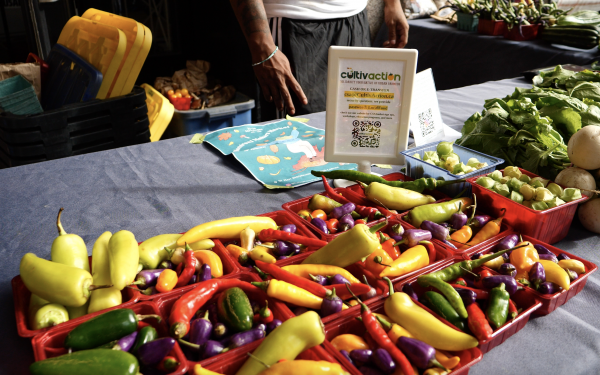
They can also join its education and engagement committee, or apply for micro-grants that fund food-related zines, articles and videos. They can additionally show up and learn about food systems around a free meal.
With no classes on Oct. 5, students came and went all morning with nowhere to rush off to.
Many lingered long after their bagels were gone, still wrapped up in lively conversations. For all CFC events, the leftovers go to the community fridges on campus, so nothing goes to waste.