Nostalgia Nook: Corporations keep trying to cash in on our childhood
Corporate nostalgia farming has ruined the magic and fun of our fondest franchises
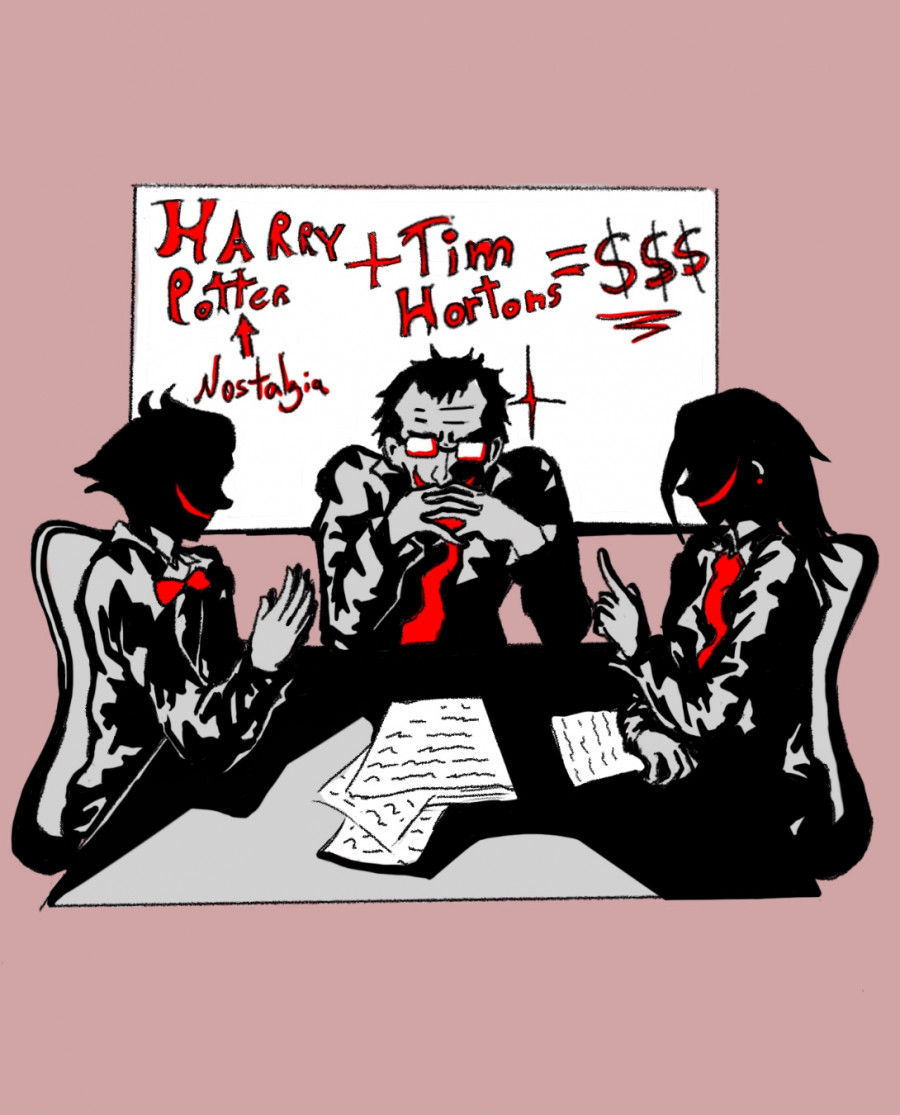
Each time I walk out of the metro to get to school, I see the Tim Hortons x Harry Potter collaboration, adding to my long-fueled frustration with businesses that take advantage of beloved franchises for profit.
For something like Harry Potter that has a seven-part book series, a movie adaptation for each book and its own world at Universal Studios, I don’t see who this benefits other than the people cashing those checks. Especially since transgender people and allies have already been boycotting Harry Potter due to the author’s bigotry and active harm. The Hufflepuff donut has been the cherry on top of my outrage.
With 1990s nostalgia being glossed over as just a fashion trend, most people probably see their Nirvana shirts more as graphic tees than band merchandise. It can be exhausting to see a shirt, sticker or keychain for something I truly loved when I was younger and feel that, in today’s climate of competitive fandoms, I’m less of a true fan if I’m not spending money.
Outside of McDonald’s BTS meals or dozens of Wicked collaboration merchandise, this corporate greed shows up in all the reboots, sequels and live-action remakes we see in film and television. It's becoming increasingly obvious that this is just another opportunity to upsell a beloved series or cult classic.
I remember when Fuller House first came out on Netflix. I thought that it was this huge moment in time where 30 years later, the cast came back together to reprise their infamous roles. However, it felt flat, lifeless and just a sloppy excuse to have the audience think, “Hah! I get that reference.”
This greed is present even in music, with Big Time Rush and the Jonas Brothers (whose website is itself in a nostalgic 2008 Internet Explorer style) both miraculously coming back together. It makes huge headlines and garners lots of attention in pop culture, but soon enough, you realize it only aims to sell tour tickets and new merch.
The rate at which these reboots and collabs come out is alarming and defeats the purpose of eliciting any nostalgia. It reveals the formulaic structure that they all end up following.
The iCarly, Wizards of Waverly Place, That’s So Raven and That '70s Show sequels were so disappointing to see, especially since it hasn’t even been that long since the original shows wrapped. They slightly change the name of the original with a pun, make the original cast parents and give us just enough cameos of past characters to make us stick around a bit longer.
The list goes on. This isn’t like the Renaissance, when there was a rediscovery or revival of past artistic achievements—this is pure corporate greed. Studios pass around contracts, retired actors get their checks and the ongoing love of emotionally attached fans gets bought.
No matter how cashable a throwback these opportunities might be, it’s also inconvenient for writers to write about characters from 30 years ago. I personally choose not to acknowledge Gilmore Girls: A Year In the Life because of the poor mischaracterization and disconnect in the writing.
I’ve seen other people refuse or choose to ignore certain series or launches, online and in person. With opinions spreading online even faster, people agree to boycott the nostalgia bait and leave original intellectual properties in the past with their dignity.
There is clearly an increasing demand for original media in the market, and nostalgia farming is no longer effective. The people have spoken, and they don’t want another Super Mario movie; they want genuine art and entertainment!
This article originally appeared in Volume 47, Issue 3, published October 6, 2026.



_600_375_90_s_c1.jpg)