Three years of genocide, decades of occupation
2026 marks three years since the genocide in Gaza began, but the history contains decades of death, occupation and denial
It has only taken three years.
Since Oct. 7, 2023, 73,470 Palestinians have been killed, including 21,283 children, and this only accounts for the official numbers. 80 per cent of the infrastructure in the Gaza Strip has been destroyed, and thousands of families have been displaced. According to the Committee to Protect Journalists, 539 journalists have been killed, injured or imprisoned.
It has been 78 years since the Nakba—meaning catastrophe in Arabic—which led to the forced displacement of over 700,000 Palestinians from their homes in the conflict that eventually formed the State of Israel. Since then, over 134,000 Palestinians have been murdered by Israeli forces across multiple wars and massacres.
Several international organizations have denounced Israel’s actions. On Sept. 16, 2025, following a two-year investigation, the United Nations Independent International Commission of Inquiry on the Occupied Palestinian Territory found that Israel has committed genocide against Palestinians. This official recognition is long overdue.
The International Court of Justice has issued multiple provisional measures demanding Israeli authorities take action, all of which have fallen on deaf ears.
Israel is far from the only silent voice in the conversation surrounding the genocide, though. Canada maintains strong diplomatic and economic relations with Israel, historically rejecting the call for boycott, divestment and sanctions (BDS) policies. The Canadian parliament also blocked legislation that would have stopped a loophole where arms sold to the United States can be diverted to Israel.
Palestinian families across Canada fear for the safety of relatives in Gaza, with little to no knowledge of their status throughout the genocide. Islamophobic and anti-Semitic hate crimes have both sharply risen over the past three years, with violence being perpetuated against both groups with increasing frequency.
Pro-Israel groups use the rise of anti-Semitic hate crimes to justify letting Israel operate with impunity while committing a genocide against the Palestinian people, but ignore the fact that both Jewish and Muslim communities are suffering. Furthermore, the wording regarding definitions in discourse is often unclear.
The Canadian government has adopted a definition that equates anti-Zionism with anti-Semitism, adding to public confusion and discourse on what Zionism and anti-Zionism are—drawing criticism from pro-Palestine Jewish groups. In some statistics on the rise in anti-Semitism, pro-Palestinian sentiment is included, further muddying the waters.
Even Zionism changes definitions depending on the speaker. To some, it means that the Jewish people deserve a homeland; to others, it means the state of Israel is operating without consequence.
Promoting Israeli violence does not support Jewish communities, and more violence against Palestinians won’t lead to less against Jewish and Muslim Canadians. What will make a change is supporting an end to Israel’s occupation of Palestine.
Concordia University is complicit in the genocide as well. In April 2025, the university disclosed its full $454 million investment portfolio, which at the time contained investments in the American investment company BlackRock. BlackRock holds major investments in Israel and in companies like Lockheed Martin, RTX, Northrop Grumman, Boeing and General Dynamics.
When students voted overwhelmingly in favour of the Concordia Student Union adopting two pro-BDS motions, university president Graham Carr denounced the decision. Carr’s remarks turned the blame on students for simply exercising their right to vote.
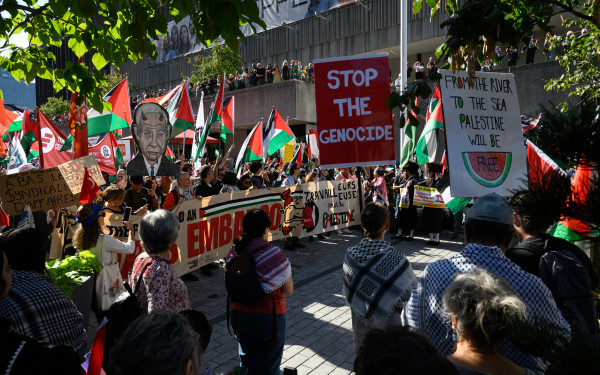
Since Oct. 7, 2023, Montreal has remained a hub for pro-Palestinian activism. The city is home to a significant and active Palestinian population and houses the largest Arab population in Canada. In August, the Montreal city council passed a motion in solidarity with the Palestinian people, though it avoided severing institutional ties with Israel.
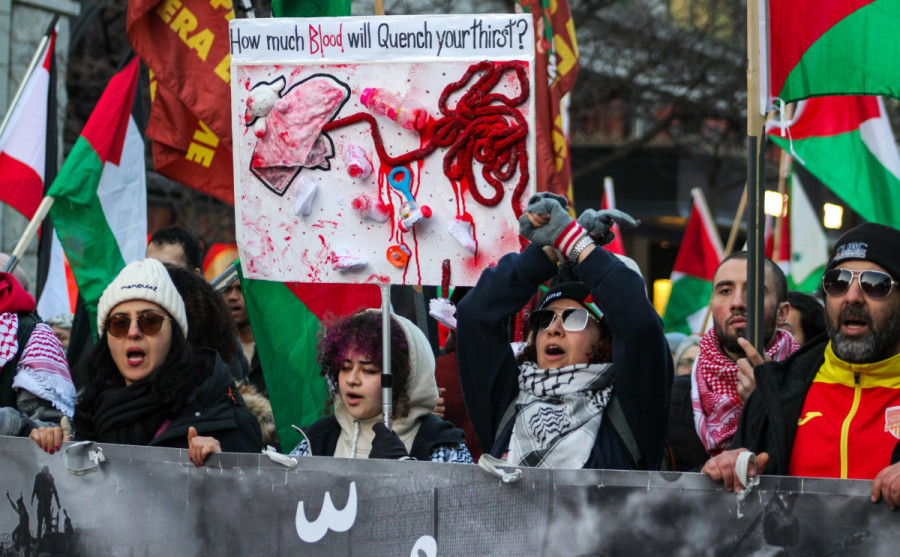
Protests across the city mobilized in support of the Palestinian people, despite harassment and brutalization from law enforcement. Demonstrations called for the enforcement of BDS policies, and the student encampment in protest at McGill University became the longest-running in Canada, lasting from April 27 to July 10, 2024.
On Oct. 7 and Oct. 10, protests will be held in Montreal in solidarity with the struggle that Palestinians still face after decades of occupation by Israel. The Link not only stands with the protesters and their right to protest, but believes it is our collective responsibility to show up for those who cannot.
The Canadian Palestinian Foundation of Quebec is an organization based in Montreal that “aims to provide urgent emergency humanitarian funds to support with food and medical care for displaced children in Gaza.” If giving funds is not a form of support accessible to you, Canadians for Justice and Peace in the Middle East is an organization that helps citizens stay informed about public advocacy campaigns and local events.
Both new and seasoned reporters can learn how to cover Palestinian stories appropriately through our toolkit. As journalists, it is important to challenge the systemic biases legacy media holds over this issue.
The most powerful thing you can do as an individual is have conversations about the ongoing genocide. Silence makes you complicit. You can always speak. You should always speak.
This article originally appeared in Volume 47, Issue 3, published October 6, 2026.