
Editorial: U.S. imperialism knows no bounds
On Jan. 3, 2026, the United States carried out a covert military operation in Venezuela, capturing and extraditing President Nicolás Maduro. He was charged with drug trafficking and will stand trial in the U.S.
Many of us have logged onto social media and seen hordes of people, Venezuelans among them, celebrating Maduro’s capture as a monumental moment for the freedom of the nation. This reaction is understandable—Maduro’s status as a brutal dictator cannot be understated, and no punishment can undo the atrocities committed under his rule.
But to treat this operation as benevolent, or to assume the U.S. acted in the interest of Venezuelan citizens, reflects a deeply myopic view of U.S. interventionism.
The U.S. isn’t a liberator. At every turn, intervention has meant occupation and oppression for ordinary citizens. Iraq, Libya and Afghanistan show what U.S.-led “transitions” can look like on the ground. To believe that Venezuela will be the exception is supremely ignorant.
If Canadians hoped their government would swiftly condemn Trump’s government, they likely came away disappointed. Prime Minister Mark Carney cowered in the face of an international ally, praising the move as “welcome news.” Despite the Canadian government pushing back against Trump’s comments in the past, it now fails to stand up when international law is so blatantly violated elsewhere.
Trump’s—and the U.S.’s greed—will not stop. The president has already singled out other nations as the subject for future operations: Colombia, Cuba, Mexico, Iran and Greenland have all drawn his attention. Threats to annex Greenland are reminiscent of previous threats to Canadian sovereignty.
What does all this mean for us?
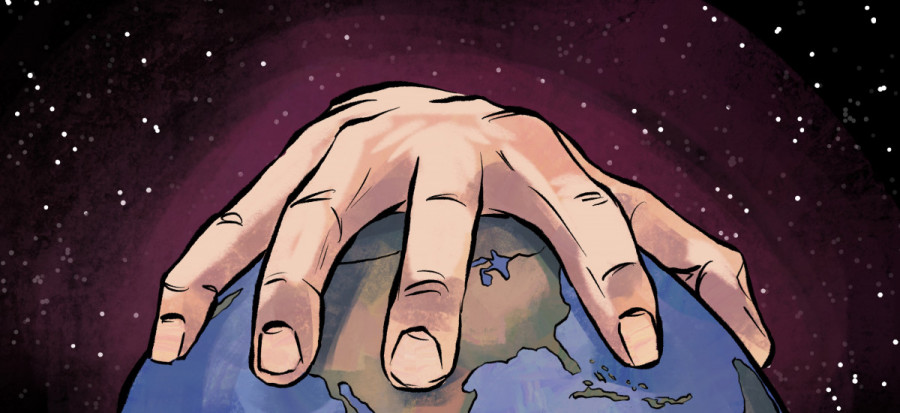
In a world where the abduction of foreign leaders by powerful nations is normalized, no country is safe. Venezuela stands as a testing ground for the lengths to which the U.S. can push its colonialist ideals.
While the U.S. government continues to stick its hands where it is not wanted or needed in other parts of the world, oppressive forces within its own country continue to detain, deport and even murder legal U.S. citizens in cold blood.
The United States Immigration and Customs Enforcement (ICE) rang in the new year by shooting a queer woman in the streets of Minneapolis on Jan. 7, 2026. Renee Nicole Good, mother to three children, was last seen telling ICE officer Jonathon Ross that she was “not mad at him” before she was shot three times by Ross while attempting to back her van away.
She did not instigate Ross. She did not try to run him over with her van. And yet, in a split decision by this so-called “law enforcement officer,” her life was cut short.
She is not an anomaly. Hundreds of legal citizens and illegal immigrants across the U.S. have been cruelly torn from their families thanks to ICE and the U.S. government. At least 32 people died in ICE custody in 2025. Silverio Villegas González. Keith Porter. Yorlenys Betzabeth Zambrano-Contreras. These names are the cost of U.S immigration enforcement.
The international community—and just as crucially, the communities here, in Montreal—must not stand for the atrocities the U.S. government continues to commit against its own citizens and those abroad. Silence in the face of these actions allows those responsible to escape unscathed.
Admittedly, the current outrage and opposition surrounding these events seem out of touch and late. Why did it take the outright abduction of a dictator for people to recognize the dangers of colonial expansion? Have the genocides in Gaza, Sudan and Congo—often met with far less media coverage despite immense loss of life—taught us nothing?
Trump has not said if or when elections would be held in Venezuela to replace the interim government headed by Maduro loyalist Delcy Rodríguez. If the U.S. is to convince us that Maduro’s capture served democracy, it must hold elections now, not indefinitely.
If the U.S. would like its operation to be remembered as a positive one rather than something violent and imperial, it must act in a way it has historically struggled with: by putting democracy and the people first.
The Link fiercely condemns American imperialism and the oppressive forces that continue to terrorize citizens across the world and on their own home turf.
This article originally appeared in Volume 46, Issue 7, published January 13, 2026.