Montreal city council passes amended motion in solidarity with Palestine
The amended motion contains no commitment to sever institutional ties with Israel
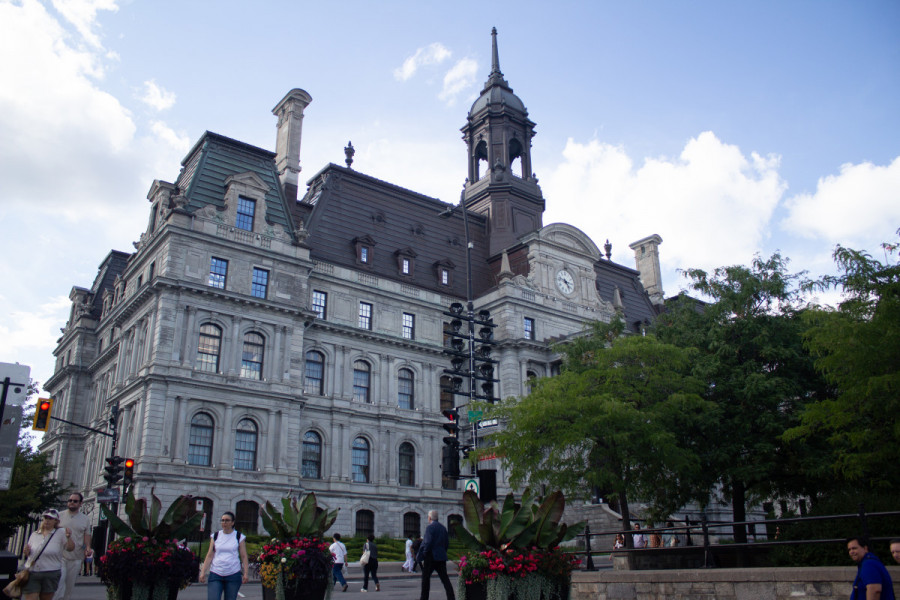
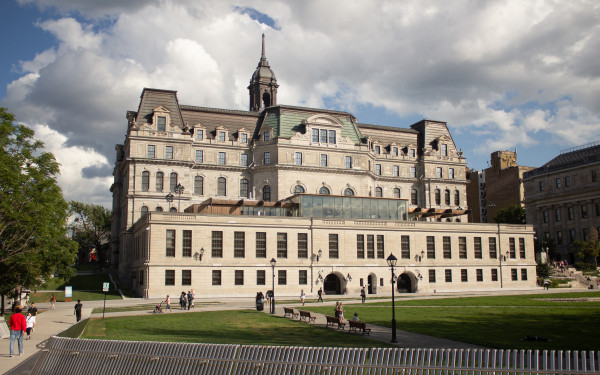
The Montreal city council adopted an amended motion expressing solidarity with the people of Palestine at the monthly council meeting on August 24.
The motion introduced several major changes by Ensemble Montréal to the original draft proposed by Projet Montréal on June 4. Projet Montréal introduced the motion at the council meeting on June 15, but Ensemble Montréal moved to suspend it until the council’s August meeting, drawing criticism from advocacy groups.
The amendment removed a section of the motion calling for the city to suspend its institutional ties with the Israeli government, “in particular by ceasing to invite representatives of that State to official events held at Montreal City Hall.” The section was replaced by a call for the governments of Quebec and Canada to “demonstrate greater leadership in favour of the peaceful resolution of the conflict.”
Other changes included removing a reminder of Montreal’s past declarations “concerning human rights violations in Iran, Haiti and Rwanda” as well as the Russian invasion of Ukraine. A statement acknowledging that multiple human rights organizations had defined Israel’s actions in the Gaza Strip as genocide was also deleted.
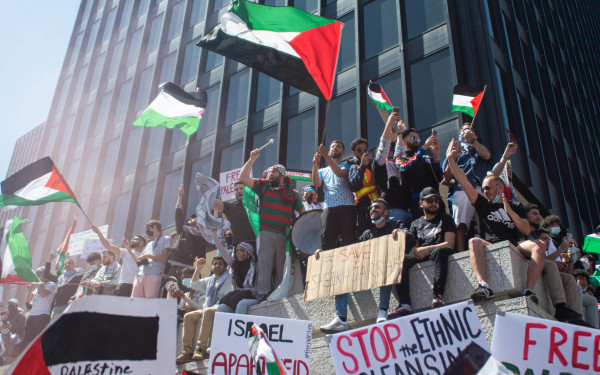
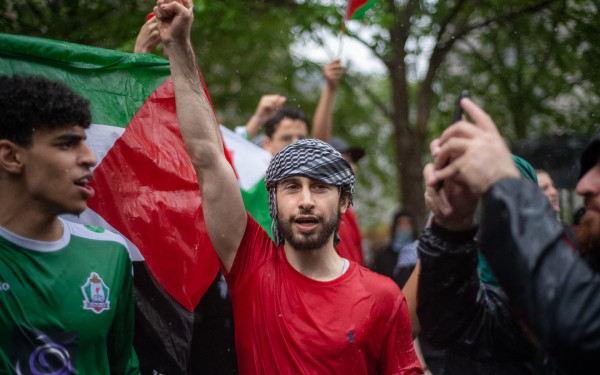
The day of the vote, protestors gathered outside Montreal City Hall in anticipation as early as 12:30 a.m. to demonstrate in support of the motion. However, they waited over eight hours for the council to finally deliberate.
During the public comment period, city council chair Chantal Rossi limited questions on the motion to just three total, which were asked in quick succession by both pro-motion and anti-motion attendees. Despite the limit, several individuals attempted to ask the council further questions on the topic, which Rossi swiftly rejected.
Finally, the motion was tabled before the council. Councillor Nathalie Goulet spoke about the precedent of the motion’s contents, calling it a “duty of humanity.”
Fellow Projet Montréal councillor Alex Norris delivered a similarly impassioned speech, acknowledging the historic implications of the motion’s success.
“One day, we will be asked what we did while all this was unfolding before our eyes,” Norris said. “We must be able to answer that Montreal did not remain silent, that Montreal did not choose double standards, that Montreal defended international law when it was easy and also when it was not.”
“One day, we will be asked what we did while all this was unfolding before our eyes. We must be able to answer that Montreal did not remain silent, that Montreal did not choose double standards, that Montreal defended international law when it was easy and also when it was not.” — Alex Norris, city councillor, Projet Montréal
When the opposition was called to speak, Montreal Mayor Soraya Martinez Ferrada expressed her disapproval of the council holding a large-scale deliberation on an international discussion, instead delegating the responsibilities to other organizations.
“[The municipal council is] not the International Criminal Court, and we are not the International Court of Justice,” Martinez Ferrada said. “And we must not substitute ourselves for international institutions that were specifically created to make these determinations.”
Goulet fired back, emphasizing Montreal’s goal to stand “as a metropolis of culture and tourism, but also as a strong defender of human rights.” She thanked the solidarity of groups such as Palestinian and Jewish Unity, the Montréal Anti-Apartheid Movement and the Quebec Artists Against Apartheid Club and for their work in bringing together supporters of the motion.
After further deliberation, the amended changes were brought before the councillors. The changes passed with a vote of 38 for and 22 against with the vote split along party lines, approving it for consideration.
After the initial vote, opposition leader Ericka Alneus addressed the council, lamenting the amendments to the motion but also recognizing it as a major milestone.
“One thing is certain: we had this debate, a debate that no one would have dared to have. Montreal had this debate,” Alneus said. “This is a signal that we are sending, and it is one that had been expected for several months.”
Finally, the councillors voted overwhelmingly to adopt the motion by a vote of 54 to 6. The new motion immediately drew criticism, including from Students for Palestine's Honour and Resistance (SPHR) Concordia, a student advocacy group.
"[The council] chose superficial symbolism above genuine accountability by giving in to foreign political pressure and eliminating all substantial calls to cut institutional relations with the Israeli government,” an SPHR representative stated, granted anonymity by The Link for safety reasons.
“It signals that municipal leaders are willing to acknowledge public outrage and the urgency of a human rights crisis, yet will ultimately backtrack when it comes to taking concrete, material steps,” the representative added.