Climate action starts with knowing who lives here
There are 161 species living on our campus. Does Concordia care?
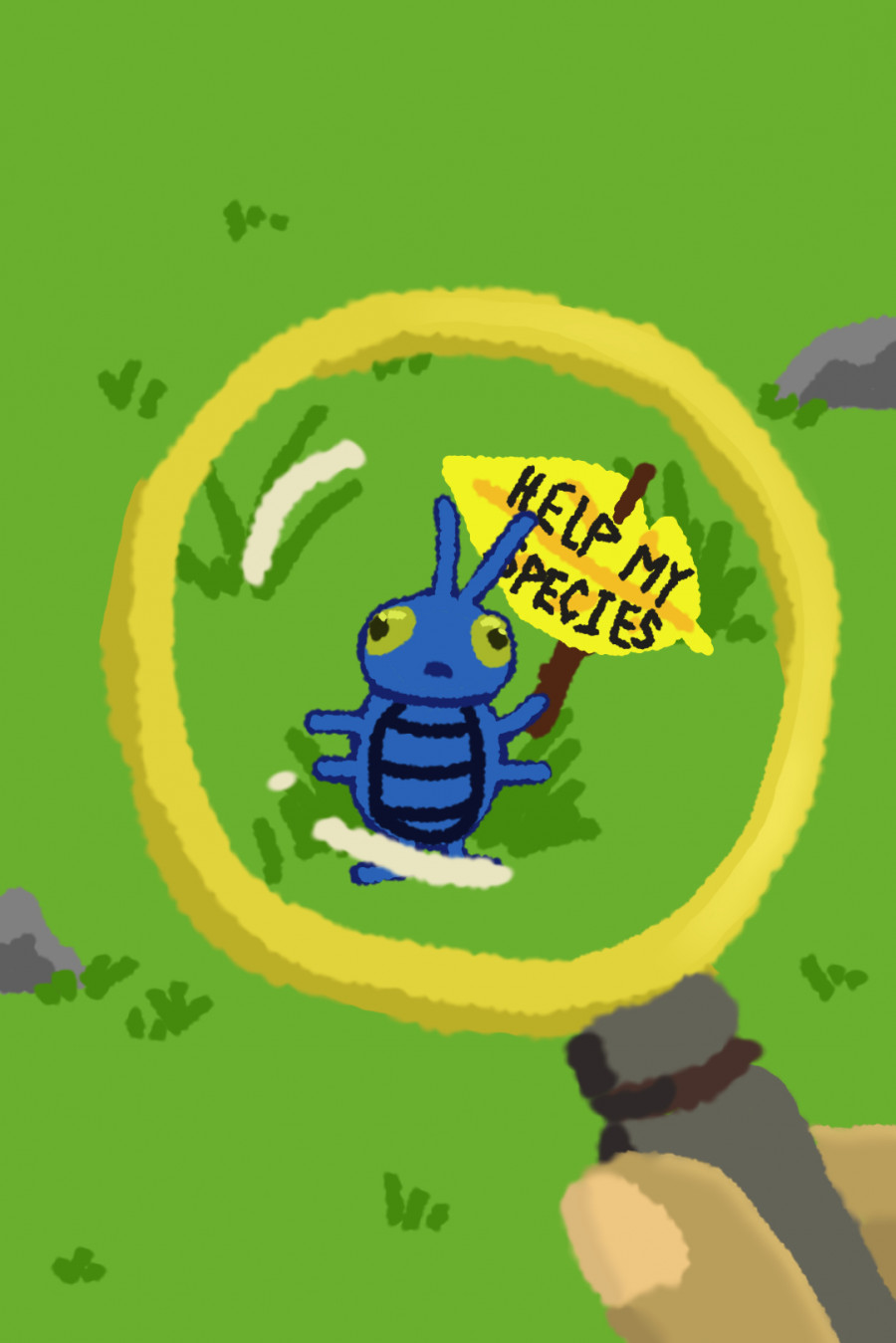
On a Thursday afternoon at Concordia University’s Loyola campus, more than 80 of us crouched in the grass with our phones out and documented 161 species. Plants, insects, birds, fungi—all found within walking distance of the Hingston Hall parking lot.
I helped organize it, so maybe I’m biased, but I came away convinced of something that has nothing to do with bias: we are going about climate action backwards. Nobody can tell you what is in your local park, how it compares to a decade ago or what has quietly disappeared. You can't manage what you've never known.
Most of what we hear about climate change is top-down. Targets get negotiated at summits, percentages get announced and the rest of us are told to wait for policy to catch up. Meanwhile, the thing those targets are supposed to protect, living ecosystems, are mostly unmeasured at the scale where people live.
A BioBlitz is a simple idea: a group of people spend an allocated amount of time in one place, usually a day, finding and recording as many living species as they can. Participants photograph what they see and upload it to the iNaturalist app (a free species identification app), where the community and experts help identify it. BioBlitz matters, and I’m tired of seeing it treated as nothing more than a nice outreach afternoon.
Every observation uploaded to iNaturalist becomes a dated, located record. Pile up enough of these findings, and you get a baseline. Baselines let scientists detect a multitude of things such as species migrating north as winters warm, flowering times drifting out of sync with pollinators and invasive species gaining a foothold in an ecosystem. While professional researchers can't be everywhere, thousands of ordinary people with their phone cameras can be.
I study fish, and the same pattern keeps showing up in my field: populations rarely collapse in a way anyone notices at the moment. They thin out slowly, and by the time the decline is obvious, reversing it is expensive or impossible. The early signals are small and local, and only the people who are paying attention notice them. Citizen science is an early-warning system that costs almost nothing, and we underuse it.
The data is only half of what a BioBlitz does. The other half is its ability to make people care. Nobody fights for a place they can't name, and most of us can't name much of what lives on our own campus. A first-year who spent an afternoon identifying a bumblebee on the lawn will think differently about that lawn from then on.
Environmental concern built on guilt and statistics burns out fast, but concern built on familiarity with the actual creatures sharing nature with us lasts because it's personal. Climate policy will only hold if enough people care about what it protects, and that kind of caring is grown from the ground up, one observation at a time.
So here is my demand for Concordia. Stop treating BioBlitz as a seasonal event to fluff up the sustainability newsletter. If the university wants to claim biodiversity as a value, it should fund environmental monitoring the way it funds anything else it considers essential.
Run the BioBlitz every year and every season. Protect the unmown patches, the pond and the messy corners that groundskeepers are tempted to tidy away. Those corners are where many of the 161 species were hiding. iNaturalist records need to be built into courses so that students across faculties, not only biology, contribute to a campus-wide dataset that gets richer each year.
None of this is expensive. A mown monoculture lawn takes more money and fuel to maintain than a meadow. All we’re waiting on is the action it takes to treat the living campus as it deserves, instead of merely as infrastructure.
I’ll admit the numbers on climate change are bleak, and I won’t pretend a single afternoon with 80 volunteers changes them. But the world won't be saved only by the people in conference halls. It'll be held together by the person who stops, looks closely at something small and writes down that it was there. Concordia has the people, the green space and now the data to prove it. The question is whether the university will act.
This article originally appeared in Volume 47, Issue 5, published November 10, 2026.