Stay loud, Montreal
Staple neighbourhood bars remain the cornerstone of the city’s open mic culture
Every musician has to start somewhere. In Montreal, that beginning often happens under dim bar lights, in front of a room full of strangers willing to listen.
Stage experience is what really makes an artist. A handful of staple Montreal bars have been the cornerstone of the city’s open mic culture today.
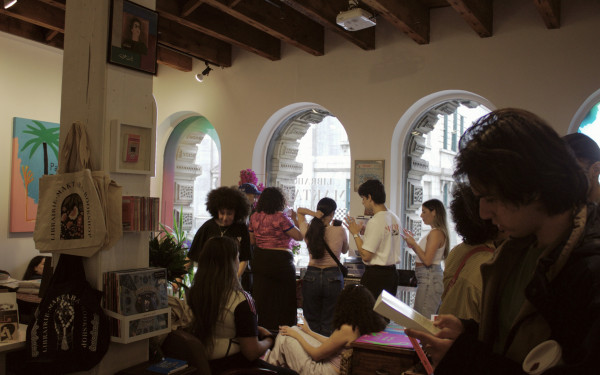
For decades, Bar Courcelle has been a gathering place for local aspiring musicians right in the heart of Saint-Henri. Despite neighbourhood changes and pandemic lockdowns, the bar continues to host open mic nights every Sunday.
Adrian (Curly) Micholuk, owner of Bar Courcelle, has witnessed the area’s transformation firsthand.
“It used to be that musicians could afford to live here because it was a lot cheaper,” Micholuk said. “But in the past five years, rent prices have skyrocketed. We used to be open late until 4 a.m., but now we end it at midnight so folks can catch the last metro.”
The gentrification of the Saint-Henri neighbourhood has led to the bar’s current crowds coming from all over the city. The mix of neighbourhood regulars, newcomers and curious first-timers is what gives these nights their unpredictable energy.
“Montreal is kind of the music capital of Canada,” Wilde said. “I think it’s definitely important for spots like Courcelle to keep existing.”
Frisco Lee, the eccentric on-and-off host of Courcelle’s open mic since 2014, has seen countless connections spark in the room.
“I’ve seen so many bands formed here over the years,” Lee said. “There’s musicians who meet each other and keep coming back, kids who wait until they’re 18 to come––since the pints are also cheap––and of course, the broke artists who’ve been here since forever.”
As Frisco reflected on special moments from past open mics, the answer arrived on cue. A man dressed in a full Gandalf costume walked through the door.
“This! It’s happening right now!” Frisco said.
It’s these kinds of unplanned, unpolished moments that fill these bars with warmth and charm in the middle of winter.
For some performers, it’s about debuting a new song to an audience for the first time, but for most, the open mics serve as a community of support.
Edward Laberge, a regular attendee and Saint-Henri resident, described the scene as deeply rooted in its surroundings.
“It’s a community within a community,” Laberge said. “Historically, it’s been more of a closed community here, or Verdun and Pointe-Saint-Charles, so I like to support the industries and businesses that are around this area.”
Laberge works around the same block as the bar, so he stops by after work on almost every Sunday night.
That night, local singer-songwriter Madison Trasler had delivered a beautiful acoustic set on piano with a few original songs as well. Trasler recalls her first experience stepping on a stage, which coincidentally was at Courcelle a few years back.
“I realized there isn’t much of a point to just performing and then leaving without listening to the other acts,” she said. “I thought I’d first do it to just get exposure, but it’s not really worth it to just do it for that.”
For many, the sustainability of Montreal’s artistic culture depends on mutual investment, where artists stay, listen and support one another.
Having just moved to Montreal from Calgary to pursue music, it was folk singer-songwriter Annie Wilde's first time attending Courcelle.
“Montreal is kind of the music capital of Canada," Wilde said. "I think it’s definitely important for spots like Courcelle to keep existing."
The performances that evening varied from stripped-back solo acts to a 10-minute harmonica set complete with audience participation. Performers demonstrated the range and openness of the space; regardless of genre or skill level, the room never lost its warmth.
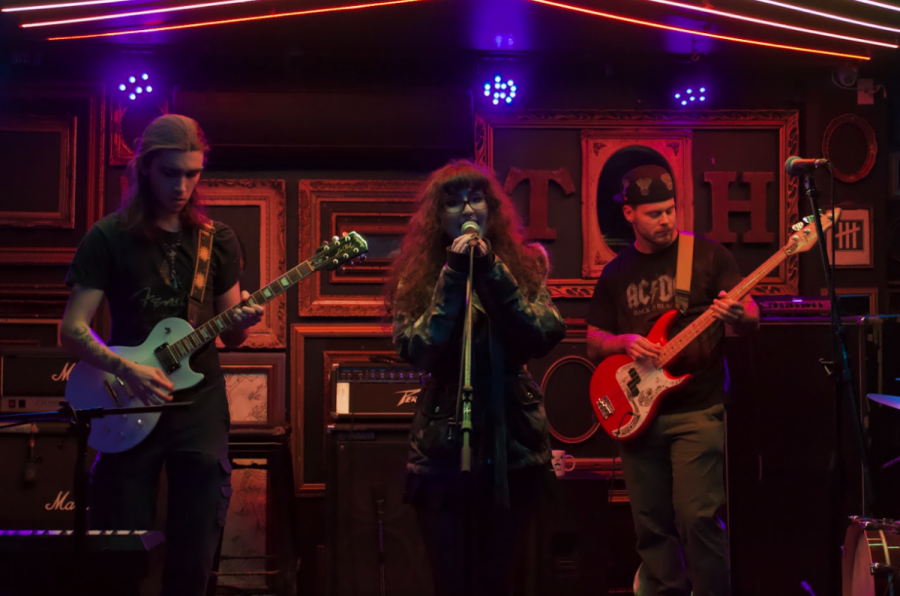
Across the city on the busy stretch of St. Denis St. in the Plateau-Mont-Royal sits Turbo Haüs, a landmark for Montreal’s live music community. Almost every young local musician has a story or memory there, even touring artists.
For the past four years, Turbo Haüs has hosted its weekly Tuesday night open mics. Filling up the bar doesn’t seem to be an issue for them, even on frigid February evenings.
Sergio Da Silva, owner of Turbo Haüs, recalls how touring bands who stay at the hotel next door will hear about their open mics and pop in to play a couple of songs.
“It’s these bands who should be playing in 500-600 people rooms who are coming to the open mic to have a few jams,” Da Silva said.
He has also seen folks who come in just for a pint get caught in conversations that lead them to unexpected connections.
“It’s really the spontaneity of it that is the most fun,” he added.
Da Silva attributes the turnout to the city’s sheer volume of aspiring performers.
“There’s enough people in the city who want to play music to make it work,” he said.
Among the crowd at Turbo Haüs on a recent Tuesday were familiar faces from Courcelle, illustrating how these venues’ communities often overlap.
Noah Hassan, one of those attendees, said the appeal extends beyond the performance itself.
“I like meeting people who like writing music and have the same interests,” Hassan said. “Walking off the stage is fun because I leave with adrenaline, but watching other performances is also great. I sometimes leave with new ideas or friends.”
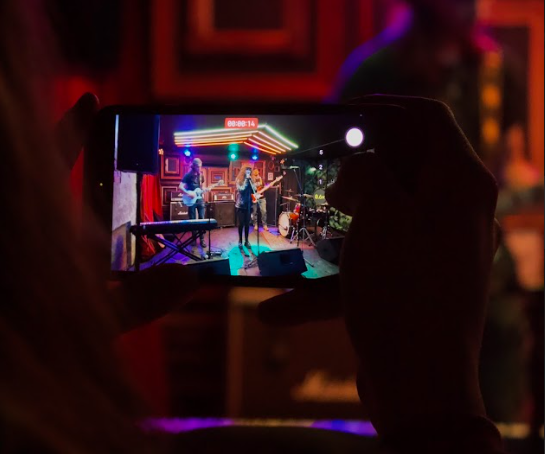
The highlight of the night came when a band was formed in real time.
Three friends took the stage together for the first time, introducing themselves as Port Cullis after coming up with the name on the spot. Channelling their nerves into momentum, the trio delivered an unforgettable debut set.
Guitarist Dylan Jacobs reflected on the experience afterward.
“It was pretty much like a new thing for all of us,” Jacobs said. “It was really fun, kind of nerve-wracking, but definitely fun. I think we’d absolutely do that again.”
Both Lee from Bar Courcelle and Mike Hand, host of Turbo Haüs, expressed a similar sentiment about their roles in sustaining these spaces.
“I can’t believe I get to do this. I feel so lucky to call this a job,” Lee said.
In rooms like these, there is a space for everyone, regardless of skill level, genre or reason for stepping on stage. Night after night, this is how Montreal’s music culture is kept alive, one nervous performer at a time.
“Montreal has a lot of places for starting musicians," Lee said, "but as long as they hear about the place and come once, they’re sold."
This article originally appeared in Volume 46, Issue 10, published February 24, 2026.