
Finding your sound at Concordia
How community radio, creative spaces and venues are shaping the university’s music scene
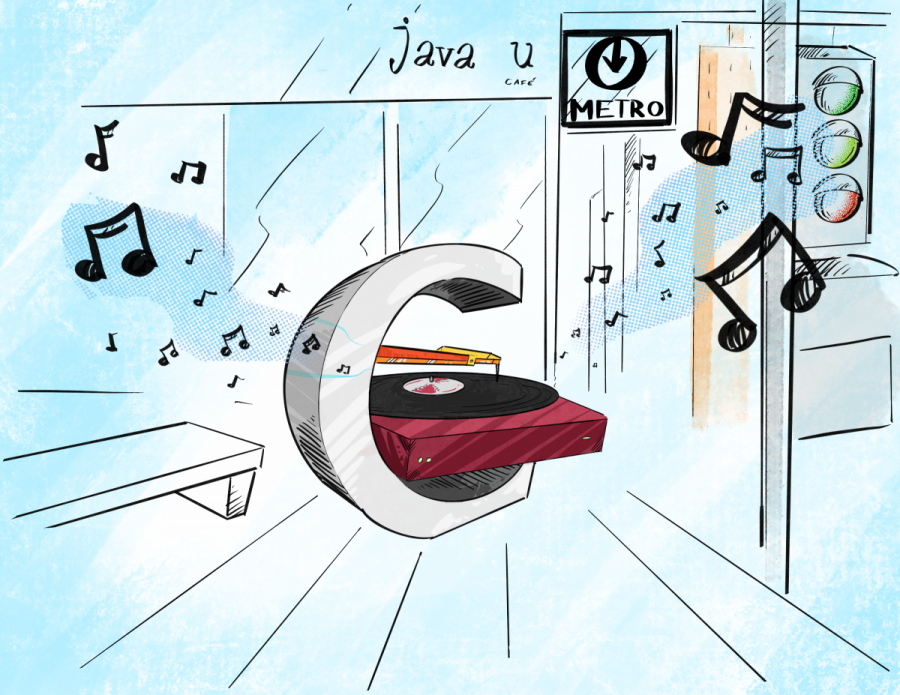
Concordia University is home to many talented musicians and ways to get involved in the music scene.
The community represents more than just a collection of artists; it is a network of spaces, student collectives, programs and collaborations that bleed into Montreal’s creative fabric.
Whether you’re looking to perform yourself or just discover new sounds, Concordia’s network of musicians makes it easy to plug in.
Shae Powell, known musically as shaedolla, is an electroacoustics major who’s deeply connected to the scene. She runs Stereo Field Trip, a radio show that airs on CJLO, Concordia’s community radio, where listeners can discover local and underground artists.
“I get people to send me their music and I end up learning a lot about who’s making what in the city,” she said.
CJLO makes it easy to get familiar with the scene. Anyone can tune in or volunteer to learn broadcasting, sound production and live recording. Volunteers can even rent the station’s studio at a discounted rate, making it a very accessible place for new musicians to be heard.
Powell, once involved in Montreal’s punk scene herself, now leans toward folk. While getting started in the music world didn’t come easy, she found that talking to other people involved was a simple and effective way to kickstart her career. She also recalled a friend who got gigs by walking into bars and cafés along Ste. Catherine St. and asking if they needed music.
“If you do end up performing at a venue, stay there,” Powell said. “Don’t leave after your set, stay and hear what the other people are making, tell them they did a good job, get the pat on the back.”
For Powell, that sense of community is what keeps the music scene alive. It’s more than just performing, but about showing up for others and sharing the same spaces.
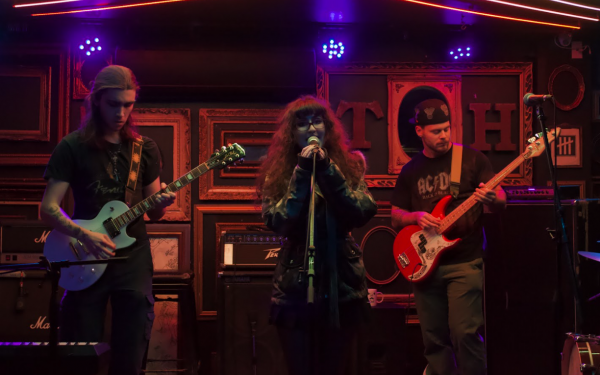
Mai/son and Lamp House are both house venues where students can play or listen, with Lamp House being run by a Concordia alumnus. These offer a much more intimate environment for students to find their footing. Powell pointed to it as the perfect place for beginners who want to perform without the pressure of large crowds.
That same spirit extends beyond venues. The Concordia Electroacoustics Studies Student Association also provides compilation albums of student work, offering another way to discover what’s being created on campus.
Powell’s biggest piece of advice for those just starting out is simple: show up and stay connected.
“Meet musicians, follow them, they will post their posters,” Powell said, “and then go to their shows and stick around because that’s how you enter the scene.”
Aria Tessler, an electroacoustics major and DJ, has also found her rhythm between Concordia and Montreal’s nightlife. She often collaborates as much with peers at the university as with artists from outside it.
Like Powell, Tessler sees Concordia as a starting point where students can make connections with fellow artists who can help them get going locally.
“The art scene in Montreal is Concordia.” — Delphine Vise
“I think a lot of people take what they’re doing at Concordia and they take it a bit elsewhere and involve themselves more generally with parts of the music scene in Montreal,” Tessler said.
On campus, that sense of community is visible almost everywhere.
The eighth floor of the John Molson School of Business is occupied by music students. It’s covered in posters for open mics, jam sessions and student shows. These posters often include call-outs for musicians, giving newcomers another easy entry point.
“Those always have kind of up-to-date things going on,” Tessler said.
Powell mentioned a music club run by a residence advisor at Grey Nuns Residence, which she discovered through one of these posters. The club allowed students to showcase their original work and perform with other musicians during their end-of-year show.
“The best way to get involved is to just get involved with the community,” Tessler said, echoing Powell’s sentiment.
It is impossible to separate Concordia’s music scene from the vibrant broader scene in Montreal. The university’s music community remains open to those who do not attend the school.
Delphine Vise and Iris Lou Dune, part of a musical duo known as 17sport, represent one example. Their project made an appearance on Powell’s show, bridging Concordia’s network with Montreal’s.
“CJLO is just a very accessible place, I find,” Dune said. “It’s just a really nice way to find new music and new artists from Montreal and Concordia.”
For them, Powell’s show provided a way to get their music heard.
The duo, only recently becoming musicians, has performed at Concordia events like the Concordia Fashion Business Association’s showcase, as well as collaborated with students to film music videos using the university’s green-screen facilities.
“The art scene in Montreal is Concordia,” Vise said.
Dune agreed, but amended that this applied mostly in the case of young people.
She pointed to the intermedia program at the university, which blends sounds, video and performance.
“It’s fun that, in this school, there’s literally a program that does that,” Dune said.
For those looking to get their foot in the door, Vise and Dune agreed with Powell and Tessler, emphasizing sending emails, DMing on Instagram, and following artists as the best ways to get started. They stressed that other musicians generally welcome newcomers.
“Everyone wants to uplift everyone,” Vise said.
For students hoping to start performing, Concordia’s scene proves that all it really takes is curiosity, community and the courage to show up.
This article originally appeared in Volume 46, Issue 6, published November 18, 2025.



_600_375_90_s_c1.jpg)