
Sir George Williams’ past and present
Inside the history of some of Concordia’s main buildings, and present opinions surrounding them
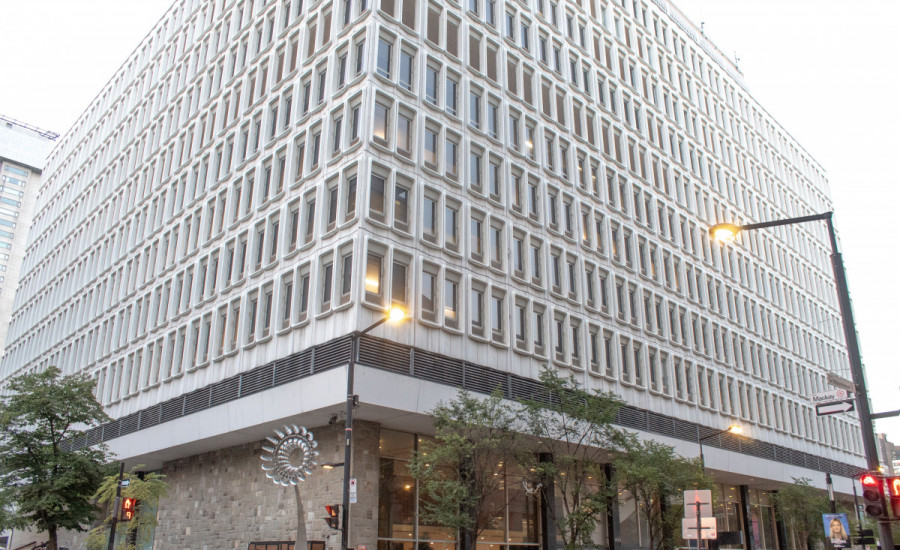
There have been plenty of changes across Concordia University’s Sir George Williams (SGW) campus since the university was established in 1974.
Some of those changes include the construction of new buildings, renovations to existing ones, and the implementation of various services and departments that some buildings still have to this day.
The Engineering, Computer Science and Visual Arts Integrated Complex (EV building) is one of the newer Concordia buildings, inaugurated in 2005 after undergoing four years of construction.
It houses departments and services, such as the faculty of fine arts and the FOFA Gallery, which showcases the work of students, staff and alumni.
While this building has many uses, some students believe there should be necessary adjustments.
Virginia Battaglini, a second-year student in the department of English literature, occasionally uses the first-floor washroom in the EV building. She has noticed the space’s uncleanliness and believes there could be room for improvement.
“The number of times I’ve entered the bathroom only to enter a stall filthy with urine, feces or used needles is genuinely disgusting. It’s not fair to students to limit which bathrooms they can use,” Battaglini said.
The belief that there should be improvements in the washrooms is not limited to only the EV building.
Jordana Montanaro, a second-year student in the department of English literature, believes that some of the bathrooms in the Faubourg (FB) Building, particularly those in the sub-basement, are not a very comfortable experience.
However, there are some aspects of the building that Montanaro enjoys.
“It’s actually very nice to hang out in [the main basement]. Its classrooms [have] a more modern design; that way I’m able to charge my electronics and focus on classwork,” Montanaro said.
The history of the FB building is long, and continues to impact present-day students and faculty.
In 1925, the Faubourg Complex sat on land leased from the Grey Nuns, and since then the building has been renovated to accommodate new areas and facilities.
Concordia bought the Faubourg Tower on July 22, 1997, and that same year https://www.concordia.ca/finearts/cinema.htmlnamed its cinema school after Mel Hoppenheim, a collector of Montreal film equipment and a generous Concordia contributor. The cinema remains in the FB building to this day.
Today, the building is home to many other departments and services, such as the department of classics, modern languages and linguistics and the office of sustainability.
As one of the largest buildings on the SGW campus, the Henry F. Hall Building is filled with various departments and services, such as the departments of economics and political science, the Concordia Student Union, the first-year experience, and the IT service desk.
The Hall building also contains various locations where students and faculty can buy food at a reasonable price, such as the Hive Cafe, Reggie’s Pub and the People’s Potato.
Since the building’s inauguration in 1966, it has been the site of repairs and renovations, as well as historic moments of protests, celebrations, debates and demonstrations.
Today, the Hall building is populated by many students from different programs, and some have noticed areas of issue.
Britney Vu, a second-year master's student in educational studies and a teacher’s assistant, frequents the Hall building.
She has noticed that certain classrooms in the building are more modern than others.
“Some classrooms have broken curtains and use chalkboards, while some of the other classrooms use whiteboards, and some have inconsistent air conditioning and heating,” Vu said. “[Also], in some classrooms I have visited, there are no outlets for charging.”
For students arriving on campus for the first time, the tall towers and shiny classrooms can appear daunting. But behind the glamorous exterior, a new world awaits to be explored.
The buildings at Concordia University each have their own very special stories and histories and have welcomed tens of thousands of students over the years. These buildings have changed over time, both in little ways and large ways, due in no small part to the students themselves, who can share their diverse and passionate opinions about the places they visit and learn in nearly every single day.
This article originally appeared in Volume 47, Issue 1, published September 8, 2026.



_600_375_90_s_c1.jpg)