Montreal city council to debate motion to cut ties with Israel on August 24
Activists say the motion would replicate Montreal’s historical anti-apartheid stance
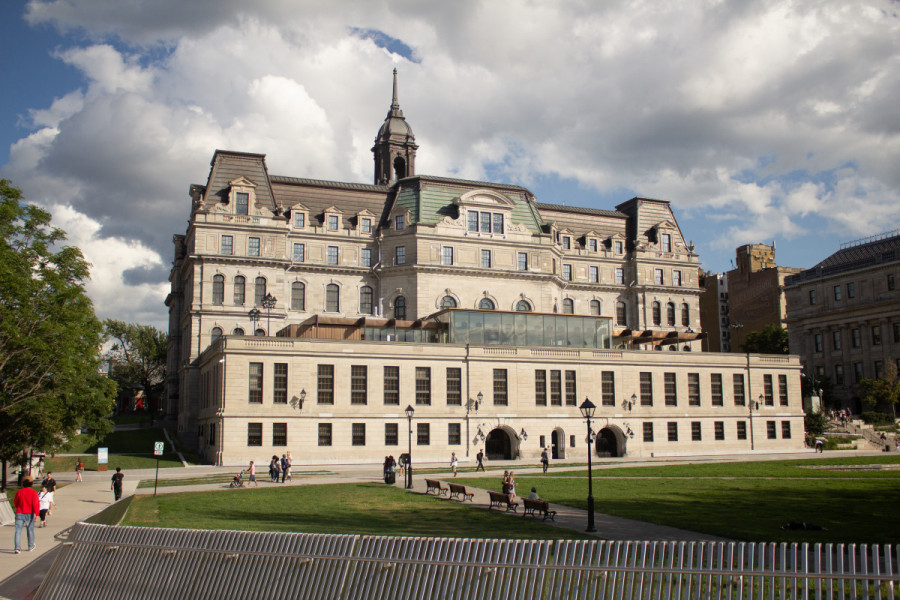
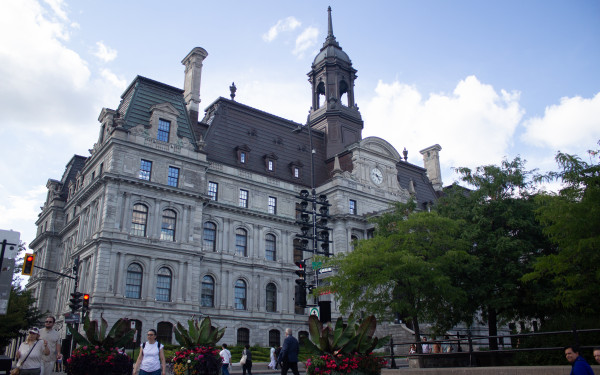
A motion calling on the city of Montreal to cut institutional ties with Israel will be heard on Aug. 24, after being pushed back from June.
The motion introduced by Projet Montréal, the official municipal opposition, on June 4 calls on the city to suspend institutional ties with the Israeli government, its institutions and municipalities. This includes not inviting Israeli state representatives to official events at city hall, “until Israel returns to its internationally recognized borders, ceases its violations of the rights of Palestinian people and ends its violations of international law.”
The text also calls on the city to “recognize and denounce the apartheid regime in Palestine and the genocide being perpetrated there” and urges the city to demonstrate solidarity with Palestinians and other civilian victims in Southwest Asia and North Africa.
A United Nations Commission, along with major international human rights organizations such as Amnesty International and Human Rights Watch, have found that Israel has committed genocide in Gaza.
On June 15, Ensemble Montreal delayed the discussion until the next city council meeting scheduled for August, as the city council does not sit in July.
“I think the motion was delayed because had it gone to the vote that day, it might have passed, and they were afraid of it passing and of it reflecting badly on them politically,” Sarah Shah said from Montreal Anti-Apartheid, a grassroots coalition of Palestine solidarity organizations at the municipal level.
Shah, who was given a pseudonym to protect her identity, said the motion to cut institutional ties with Israel is the first demand of a pledge signed by 25 per cent of candidates during the municipal election campaign last year.
Other commitments in the pledge include divesting municipal contracts and pension funds from Israel; boycotting sports, academic and cultural representatives; providing safety for Palestinian refugees; and urging the government of Canada to stop military trade with Israel and expand the temporary resident visa program for Canadians with family members in Gaza.
While the Government of Canada has insisted that it has not allowed arms shipments to Israel since January 2024, a report published by four organizations in July 2025 found that military exports were still ongoing.
Shah noted the motion is consistent with the city’s past actions when former mayor Jean Doré boycotted companies that were doing business with apartheid South Africa. During an impromptu visit to Montreal in June 1990, Nelson Mandela referred to the city as “a home of the struggle against apartheid” to a crowd of 15,000 people at the Champ-De-Mars park.
“We can’t rewrite history," Shah said, reflecting on the moment. "It’s in our patrimony to stand against apartheid.”
A representative of Students for Palestine’s Honour and Resistance (SPHR) Concordia, a student advocacy group, said a similar motion against Israel would have a significant impact at the municipal level.
“[It’s] a huge historical moment to see words like genocide and apartheid being explicitly named in a piece of proposed legislation.” — Zev Saltiel, Independent Jewish Voices Canada, Montreal chapter
“The implementation of this motion would potentially set a legal precedent for unions to push their demands for divestment across Montreal's financial environment and allow for actual choices to be made about how and where our taxes and funds are invested,” the representative said, who was granted anonymity by The Link for safety reasons.
Zev Saltiel from the Montreal chapter of Independent Jewish Voices Canada, a grassroots advocacy organization, also calls the motion noteworthy.
“[It's] a huge historical moment to see words like genocide and apartheid being explicitly named in a piece of proposed legislation,” Saltiel said.
He said that as Montreal is one of the largest homes to Holocaust survivors in the world, it was important for the city to recognize other genocides taking place.
Saltiel also hopes that passing the motion at the municipal level will have a ripple effect, pushing politicians at the provincial and federal levels to cut ties with Israel.
Pro-Israel lobby organizations have criticized the motion by stating that it is divisive, one-sided and “would further normalize the targeting of [the] Jewish community.”
In response to this criticism, activists like Shah say the motion would make it safer for all communities.
“If the city itself cuts institutional ties with Israel, then people are less likely to link Judaism with Zionism and Israel, and that would make it safer for everybody,” Shah said.
While delaying the debate and vote on the motion during the June council meeting, Mayor Soraya Martinez Ferrada instead brought forward a declaration for “civil peace, intercultural dialogue and living together.”
Shah noted that the declaration does not require a vote. At the same time, the SPHR representative said the decision to delay the debate on the motion was undemocratic.
“[It] signals that [the] leadership prioritizes political self-preservation over democratic engagement with its residents,” the representative said.