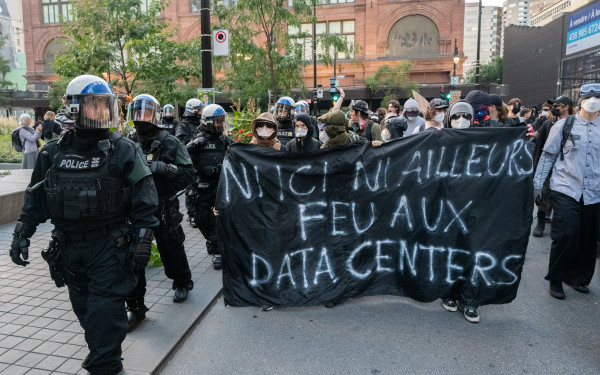
Montreal adopts bylaw to ban insults against police, inciting criticism
Insults, harassment, threats, abuse, intimidation and aggressive or offensive conduct are all punish
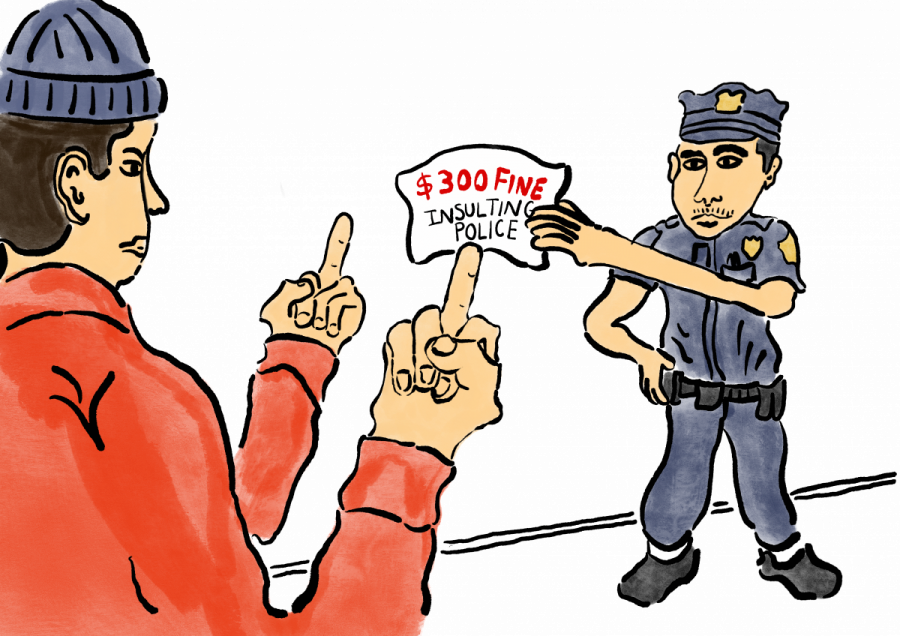
The City of Montreal adopted a bylaw on Sept. 21 to ban people from insulting police officers and other municipal workers.
Under the bylaw, which took effect on Oct. 1, people who insult city staff could face fines between $350 and $1,000 for a first offence. Subsequent offences can lead to fines of up to $2,000.
The bylaw has led to an outcry from both academics and Montreal residents. Two legal groups, the Clinique juridique de Saint-Michel (CJSM) and the Association des juristes progressistes (AJP), filed lawsuits to suspend the bylaw.
Fernando Belton, the CJSM executive director and a lawyer, said the bylaw gives authorities too much power to dictate what justifies offensive conduct.
“Being offended by someone's words should not be enough to justify a fine," Belton said. "Freedom of expression also protects criticism that makes people uncomfortable."
The bylaw follows a similar rule implemented in Quebec City, which has led to more than 11,000 fines since April 2020.
It does not specifically define what constitutes an insult towards a city official. It only states that people are not allowed to intimidate, harass, menace or insult officials while they are acting in their position.
Béatrice Allard, AJP board member and lawyer, said the lawsuit is necessary for Montrealers to retain their rights as citizens. She said police should not have the power to decide which criticism is or is not acceptable.
“We are concerned that it could be used against people speaking out about racial profiling or police conduct, including during protests,” Allard said. “We could wait for several months before hearing on the constitutionality of the bylaw; in the meantime, many Montrealers could have their rights infringed irreversibly.”
Montreal residents worry this bylaw will only add to the numerous powers already held by the Service de police de la Ville de Montréal (SPVM).
Ki’ra Prentice has attended protests where the SPVM were present and said the SPVM attacked her while she was leaving a protest in 2024. She is currently pursuing legal action against the City of Montreal.
Prentice believes the bylaw does not change anything because of the extensive powers the police already use against people.
“People I know have been regularly ticketed under a noise bylaw because the point is not so much to stick someone with a fine, [but] in that moment detain, arrest and humiliate someone,” Prentice said.
She also believes this decision will discourage certain protesters from voicing their concerns when they see police officers behaving violently.
“[The bylaw] makes people think, ‘This is one extra risk that maybe I feel like I’m taking on voicing my discontent because if [the police] see it as a quote unquote insult, then here I am risking my own criminalization, even as I wanted to stand up against the criminalization of someone else,’” Prentice said.
Academics who specialize in ending police violence are also concerned about the bylaw’s expansion of police powers.
“Being offended by someone’s words should not be enough to justify a fine. Freedom of expression also protects criticism that makes people uncomfortable.” — Fernando Belton, CJSM executive director and lawyer
Concordia University associate professor Ted Rutland believes the police already have adequate powers to deal with harassment and threatening behaviour, including charging people with obstruction of justice.
“Intimidation, threats and violence are already crimes under the code. The police have a law they use in these situations, which in English is obstruction of justice, which they can use if someone impairs their ability to do their job,” Rutland said. “The police use that abusively all the time.”
According to lawyer Julius Grey, the main issue with the bylaw is that it restricts section 2(b) of the Canadian Charter of Rights and Freedoms, which grants Canadians the right to freedom of thought, belief, opinion and expression, as well as freedom of the press.
“Freedom of expression is not only for polite and balanced views. [...] In the case of police officers and municipal employees, it would be a real reduction of freedom of expression to say insulting them is never permitted. Free expression is precisely there to preserve the right to be outrageous,” Grey said.
Additionally, the SVPM has been under recent scrutiny due to allegations of racial discrimination, police violence and surveillance.
However, Ensemble Montréal has dismissed criticisms of their bylaw. The Canadian Press reported that Mayor Soraya Martinez-Ferrada said: “Just giving the middle finger to a police officer would not justify a fine.”
The Link asked the SPVM for comment, and it referred the request to the City of Montreal.
The City of Montreal told The Link it would not comment given the matter is currently before the court.
The Fraternité des policiers et policières de Montréal, which represents the SPVM, said it welcomes the bylaw's adoption in a press release on Sept. 21.
The hearing on the suspension of the bylaw is scheduled for Thursday, Oct. 8. Grey believes the lawsuit has significant credibility and a strong likelihood of succeeding.
“There was an earlier bylaw in Montreal that was set aside by Justice Randall Richmond and one in Quebec [City] that was upheld, but I think on the whole this challenge should succeed,” Grey said.
However, Parti Québécois (PQ) leader Paul St-Pierre Plamondon has shown support for the Montreal bylaw and called it a starting point for expanding restrictions on insulting police across the province.
“What the PQ and other right wing populist parties offer is that they’re gonna make things worse for somebody else. So it’s zero surprise that he would support this. And it’ll do the same thing as it does in Montreal,” Rutland said.
Rutland thinks the bylaw will be challenged and defeated.
"All Quebecers will support, through their taxes, a team of lawyers to defend a law that shouldn’t have been passed in the first place,” Rutland said.
This article originally appeared in Volume 47, Issue 3, published October 6, 2026.




_600_375_90_s_c1.jpg)