The problem with restaurant gap relationships
Would you rather have a restaurant gap relationship or eat alone forever?
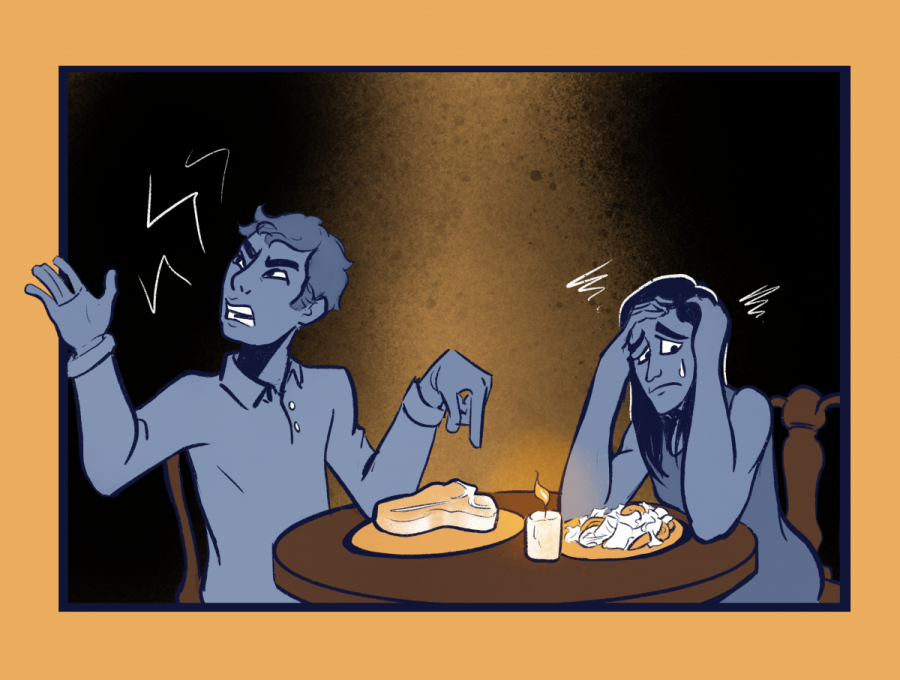
Picture yourself out on a first date, and you're really hitting it off. The restaurant is really fancy, not something you’d usually spend money on. Then, your dinner is served, and you realize your date has a massive steak on their plate while you are a hardcore vegetarian. Later that night, you're starving because your date made you eat three hours earlier than you normally would.
This is what is known as “the restaurant gap,” which refers to any difference in meals and eating habits. These can include differences in diet, mealtimes, money spent on food and waitstaff treatment. A New York Times article defines the restaurant gap as “a misalignment in tastes, spending habits and culinary curiosity.”
The real question is whether this is a relationship dealbreaker. Let me tell you exactly why it should be.
The biggest difference in dining habits (and the hardest to overcome) is how someone treats the waitstaff. When your partner or date treats the waitstaff terribly, it’s an extension of how they see other people. The restaurant gap can reveal a complete lack of empathy.
I can't imagine the audacity of someone to behave disrespectfully toward a person just trying to get through a shift. I’ve heard horror stories beyond belief: your date realizes their steak isn’t cooked the way they wanted it, snaps their fingers to call over a server and berates them for what feels like 20 minutes. Someone is simply doing their job; you don't know how their day has been, and yet you think that it's okay to treat them badly?
Maybe they can’t picture themselves in that role, so they act superior. They're showing you that they believe some people deserve to be treated badly simply for trying to do their job and earn a living. If someone can treat strangers like that, how will they treat you?
Though such differences in dining habits may not always be as extreme, smaller gaps can still cause irreparable fractures.
For example, it might not seem like a big deal to eat at a different time than your partner, but it could quickly become an issue in the relationship. Say you’re both working full time, or have very different class schedules; you might not have that much time to spend together. Just as opposite sleep schedules can cause issues, losing one or more mealtimes a day can too.
Whether we like it or not, much of our social lives are centred around food. When dinner or breakfast times differ for each partner, couples can lose quality time together. For many couples, shared meals at the end of the day are the perfect—and sometimes only—opportunity to connect and check in. Without this joint routine, the window for connection can shrink significantly.
The same goes with different diets or food restrictions. If one partner is vegan and the other loves meat, it can quickly cause tension. This mismatch can mean more than just missing out on connecting over food or not being able to cook together. You’re lacking the intimate, shared experience of trying food together.
A study found that providing food helped participants connect and start conversations with each other. This means being on the same page about food can be essential to creating that initial connection between partners. One partner might even try to match the other's food habits and say goodbye to some of the food they love. Is that a sacrifice you’d be willing to make?
These might not seem like big issues, and you can choose to ignore them, but I urge you to keep restaurant habits in mind when looking for a partner. Little things add up quickly. If I had to go to a big, expensive steak restaurant every time I went out with someone, I wouldn't be seeing that person very often.
This article originally appeared in Volume 47, Issue 3, published October 6, 2026.