Gaza benefit concert at Turbo Haüs channels resistance
Montreal’s underground takes a stand for Palestine
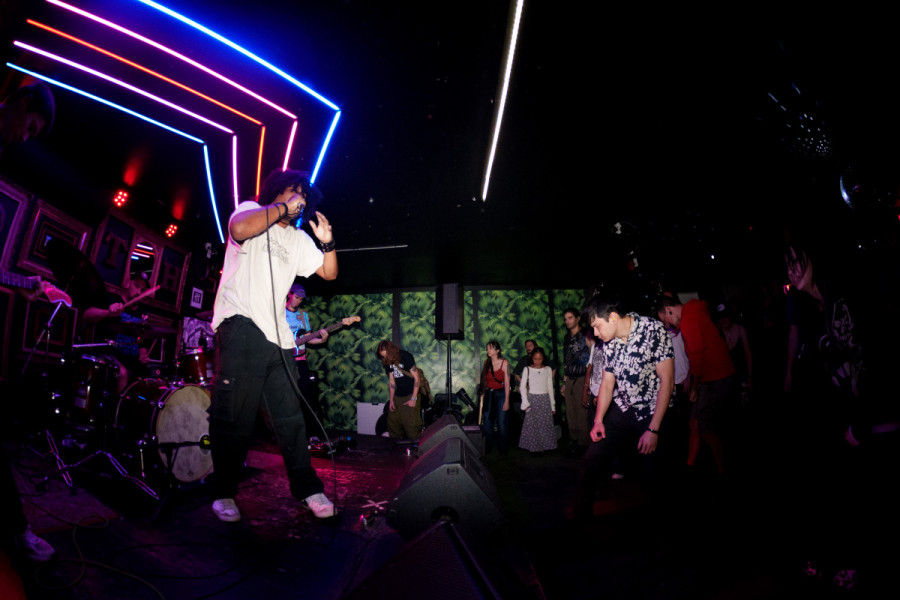
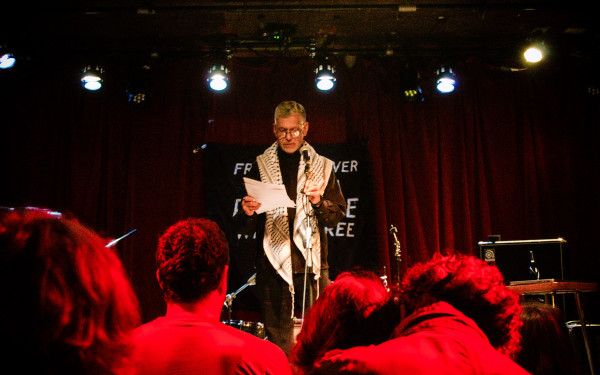
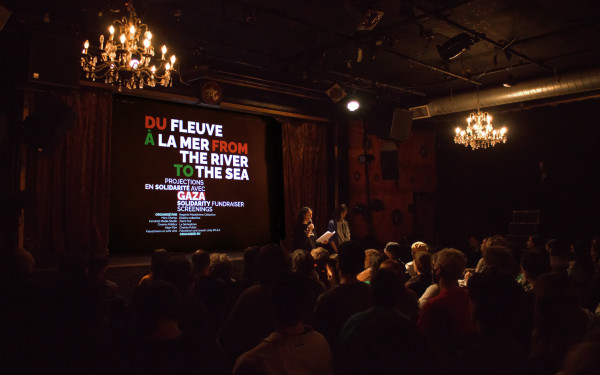
Turbo Haüs overflowed with people on the night of Sept. 11, the crowd spilling out onto St. Denis St.
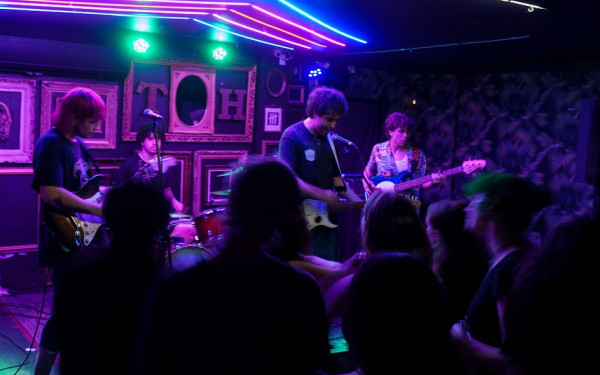
A blend of noise, sweat and solidarity filled the venue as four Montreal bands from across the city’s underground music scene—Dying of Thirst, La Fatigue, Slouche, and Eric Spinelli—played a bilingual Gaza benefit show.
Hardcore, grind band Dying of Thirst organized the event, not only curating the lineup but also playing a blistering closing set. All ticket and merchandise proceeds went to the Palestinian Youth Movement of Montreal, a grassroots organization dedicated to Palestinian liberation and youth empowerment.
For Dying of Thirst and La Fatigue bassist Tarek Smirani, organizing this show represented both a musical and political necessity.
“Our singer Nick is half Black and half Inuit, so decolonialism—from a North American point of view—has always been central to our lyrics,” Smirani said. “For me, coming from the hardcore and grind scenes, those genres are inherently political. Supporting Palestine feels like a natural extension of that.”
The bill was intentionally mixed. Screamo bands Eric Spinelli and La Fatigue brought chaotic, razor-sharp energy, while Slouche carved out a wall of noise-rock feedback and fuzz. Dying of Thirst closed with a relentless hardcore set.
The genre mix reflected the shared anti-establishment roots of each style, showing how punk and experimental scenes can converge for a common cause.
For Jordan Lang, guitarist of Eric Spinelli, the decision to play came easily as the band had already played in solidarity with Gaza.
“Back in January, we played another benefit show in Toronto for Gaza,” Lang said. “It’s important because people are dying, and there’s not much we can do about it except lend what little help we can.”
While Eric Spinelli’s lyrics aren’t overtly political, Lang sees their music as connected to something larger than personal expression.
“But all of us, as a movement, do see [screamo] as having some purpose besides just screaming,” Lang explained.
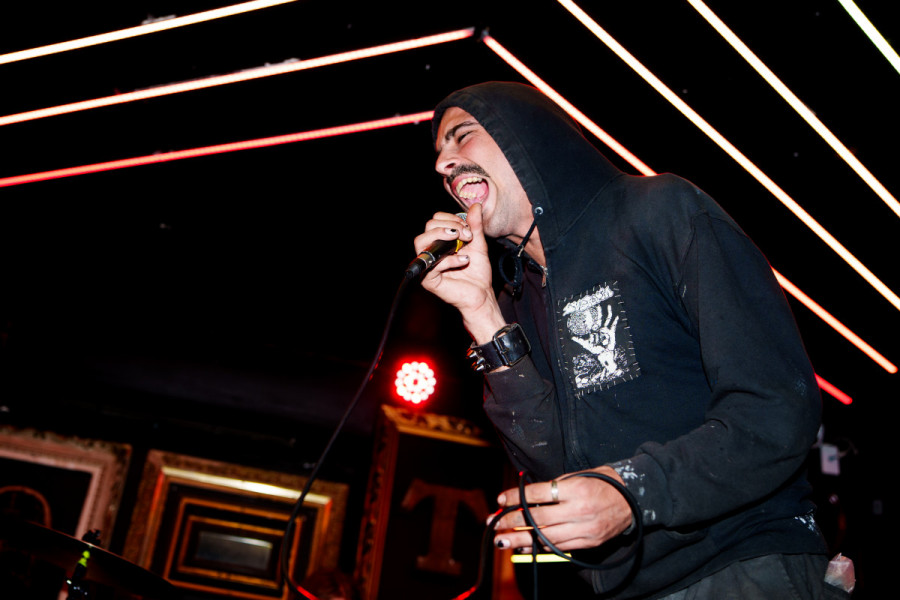
“If I can generate any good through playing music, I’m going to try,” Roy said. “Art is always political.”
His guitar work mirrors this push and pull between mayhem and tranquillity.
“Some songs might be aggressive all the way through, but a lot of them have an extremely melodic, cohesive section,” Lang said. “I think, in a lot of ways, I try to evoke an imagery of chaos and imbalance.”
David Roy, guitarist for Slouche, saw playing the benefit as an obvious choice.
“If I can generate any good through playing music, I’m going to try,” Roy said. “Art is always political.”
For Roy, noise rock carries its own kind of rebellion. He describes the sound as being built on distortion and tied to opposition.
“Noise music has always been anti-fascist and anti-establishment,” he said.
That sentiment came through in Slouche’s set. The night felt deeply communal, with friends greeting each other and strangers sharing the pit.
That collective energy resonated throughout the night. During Dying of Thirst’s closing set, the crowd surged forward, bodies colliding in the pit while voices shouted lyrics back at the band—a unifying moment.
The benefit show turned solidarity with Gaza into tangible, local action. It raised funds and awareness while giving people a space to channel grief and anger collectively.
The show reminded audiences that music can provide both an escape from politics and a direct confrontation of it.