Do it for the Vine
A eulogy for 2016 and the internet we lost
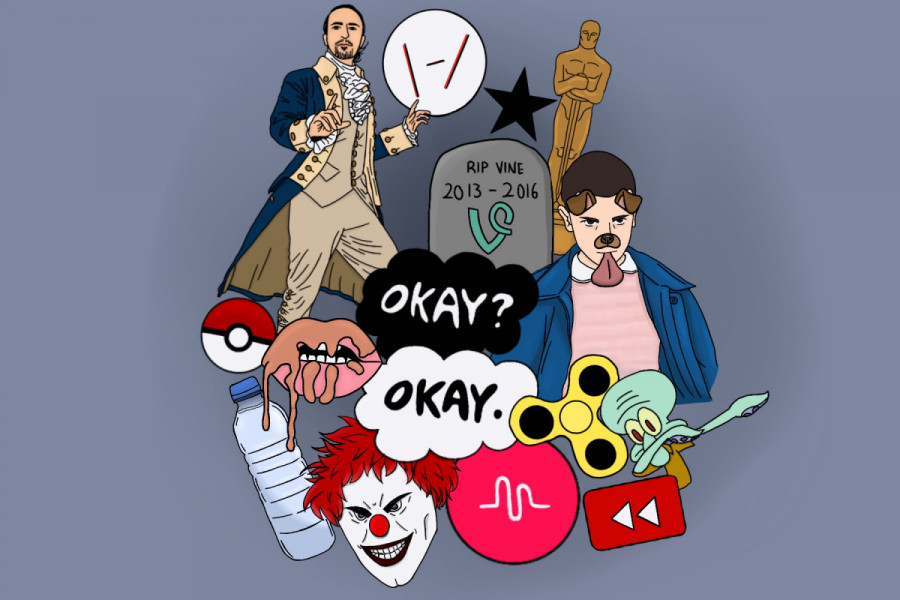
Picture this: Snapchat filters are all the rage, “Closer” by The Chainsmokers is playing in every store, and Trump has yet to take office. It’s 2016, and everything feels lighter than you’ll ever remember it being again.
I think I speak for everyone when I say that we’re all yearning for the nostalgic in an attempt to cope with the gruelling reality of 2026, the tech takeover and the billionaires in office who drive an erosion of optimism.
We often refer to 2016 as the year the timeline shifted. It was one of the last moments that felt uncomplicated, before everything sped up: the political instability, climate disasters, economic strain and online radicalization.
After that blissful year, every one of us witnessed the pace of crisis snowball into worldwide chaos, so it makes sense that people feel such a strong pull toward the nostalgia of a simpler time. Young millennials are now in their early 30s, and Gen Z is climbing steadily into our 20s, so the version of life we feel nostalgic for is that brief, carefree stretch of youth from a decade ago.
I joined Instagram in 2016, posted grainy photos of The Fault in Our Stars or latte art for 11 likes, and it was awesome.
Social media wasn’t filtered through a performative lens, and you could peacefully scroll to catch up with friends' lives.
Now, all I see are horrifying headlines and graphic videos, and every single app on my phone has become an advertisement landmine. Pinterest, meanwhile, has been rendered nearly unusable because of brand deals, sponsored content and AI slop.
Alongside the trend of looking back on 2016, the internet has also become obsessed with going analogue. People are starting to crave a life that’s more offline, more present and less mediated by screens. It’s reflected in the way people document their lives now, leaning toward grainier photos, physical keepsakes and paper. There’s also been the reminder that digital life is fragile, and entire archives can vanish without warning.
The internet of the 2010’s was carefree, and life was a lot more colourful. Meme culture had reached its peak, and nothing felt too serious online. Rap music peaked, YouTubers reigned supreme, and the bright aesthetics of the Tumblr flower girl made that summer feel like a movie.
In summer 2016, I kept up with friends via Snapchat and FaceTime. Now, if I don’t constantly refresh TikTok, I miss their videos and thus, their life. We’ve shifted from an internal, personal use of the internet to external performance.
In glorifying the performative aspects, there has been a complete oversaturation of digital life.
The pressure to share, to keep up, to show everyone you’re still doing well in these awful times has turned social media into performance. Instead of connecting with the people who matter, we end up broadcasting stability to strangers.
A decade ago, social media used to hold little moments. Now, it’s a noisy feed of consumption and crisis, where connection feels like the thing that gets pushed furthest down the page.
But what is the simplest answer as to why we all yearn for 2016?
The internet is in unanimous agreement that the death of that damn gorilla is to blame.
This article originally appeared in Volume 46, Issue 8, published January 27, 2026.