Care in every stitch
Iris en ciel approaches leatherwork through intimacy and intentionality
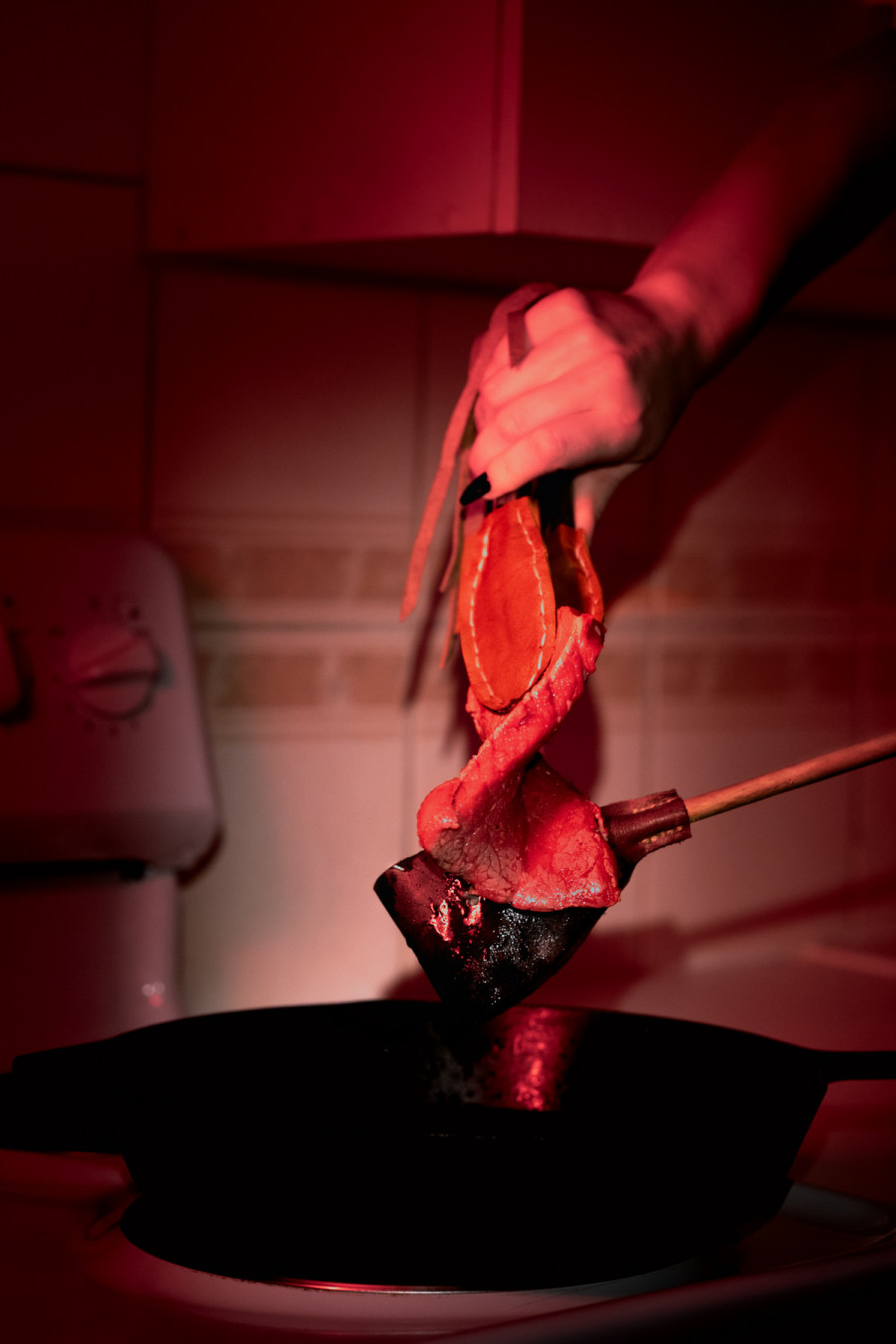
In the fall of 2024, in a small Montreal studio, turned half-bedroom-half-workshop, Iris en ciel took its first breath.
Founder and leatherwork artist Isabelle Mills creates pieces rooted in queer intimacy, exploration and gender-affirming care. Deeply inspired by kink culture, Iris en ciel transforms objects often associated with sexuality into intimate, intentional art.
“I want my work to feel intimate, not just sexual,” Mills said.
Their introduction to working with leather was entirely informal. What started as a sustainable way to salvage fabric from a couch evolved into a series of experimental red-leather pieces.
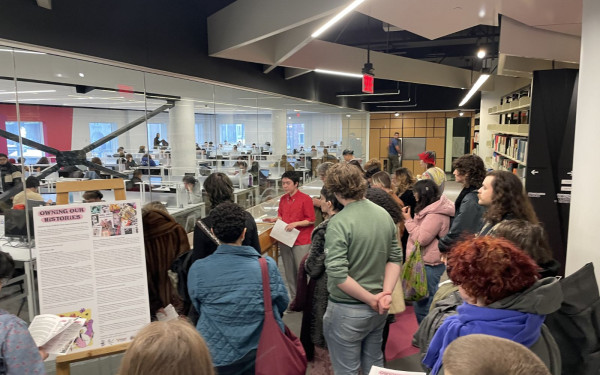
Over time, Mills’s work became more intentional. Rather than sourcing leather from their immediate surroundings, they started visiting local leather shops like Cuir Di Zazzo. A residency with the Fine Arts Reading Room at Concordia University allowed them to deepen their understanding of the material.
In 2025, Mills began questioning how leather could be reshaped into new forms.
They also added a major in sexuality to their current sculpture BFA to better comprehend the history and implications behind creating more personal pieces, something that continues to inform their work.
Leather became more than a medium of art; it became skin, something that carries weight, memory and responsibility.
Designing leatherwork is a challenging task. From a stranger’s outfit to a moment in nature, anything can spark an idea, but the process of creation is slow and tenacious.
Each piece requires patience, physical endurance and a willingness to sit with the material. This slowness is intentional, resisting mass production and fast consumption.
Before a piece is made, Mills begins with a conversation.
“I want the ambiguity of like, ‘I’m not going to tell you what I have, but I want to feel like I’m powerful and I love myself in my body.” — Isabelle Mills
They ask clients why they want the object, what it represents, and how it will be used. While clients are free to share what they’re comfortable with, the questionnaire is essential to the process.
It allows Mills to connect with their customer and design something that reflects the client’s needs rather than imposing an aesthetic.
“When I create a piece, and someone finds it, and it fits them properly, it brings them so much joy,” Mills said. “I just want it to be exactly what they want.”
When it comes to custom and kinky pieces, Mills describes the process as personal and, at times, intimidating. To navigate this, they often draft multiple designs, carefully considering materials, textures and how each leather will feel against the body. Every element is chosen with the wearer in mind.
For Zevida Germain, client of Iris en ciel, commissioning a custom piece was a collaborative experience. Rather than placing an order and receiving a finished product, Germain was involved at every stage of the process, from early conversations to final decisions.
“It feels like you’re getting a piece that someone really cares [about]," Germain said. "They care about the process, and they care about whether you’re gonna love it."
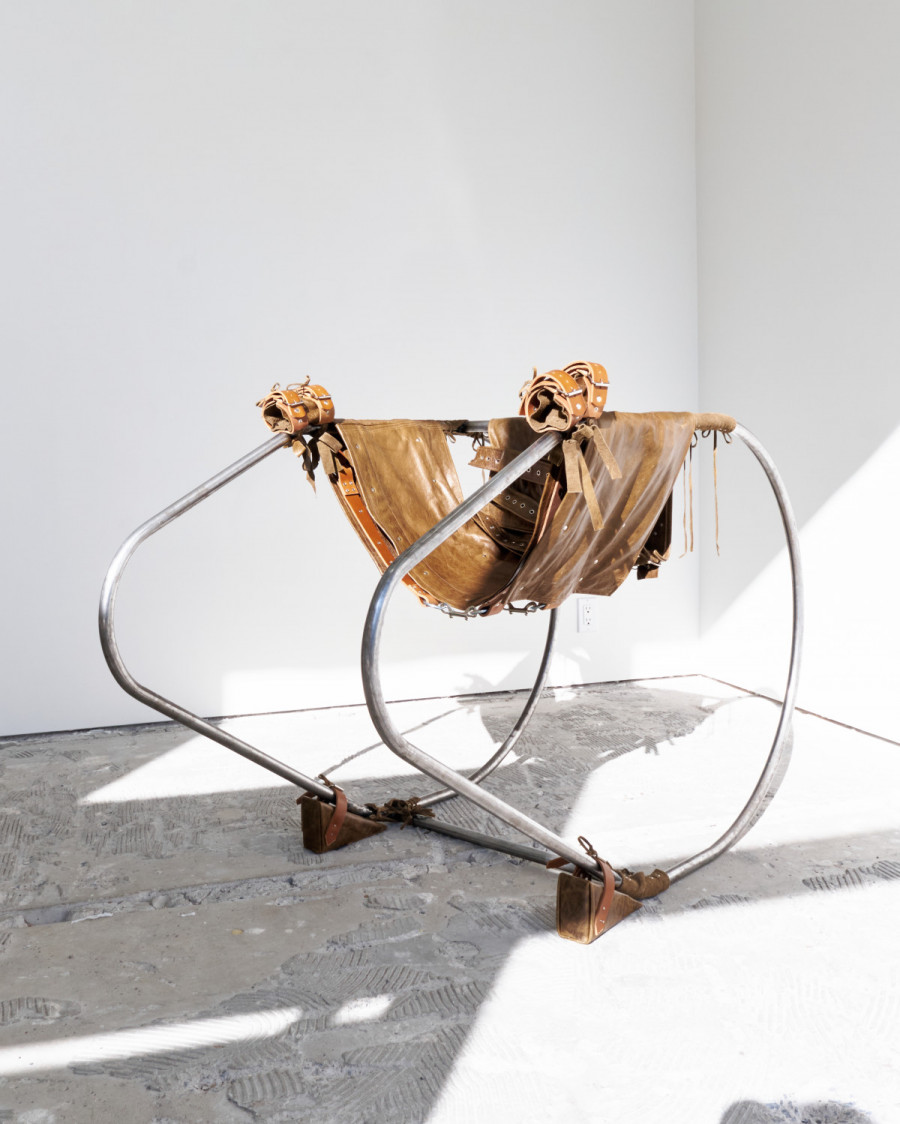
As a non-binary artist, Mills discovered a gap within the leather community, where many pieces are designed primarily through a bondage-focused lens rather than as an expression of gender.
In response, Mills created the Heart Packer series—packers designed specifically for non-binary individuals with vaginas. The series reframes a body part that’s often sexualized or hidden by society, and frames it as powerful.
“I want the ambiguity of like, 'I’m not going to tell you what I have, but I want to feel like I’m powerful and I love myself in my body,'” Mills said.
Through Iris en ciel, Mills has found a way to make gender affirming pieces accessible, and their work continues to be incredibly important.
Beyond the studio walls and the personal client interactions, Iris en ciel’s work resonates within broader community wellness spaces.
For Omene Akpeokhai, president of Sex and Self Concordia, Mills’ practice reflects a shared commitment to non-traditional forms of care. The student-run organization provides sexual health, gender-affirming and wellness resources to students and community members.
“Trans, non-binary and gender-diverse people are frequently viewed through a medicalized lens,” Akpeokhai said. “To engage with such work through a creative and personal outlook, especially from someone who is telling a story through their experience, is sincere and lovely to see.”
Akpeokhai understands this labour as intentionally unbound from institutional frameworks, shaped instead by the needs and voices of the community it serves.
“The work we do is quite untraditional to typical forms of sexual and gender-based educational programming,” Akpeokhai said.
Sex and Self Concordia previously featured Iris en ciel’s Heart Packer series in its first-ever sex magazine, Sex(Ed.), which launched in March 2025. The magazine features student submissions across mediums, exploring sex and sexuality through personal experience.
Mills’s leatherwork is more than a simple skill or a craft; it is a constant commitment to connect and help with their community. Iris en ciel offers safety, a sense of validation and a sense of belonging that is often denied to trans and non-binary people. Their art is inherently rebellious, as it resists what and where art is supposed to be.
“There’s this idea that the art I create needs to fit in a gallery setting, and this is something I constantly struggle with as an artist [who] creates work that doesn’t normally find itself in [those places],” Mills said.
The exploration of leatherwork through intimacy, gender and kinks continues to shock, but this art is not only meant to be looked at; it’s also meant to be worn, to be used. It doesn’t only live in queer spaces, it lives in the world and deserves to be seen.
At its core, Iris en ciel makes space for everybody. The intention behind each stitch and concept speaks to the work’s purpose.
With files from Safa Hachi.
This article originally appeared in Volume 46, Issue 8, published January 27, 2026.