A softer way back to creativity
At Soft Studio Days, Taia Lajoie is carving out a quieter, softer and more human approach to creativity in Montreal
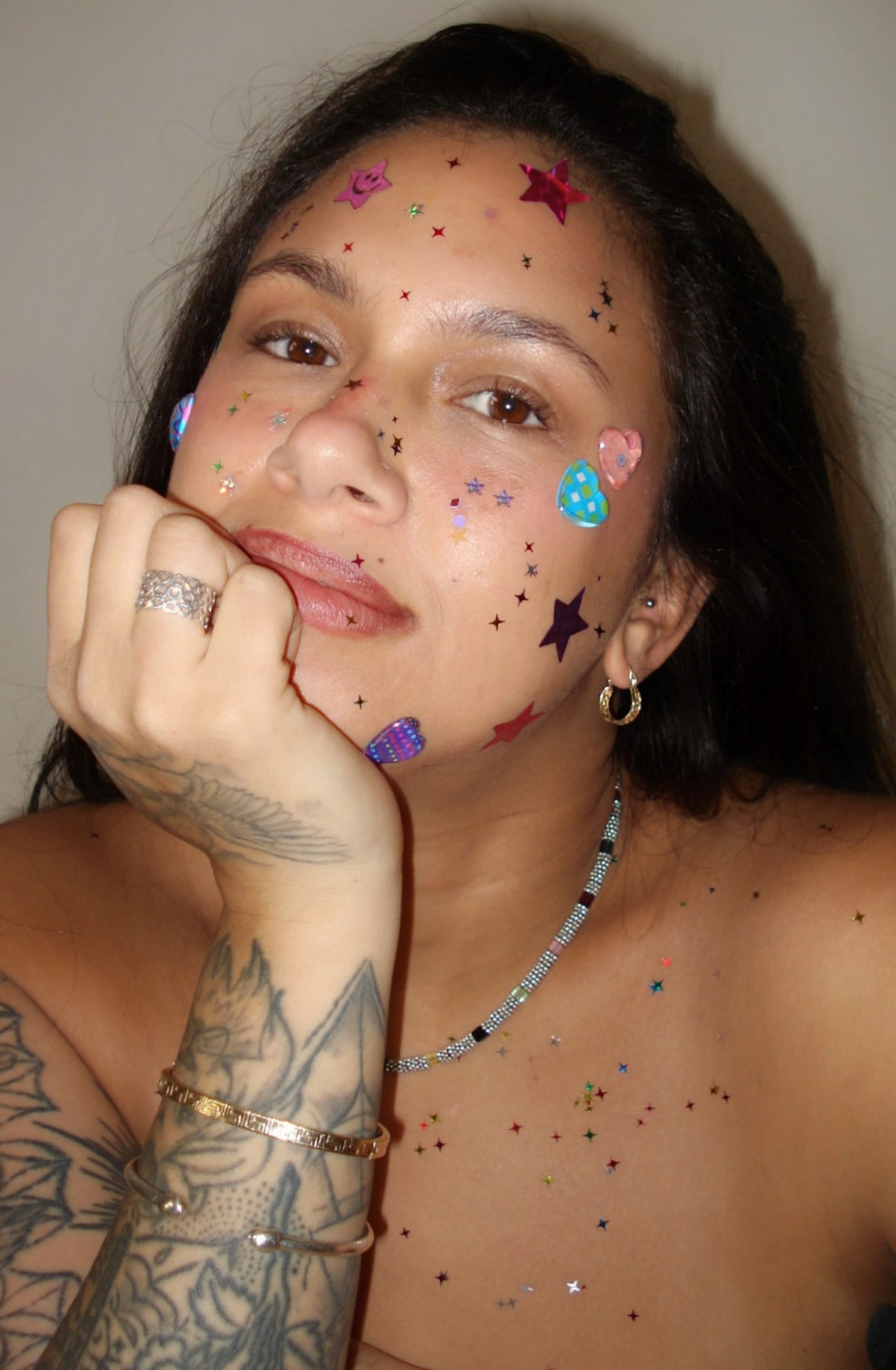
On a quiet residential street in NDG, just a short walk from Vendôme Metro station, adults gather inside a softly-lit studio that smells faintly of eucalyptus.
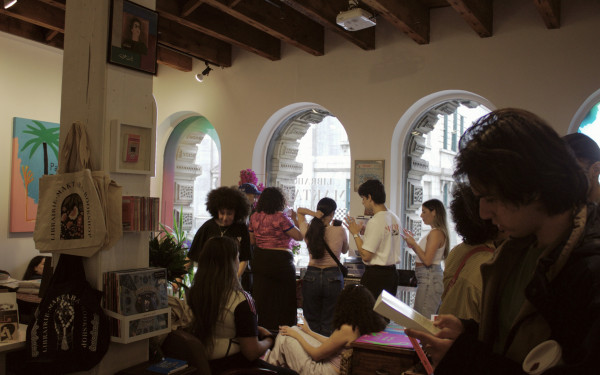
Soft music hums in the background. The lighting is warm. Tables are scattered with magazines, scissors, clay, scraps of paper and half-finished projects. Hugs are offered freely. For a few hours, attendees leave the urgency of the outside world at the door.
This is Taia Lajoie’s Soft Studio Days, a space that hosts small, guided art workshops ranging from collage and clay work to journaling and mixed-media projects. With a focus on beginner-friendly sessions, participants are encouraged to experiment, play and create without pressure.
“I’ve created a space that’s not just about how it looks,” Lajoie said. “It’s about how it feels.”
Virginia Lauzon, a close friend of Lajoie’s and a frequent attendee, describes the studio as a place that immediately puts people at ease.
“Imagine landing on a soft, cosy cloud at the end of a long week,” Lauzon said. “That’s what the events are like.”
For Lauzon, who is neurodivergent, the attention to detail when it comes to sound and lighting is especially meaningful.
“This studio feels like home,” Lauzon said. “It’s warm, inviting and the kind of safe space you can truly be yourself in without judgment.”
For Lajoie, that distinction remains central. Born and raised in Montreal, she describes herself as someone who has always been creating. From sewing and knitting to journaling, scrapbooking, painting and tattooing, she never limited her creativity to one medium.
She began drawing for a tattoo shop at 12 years old. By 16, she was tattooing. Her father, who owned the shop, played a major role in shaping her early relationship to art.
Though Lajoie was accepted into the fine arts program at Dawson College, formal art education quickly felt restrictive.
“I was very much a person that just kind of created based off of what I was feeling,” she said. “And that wasn’t allowed in the program.”
Instead, Lajoie forged her own path. For nearly a decade, she worked in tattooing and aesthetics, eventually founding her own beauty studio. The work was meaningful, but something else lingered beneath the surface: a desire to create without performance, without outcome, and alongside others.
That intention was present long before Soft Studio Days became a physical space, according to her partner, Brandon Srey.
“She doesn’t plan events like events,” Srey said. “She plans them the way someone prepares for family to come over.”
The idea for Soft Studio Days first surfaced four years ago. Lajoie imagined hosting gatherings where people could come together to make art without the pressure of networking, partying or productivity. At the time, life intervened, and the idea remained on hold.
“A piece of her heart and home broke off of her and materialized into a physical place.” — Brandon Srey
It wasn’t until the fall of last year, after a period of significant personal loss and shifting relationships, that the project returned with urgency.
“I lost a lot of relationships,” Lajoie said. “And it made me realize that I never had a place where I could just be me.”
Soft Studio Days opened its doors as a studio where adults could return to creativity the way many remember it from childhood: freely, imperfectly and without expectation.
At the heart of the project is softness, a word Lajoie uses intentionally. She speaks openly about growing up with tough love, about being hard on herself and about learning how to care in gentler ways. That philosophy shapes every detail of the studio, from the pacing of workshops to the sensory environment.
“I’ve created a space [where] it’s not just the way that it looks, but it’s the way that it feels,” she said. “When I’m creating, I like to feel comfortable and safe. If I don’t, I can’t create the way that I want to.”
The atmosphere is deliberately calm; incense burns lightly, and music stays low. A quiet area waits upstairs for anyone who feels overwhelmed. Lajoie is attentive to how sound, light and scent affect people’s ability to settle into the space.
Srey describes waking up to freshly baked cookies, hand-drawn stickers, seasonal decorations and art supplies Lajoie has carefully chosen because she imagined someone might need or enjoy them.
“A piece of her heart and home broke off of her and materialized into a physical place,” he said.
The workshops themselves, while varied, remain rooted in a shared sense of nostalgia.
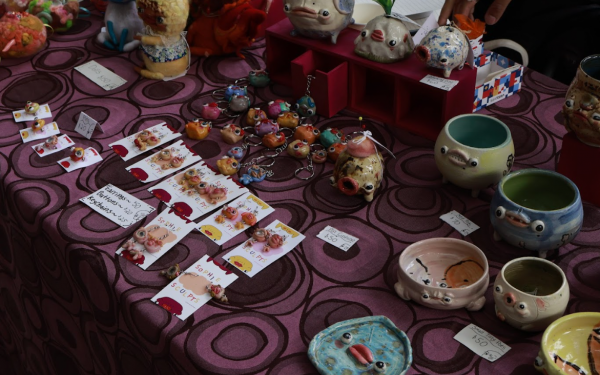
Monthly collage clubs encourage participants to rip, crumple and cut without hesitation. Junk journaling sessions invite people to collect receipts, tags and scraps from their day and transform them into something personal, while clay nights bring participants back to the tactile pleasure of shaping objects by hand.
Other events lean further into that playful instinct. Vision board workshops, handmade journal covers, charm-making sessions and cake-decorating nights all centre on the joy of experimentation rather than a finished product.
Lajoie emphasizes that mess is welcome and even encouraged. At Soft Studio Days, creativity doesn’t need to be neat, productive or polished to carry meaning.
“I’m really trying to bring back all of the roots of childhood,” Lajoie said. “All the things maybe some kids didn’t get to play with, or didn’t get to be messy with. The whole idea is: get creative, get messy and don’t worry about the rest.”
A consistent message runs through all of the programming: experience is not required.
“A lot of people come in, and they’re like, ‘I’m not crafty at all,’” Lajoie said. “And I’m like, that’s OK.”
Rather than providing step-by-step instructions, Lajoie offers prompts and examples, encouraging participants to test their limits and follow their intuition.
That approach, Lauzon notes, often turns strangers into community. People arrive alone and leave having exchanged contact information, eager to stay connected and support one another’s creative work.
“Many of us still struggle to join communities in real life,” Lauzon said. “It’s like we forgot how to ‘people.’ Soft Studio Days is our reminder that getting out of the house, trying something new and meeting people can actually be simple, fun and rewarding.”
For Srey, opening the studio hasn’t changed Lajoie but rather amplified her.
“All of her best qualities have grown louder and brighter,” Srey said. “You can see how deeply fulfilled she feels having a space that finally reflects her.”
While Montreal is known for its DIY culture and experimental art spaces, Soft Studio Days occupies a quieter lane. It focuses less on showcasing finished work and instead emphasizes process, presence and connection. Lajoie sees art and community as inseparable.
“You don’t have to have an art degree,” Lajoie said, “you don’t even have to have ever picked up a pencil [...] It’s not about execution, but about letting go.
This article originally appeared in Volume 46, Issue 7, published January 13, 2026.