The Rover screens their documentary ‘Palestine on Campus’
A powerful screening and panel lay bare the fight to keep pro-Palestine voices heard on campus
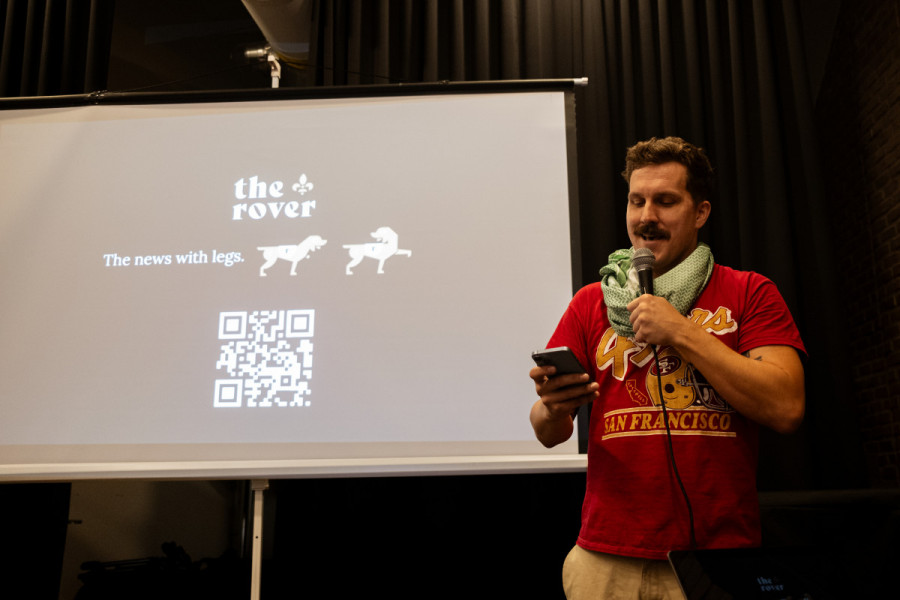
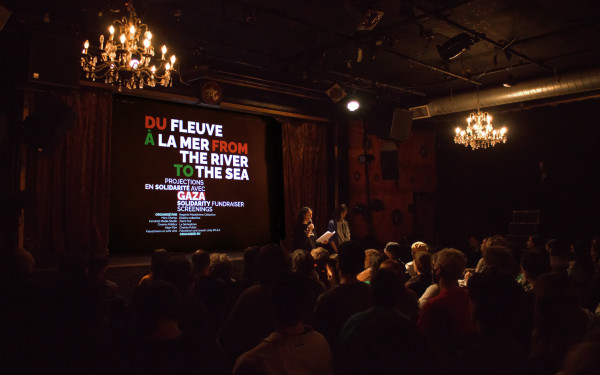
On Sept. 16, The Rover hosted a screening of their documentary “Palestine on Campus,” which aimed to explore the repression and backlash pro-Palestine students face at Canadian post-secondary institutions.
The 30-minute-long documentary served as a look back on the past two years of pro-Palestine student activism in Montreal and the measures institutions have taken to prevent demonstrations, such as injunctions and heavy police presence on campus. Activists detailed their experience with police brutality, political repression and the fight against their school administrations.
Savannah Stewart, the documentary’s lead journalist and managing editor of The Rover, spoke about the role and importance of independent media.
“We are seeing the censorship in larger media, and they may have all sorts of reasons for it, but at the end of the day, it is censorship,” she said. “Luckily, independent media is not beholden to hedge funds, to big donors who try to sway content this or that way.”
Stewart continued by explaining that The Rover wants to serve the Montreal community and that “ it is abundantly clear that people care about the Palestine movement and want to hear about it.”
Following the screening, The Rover hosted a panel that aimed to explore the past, present and future of the student movement for Palestine.
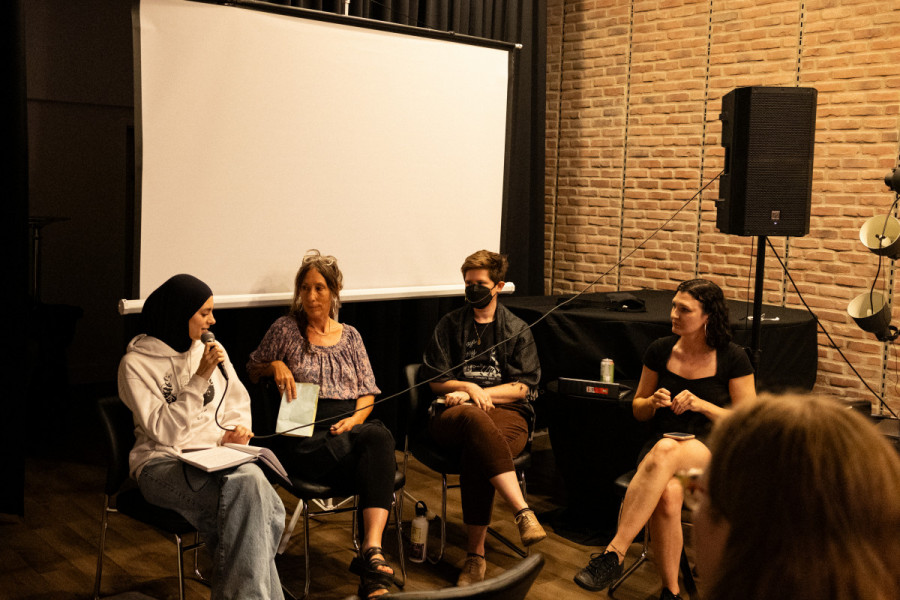
One of the featured panellists was Danna Ballantyne, external and mobilization coordinator at the Concordia University student union. She shared her experience with being an activist for Palestine, a place she calls home.
“As a Palestinian, I am acutely aware of the surveillance I’m under. I am aware of it since the first time I went to Palestine. I am aware of it, as my friends at home are being killed,” Ballantyne said.
Alongside Ballantyne was Gwendolyn Schulman, a former anti-apartheid student activist and co-founder of Amandla, CKUT radio's African current affairs program, which ran from 1988 to 2024.
Although she sees parallels between the current pro-Palestine movement and the 1960s anti-Apartheid South Africa movement, she believes that activists today have harsher conditions from their school administrations and government.
“I see what is going on today with Palestine solidarity on campus, and I just want to hold my head and cry,” Schulman said.
She explained that although anti-Apartheid students faced several bureaucratic challenges, McGill University would never call the police on campus, due to their fear of negative publicity.
“[The administration] wanted to try to just wait us out, and [the protests] would just go away,” Schulman said. “That’s why I am so shocked when I see the footage today of the high police presence. It’s a complete change in McGill’s mentality and its approaches to activism.”
Rine Vieth, a social scientist and socio-legal scholar, also spoke at the panel, reflecting on the increase of police and private security on university campuses.
“I think there is a huge loss of faith, and I think that that matters,” they said. “I think universities should be there to serve the public, universities are there to serve the students, and it makes me so angry to see senior administrations send police after students. Because of this loss of faith, I don’t think a good-faith conversation is possible.”
The event wrapped after an hour of questions and conversation with the panellists.



_600_375_90_s_c1.jpeg)