The knowledge gap behind anti-union messaging
When legal literacy is absent, fear becomes the default
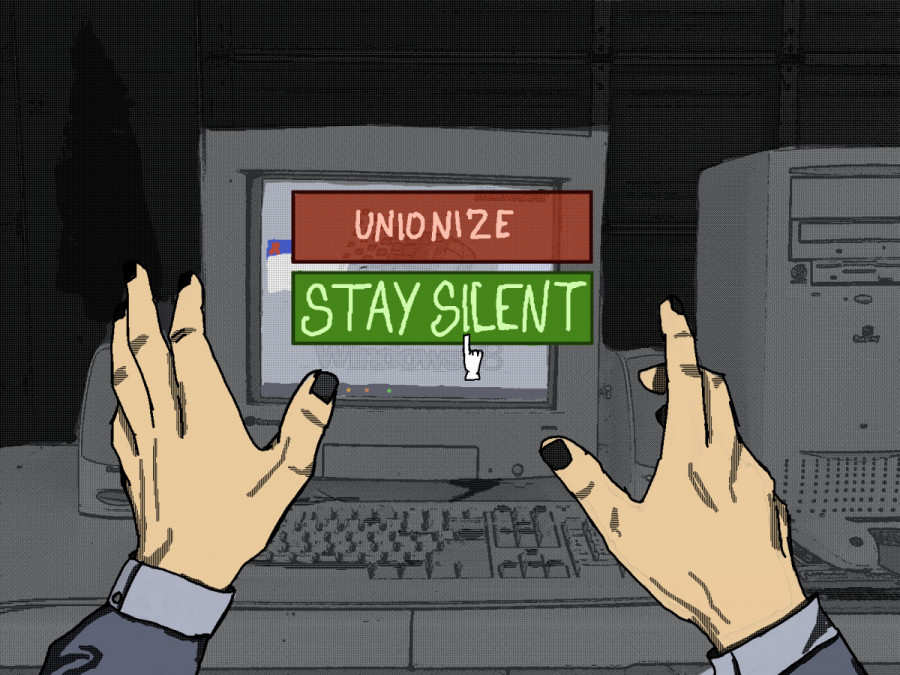
Before workers are ever asked whether they support unions, a quieter decision has already been made for them.
Labour rights are rarely explained with the same clarity or urgency as workplace rules. There is no onboarding slide on protected organizing, no plain-language explanation of what retaliation legally means, no moment where workers are told what power they are allowed to exercise together.
Instead, silence does the work. In that silence, fear becomes the default, and anti-union messaging doesn’t need to convince; it only needs to arrive first.
Workers are trained extensively in compliance. They learn codes of conduct, reporting hierarchies, performance metrics and the consequences of getting things wrong.
What they rarely learn is the legal framework that governs their rights at work. Collective bargaining protections, limits on employer retaliation and the conditions under which organizing is lawful are treated as peripheral, if they are mentioned at all.
Employers, meanwhile, are deeply familiar with these boundaries. They understand how workplace rules interact with labour law, and how organizing can be discouraged or delayed without triggering immediate consequences. This imbalance of knowledge is not incidental; it is structural, and it shapes the terrain on which every “choice” about organizing is later made.
Anti-union messaging enters precisely at this point of uncertainty. It does not need to argue against collective action so much as it needs to define it first. Warnings about job security, dues or workplace “disruption” land differently when workers have never been told what the law protects or how power is meant to be exercised collectively.
In the absence of legal literacy, these messages do not feel like persuasion; they feel like caution. Organizing is framed as a personal risk rather than a protected activity, and fear becomes indistinguishable from professionalism.
This dynamic was underscored in 2025, when the B.C. Labour Relations Board found that Amazon had manipulated hiring during the certification period.
The company had run a “lengthy and pervasive” anti-union campaign, including increased management presence, one-on-one meetings, anti-union messaging, and inducements such as relaxed policies and incentives, undermining free choice so severely that the union was certified without a vote, a remedy reserved for serious interference.
Similar patterns were documented internationally in 2023, including in U.S. labour board findings involving Starbucks, where anti-union campaigns and retaliatory firings were found to have interfered with organizing efforts.
When workers are said to “choose” not to organize under these conditions, the choice itself deserves scrutiny. A decision made without access to basic legal information is not neutral; it is constrained.
This arrangement benefits those who already hold institutional power. When uncertainty discourages organizing, employers retain unilateral control over wages, schedules and working conditions without needing to actively suppress dissent. Compliance is internalized as professionalism, and restraint is rewarded as maturity.
Over time, workers learn that asking fewer questions is safer than asserting rights they do not fully understand. The result is not open opposition to collective action, but quiet marginalization.
In Quebec, this logic is now being tested before a labour tribunal, where unions allege that the sudden closure of multiple Amazon warehouses following organizing efforts functioned as a deterrent to collective action.
This dynamic gradually reshapes how workers understand participation itself.
When rights are obscured, and caution is rewarded, collective action begins to feel abnormal, even inappropriate. Workers learn to navigate institutions by minimizing friction rather than questioning authority, carrying these habits from job to job.
This same knowledge gap shows up on campus, often through institutional language that presents labour relations as a technical administrative matter rather than a lived question of rights and power. Concordia University maintains formal labour relations and collective agreement resources, but these frameworks rarely translate into the kind of plain-language literacy most student workers need in practice.
At the same time, student life is structurally tied to part-time work, with campus systems actively guiding students into jobs through tools like the CAPS and HOJO job banks. All the while, students often rely on the Concordia Student Union's advocacy and legal information support when problems arise.
In this environment, uncertainty does what explicit messaging doesn’t need to: it makes collective action feel complicated, risky or simply “not for people like us.”
A fair labour system would begin by treating legal literacy as basic infrastructure rather than optional knowledge. Workers should encounter their rights with the same clarity and regularity as workplace rules, through plain-language explanations of what collective action protects and what employers are prohibited from doing.
This is not about steering workers toward or away from unionization, but about restoring symmetry to a system built on imbalance.
That symmetry matters even at the policy level. In late 2025, several major Quebec labour federations launched a court challenge against provincial legislation they argue grants the government broad discretion to curtail strikes. It’s a reminder that uncertainty can be embedded not only in workplaces, but in law itself.
This is not a failure of individual courage or awareness; it is the predictable outcome of a system that teaches compliance more carefully than rights.
If we are serious about choice, fairness and democratic participation at work, then the absence of labour rights education must be recognized for what it is—not neutral, but a policy decision with consequences.
This article originally appeared in Volume 46, Issue 8, published January 27, 2026.




__600_375_s_c1.png)