The fight for Indigenous rights continues
Hundreds gather for the fifth annual Every Child Matters March

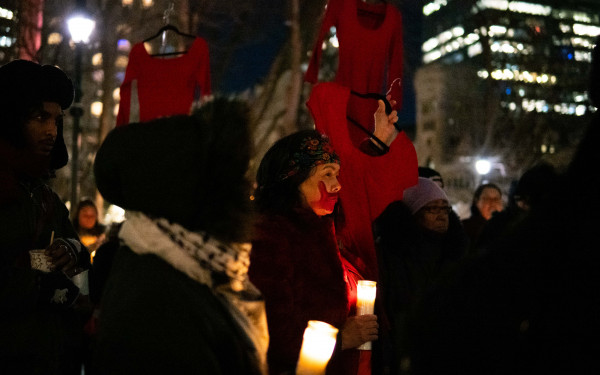
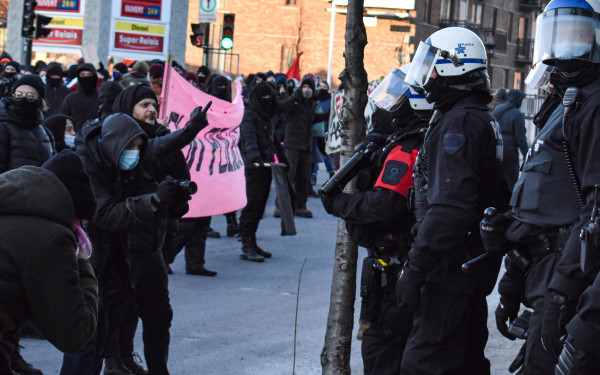
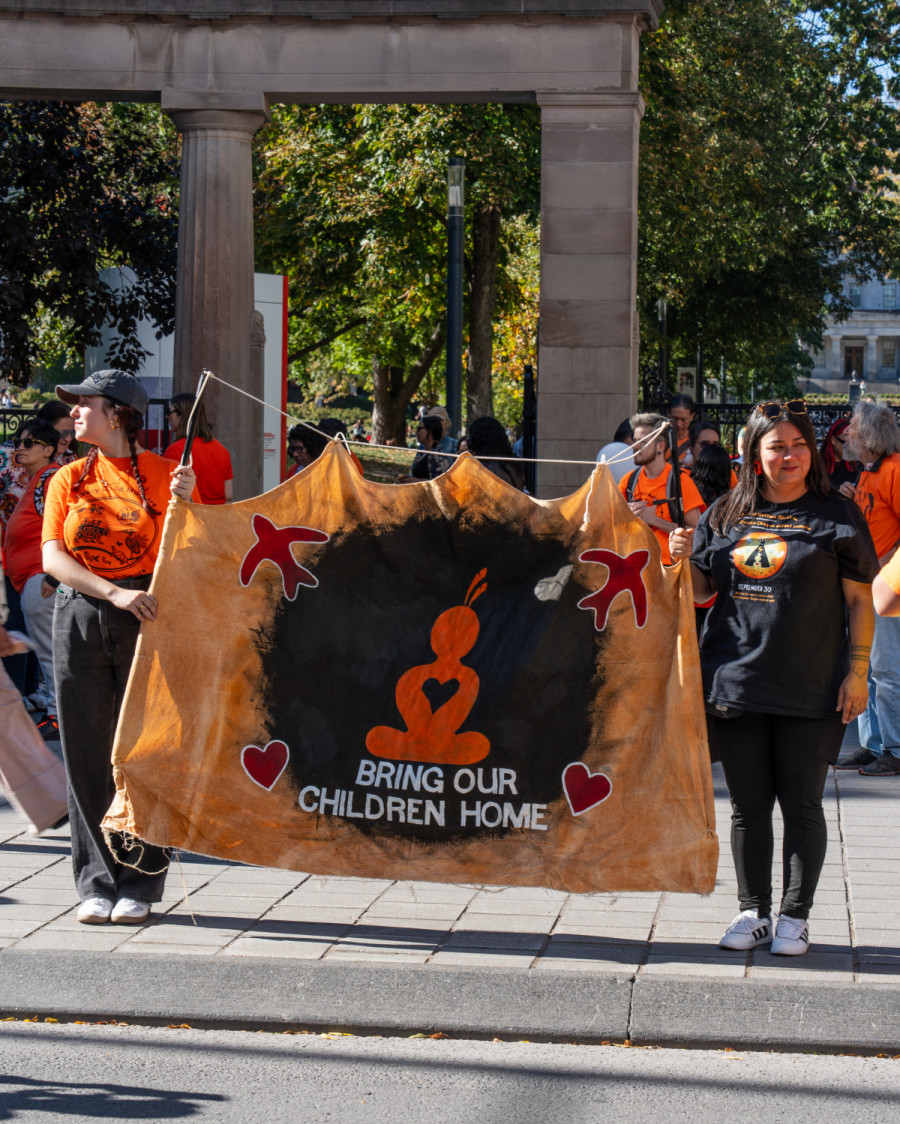
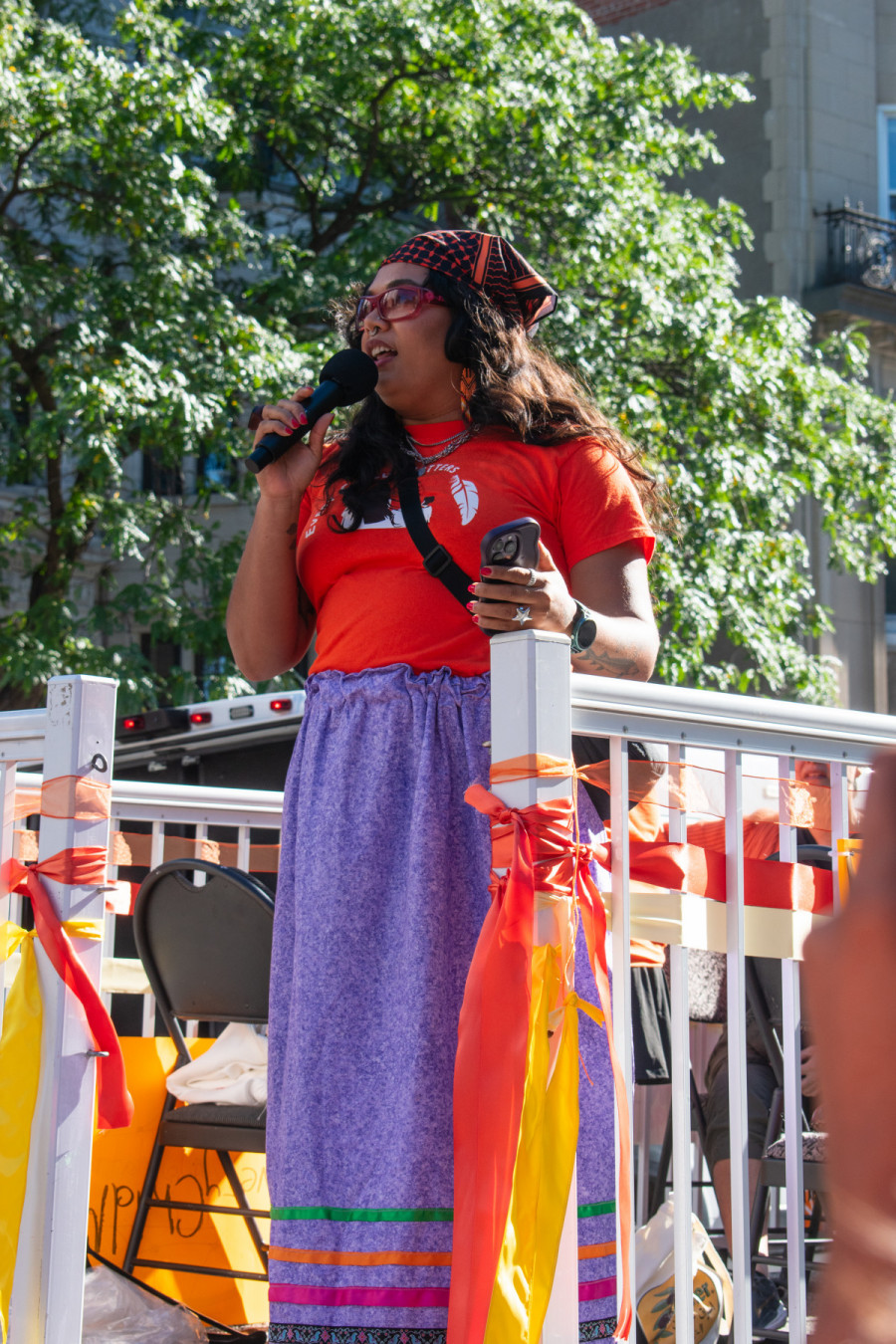
On Sept. 30, hundreds of people gathered to commemorate the fifth annual Every Child Matters March. The event served to honour survivors of residential schools and missing Indigenous children.
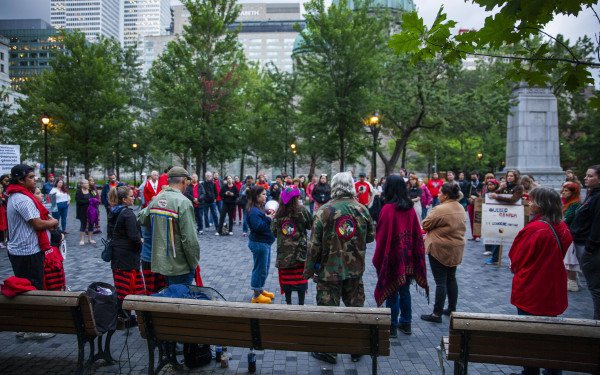
The march started at the George-Étienne Cartier Monument, where participants gathered for speeches from Indigenous community members and to listen to traditional First Nations drumming.
Anishinaabe MC and musician Leonard Sumner started the event with song.
“The first thing we hear, the first thing we are connected to, is our mother’s heartbeat. So for everybody here, you all have a drum within you already,” Sumner said before beginning to sing. “We don’t need drumsticks to sing our song.”
The event also marked the 10-year anniversary of the Truth and Reconciliation Commission. The federal government formed the commission to investigate the full extent of the harm caused by residential schools, propose solutions and prevent future abuse of Indigenous communities.
Out of the 94 recommendations the commission put forward since its inception, the government has only implemented 14. Based on the organization's Indigenous Watchdog report, 16 recommendations have not been started, 22 have been stalled, and 42 are in progress.
One of the stalled recommendations is recommendation number 18, which aims to recognize and implement the healthcare rights of Indigenous people.
Despite activist calls for the government to complete all recommendations, a report from the Yellowhead Institute says Canada won’t complete all 94 of the Truth and Reconciliation Commission’s calls to action until 2081.
Janelle Lapointe, senior advisor at the David Suzuki Foundation and a member of Stellat’en First Nation, criticized the government for “dragging their feet” when it comes to Indigenous issues.
“The government proves time and time again, whether it be its mobilization in World War II, to its response to the health pandemic, and now this fast-tracking of critical infrastructure, they can act fast if they want to,” Lapointe said. “I think it's important that we call their bluff on them dragging their heels and urge them to move faster on those critical recommendations that can tangibly improve the lives of Indigenous people.”
In a press release, Lapointe criticized the Canadian government for putting enormous emphasis on economic reconciliation.
“Our ancestors endured systemic oppression so we can live freely as Indigenous people, not as pseudo-corporations,” she wrote.
In an interview with The Link, she explained that seeing the federal government’s overemphasis on economic reconciliation is especially disappointing, as it “barely appears in the Truth and Reconciliation Report.”
“The government really offset their duty to reconciliation to corporations, and are using it as an excuse to push extractive projects with Indigenous revenue sharing or partnership,” Lapointe said. “To me, that is just like a tricky PR tactic, and a weaponization of the growing awareness about Indigenous issues to get people to back the same extractive economy that was built on Indigenous dispossession.”
Lapointe also highlighted the growing right-wing movement and its denial of residential schools.
“[The denial is] so far-fetched, especially in the context where the last residential school closed in 1996. We're not talking about ancient history,” she said. “Canada is a very young country, and it's only appropriate that we're atoning for the very, very recent and ongoing injustices for Indigenous people.”
Participants started marching at around 1:10 p.m., with people following a float adorned with Every Child Matters signs.
Sevghi, a marcher who was given last name anonymity for safety reasons, was handing out informational pamphlets on the Mohawk Mothers’ fight with McGill University regarding its attempted excavation of unmarked Indigenous graves. It’s a fight that they said is still ongoing.
“We need to know the truth, and we need to know the truth of the land that we're living on. There's a lot of misinformation and violence still happening today by the colonial forces, such as educational institutions like McGill,” Sevghi said. “It is very important for us to uncover and to spread this truth, and that's what we're trying to do today with the solidarity group Mohawk Mothers.”
Sevghi said they believe that in order for there to be true reconciliation, people cannot rely on government promises.
“I wouldn't ask anything from the government, because the government is still a colonial structure today. For me, Canada is only a project,” Sevghi said. “I immigrated here in this project, the Quebec and the Canadian project, but now what I decided to do is to be living on Turtle Island.”
The march ended at the former Macdonald Monument at Place du Canada.