
The cost of compartmentalization
Dividing ourselves to survive in systems that reward sameness
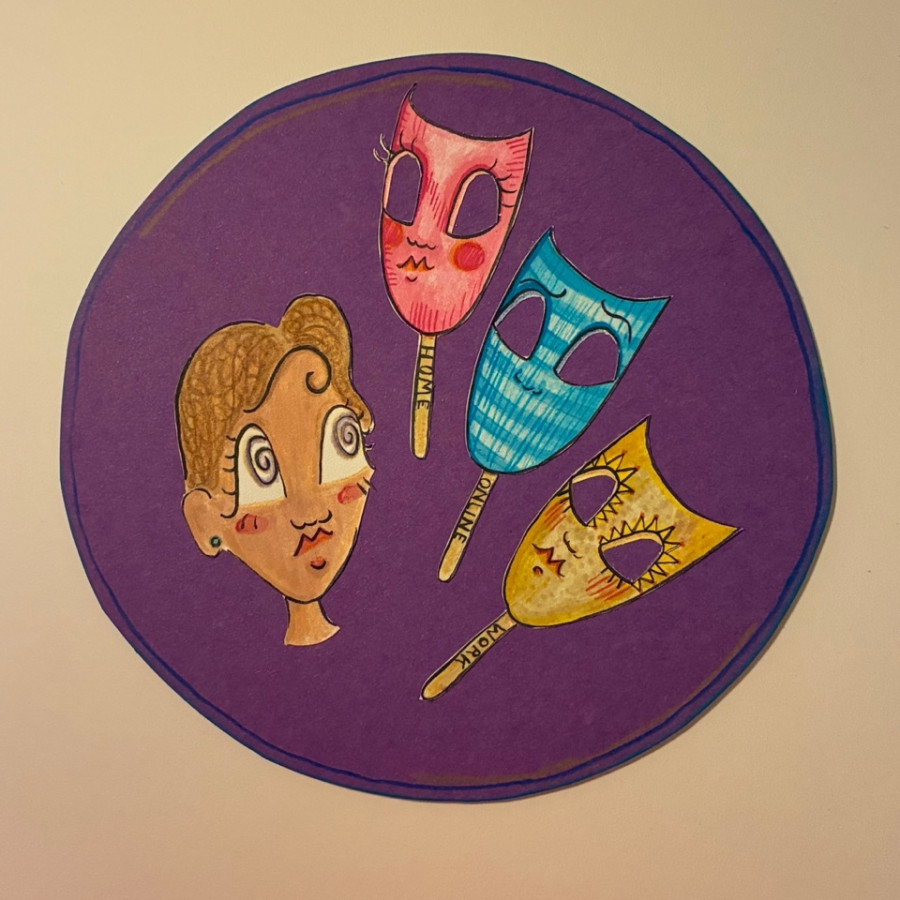
At work, you smile politely. At home, you switch languages. Online, you become a version of yourself that no one in either world quite knows. For many who live at the intersection of cultures, genders and beliefs, this daily self-editing isn’t vanity. It’s survival.
We call it professionalism, adaptation or privacy. In truth, it’s the social expectation to divide yourself just enough to belong everywhere, yet completely nowhere.
Social psychology calls this identity incongruence, the tension between who we are and who we’re expected to be. Research shows that constantly managing others’ impressions quietly erodes life satisfaction by reducing our sense of control and increasing loneliness. The harm isn’t always loud; it lives in the hesitation before speaking, the laughter that feels rehearsed and the quiet relief of not being noticed.
Intersectionality scholar Kimberlé Crenshaw reminds us that institutions built on “single-axis” identities—treating gender, race or sexuality as separate experiences—erase those who live at their overlap. When workplaces, classrooms or even advocacy movements ignore these intersections, individuals are left to manage them privately. The result isn’t inclusion but containment: difference becomes acceptable only in fragments.
Universities often illustrate this contradiction. Orientation brochures and mission statements celebrate diversity, but the classroom can still reward neutrality over candour. Students of faith may avoid mentioning beliefs in ethics discussions. Racialized students may hesitate to challenge stereotypes for fear of seeming “difficult.” The message is subtle yet consistent: participation is safest when stripped of personal truth.
A U.S. study shows that about six in 10 employees “cover” parts of their identity to fit workplace norms. That figure isn’t just statistical, it’s also moral. It shows how modern institutions quietly reward compliance over authenticity.
Students learn to mute opinions to avoid being “controversial.” Newcomers soften their accents to sound “professional.” Queer individuals toggle between lives that can never safely coexist. What looks like adaptability often conceals exhaustion.
This is more than a mental health issue; it’s a civic one. When people feel unsafe being whole, public life loses its diversity of thought. Creativity, moral courage and dissent, the same qualities that sustain a healthy democracy, depend on the freedom to exist without disguise. A society that forces its citizens to compartmentalize trades integrity for comfort, and justice for decorum.
The solution isn’t radical transparency but structural safety. Policies that protect expression, inclusive leadership training, and intersectional representation in decision-making are not luxuries; they’re prerequisites for fairness. Belonging shouldn’t depend on strategic self-erasure.
Yet even the best-intentioned reforms struggle to live up to their goals. Programs like Concordia University’s equity initiatives, school board inclusion training in Toronto and Peel, and federal initiatives such as Gender-based Analysis Plus (GBA Plus) have all shown that awareness alone rarely transforms systems.
A 40-year review of diversity and inclusion training across the U.S. found that while participants often leave with greater sensitivity, real change fades without accountability, leadership buy-in and structural follow-through.
At Peel, provincial supervision was required to enforce equity directives. Federally, GBA Plus audits reveal uneven implementation and limited metrics. These examples don’t negate the importance of such efforts, but they reveal how hard genuine transformation is when institutions seek representation without the redistribution of power.
We often tell people to “be authentic,” as if authenticity were a personal virtue. But authenticity is only possible where institutions make it safe. Until we design systems that allow people to bring their whole selves into public life, we will keep mistaking silence for civility and fragmentation for order.
The cost of compartmentalization is paid quietly, but it’s paid by everyone who believes democracy should mean being seen completely.
This article originally appeared in Volume 46, Issue 6, published November 18, 2025.



_600_375_90_s_c1.jpg)