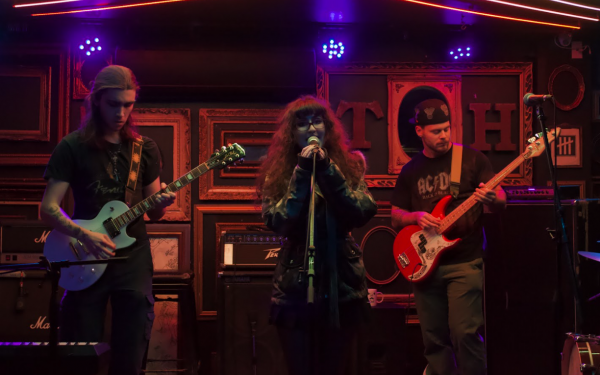
Sweat and steel at Montreal’s Wacken Metal Battle
Four local metal bands competed in the first round at Piranha bar
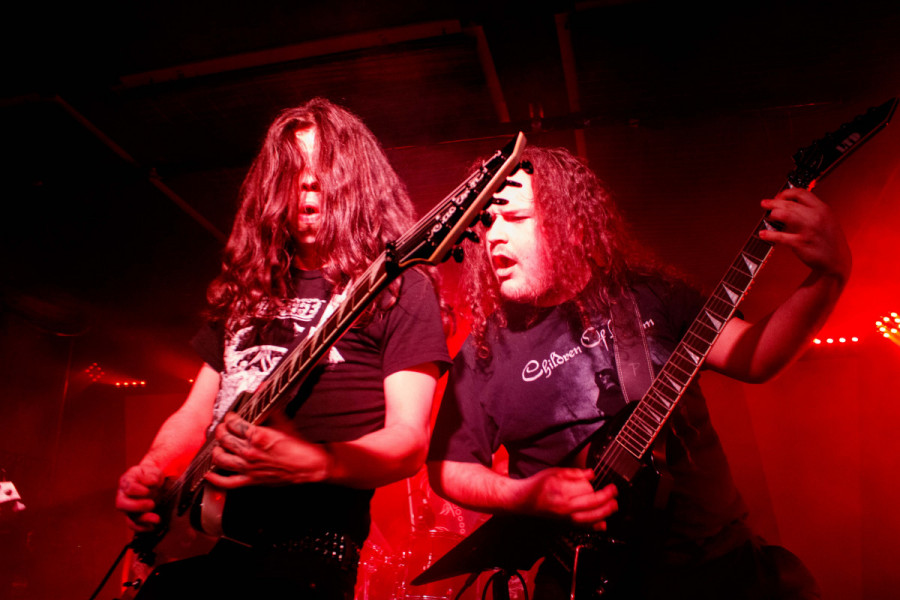
Four Montreal metal bands faced judges and a packed room at Piranha Bar during the opening round of the city’s Wacken Metal Battle, where precision, endurance and crowd control were put to the test.
The competition serves to select bands to represent the city on an international stage, with winners advancing to perform at Wacken Open Air, one of the world’s largest metal festivals, which draws tens of thousands of spectators each year. The chance to represent Canadian metal internationally pushed all four bands to give it their all during their short 25-minute sets.
Hatestinger kicked off the evening with a thrash set that didn’t hesitate to get things moving. Having the hard job of warming up the crowd, the trio’s fast, clean riffs quickly took command, backed by precise guitar skills and strong double vocals.
Lead guitarist and vocalist Olivier Pontbriand said the band aimed to balance intensity with precision.
“Thrash is about aggression, but it’s also about being tight, and that’s what we were trying to prove tonight,” he said.
Their momentum gave the short set the impression it had gone too fast. This was noted by some judges as both a strength and a limitation.
Judge Adrien Begrand, a veteran metal journalist who has covered the genre for over four decades, praised the band’s command of thrash fundamentals.
“You guys truly understand what it means to be rooted in thrash, and you own it,” Begrand said.
Some judges offered more performance-focused feedback.
Luc Lainé, a metal radio host at CFLX 95.5 FM and a longtime figure in the local scene, encouraged Pontbriand to embrace his role as frontman by stepping forward and fully showcasing his quick, clean guitar solos.
Following the feedback from the jury, Andrew Wieler, metal music director at CJLO 1690 AM, gave his closing statement by congratulating the band for an “aggressive, fun party” set.
After a much-needed short break, the crowd rose once again, ready to hear the next band.
Ressac stepped on stage, noticeably altering the tone of the room.
As an atmospheric black metal act, the band took its time getting things moving, with intertwined slow melodic parts interrupted by all-out raw energy, anchored by their masked drummer. The warm contrast paid off, with judges repeatedly calling the set “hypnotic.”
Montreal-based cultural and music journalist Benoît Lelièvre highlighted the band’s ability to build atmosphere, emphasizing the rarity of their style in head-on battles.
This feedback resonated with Dominique Degré, the bassist of the band.
“We don’t play a lot of shows, so this is a really nice opportunity for us to share our music with people who might not usually listen to black metal,” Degré said.
Forbidden Order followed, standing out from the rest of the lineup with the largest fan base and prior festival experience.
Blending metalcore with progressive rock and melody, the band moved rapidly between influences and sections. Vocalist Jeremy Rodriguez Carignan said the band intentionally resists genre limits.
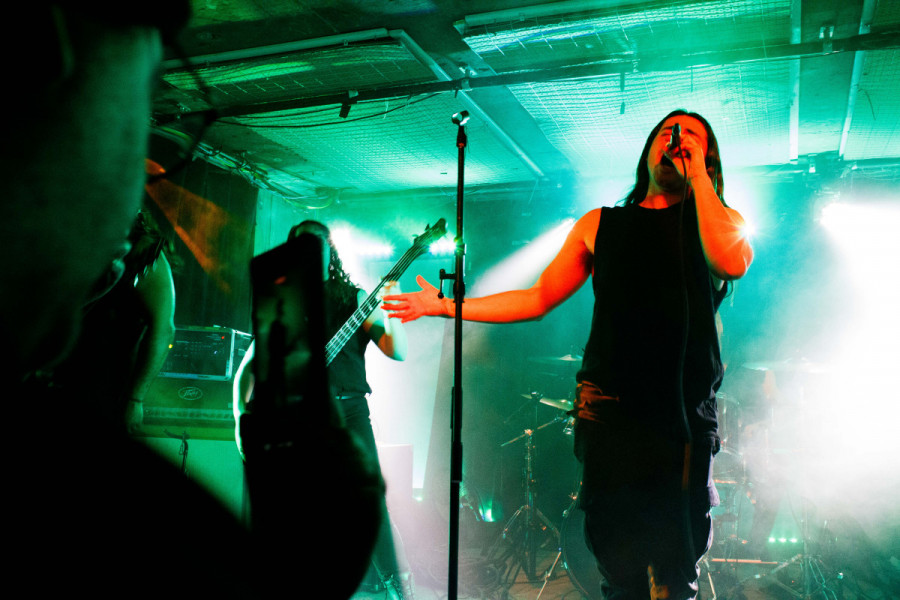
“We don’t fit into just one genre; we like to surprise people with different sounds,” he said.
Judges commented on an uneasy start, but the crowd had responded quickly. With an impressive vocal range and support from both guitarists’ backup vocals, Forbidden Order unleashed powerful lyrics, almost like a siren's call.
Judge Lainé congratulated the band on the great improvements they had made since their last battle he judged, but also highlighted some movement issues.
Wieler was more explicit, saying he felt that the band tried a little too hard to work the crowd at first, but he recognized it had paid off later in their set. He also praised their last song for its theatrics and more bizarre vocal additions.
Pierre Beaubien, the host of Décibel Métal on CIBL 101.5 FM, recognized the powerful energy they had maintained throughout their performance and their noticeable chemistry.
Once the fog settled and glasses refilled, Stregoneria took the stage as the last band.
As soon as the drummer struck his snare, the band began to play, their weighty riffs delivered with surgical precision and guttural screams. The pure bone-rattling energy almost controlled the audience as a seemingly never-ending mosh opened up with more people than had previously engaged.
Adrenaline pumped hard from the start to the end. Some of the attendees began chanting for one more song after the band’s allotted set time.
Stregoneria singer and lead guitarist Roberto Castello said the band always delivers fully for its audience. After a brief apology to the jury, the band launched into an extra song to close the night.
Begrand was the first to speak, admitting that he did not know how to find the words as they had left him speechless, a sentiment shared across the jury.
“This is the future of Montreal’s metal,” Begrand said.
Lelièvre noted it was rare to see a band at this stage already delivering such high potential. Wieler highlighted the band’s effortless, lucid identity, which carried through their riffs, while Beaubien said Stregoneria managed to pull the audience in through the music alone, without needing to rely on stage interaction.
After a 15-minute break for judges to tally their scores, the results were announced. Stregoneria emerged as the clear winner, followed by Ressac, Forbidden Order and Hatestinger.
After loud cheering and pictures, Castello announced that he was looking forward to continuing one step at a time and seeing what happens in the future. The band will now go forward to future battles to hopefully represent Montreal and maybe eventually Canada.
With files from Nicolas Tremblay.