
Students celebrate Amazigh New Year 2976
Yennayer festivities organized by McGill’s Algerian Students’ Association spotlights Amazigh culture and community
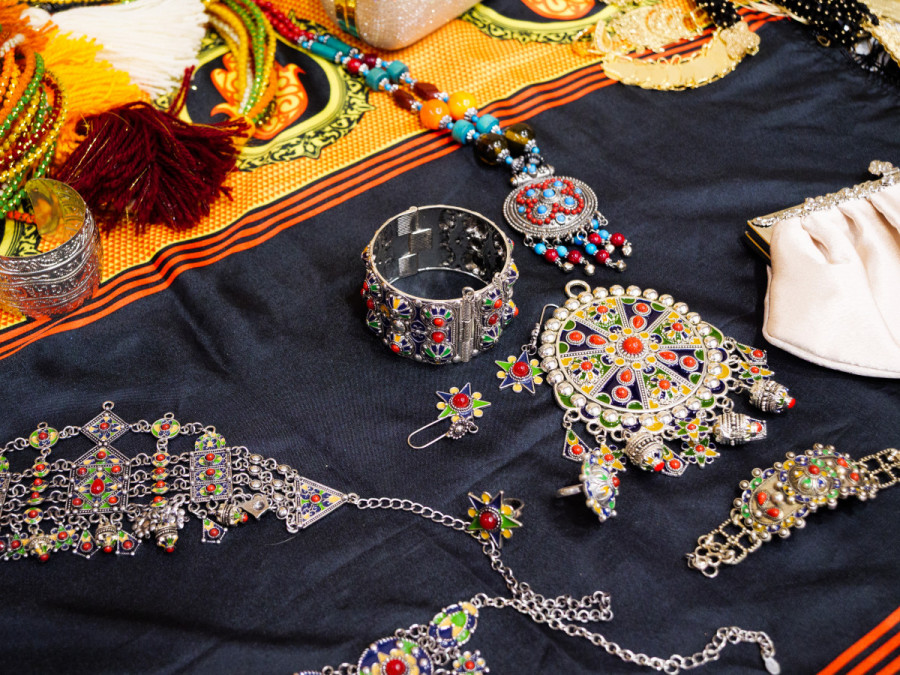
McGill University's Algerian Students’ Association (ASA) hosted its second edition of Amazigh Night on Jan. 16, celebrating Amazigh New Year 2976 with an offering of music, food and wares from local businesses.
Created as a space for Algerian students to reconnect with their heritage, this year’s Yennayer celebration drew a diverse crowd, reflecting the wider North African and African community in Montreal.
Yennayer dates back nearly 3000 years and marks the beginning of the Amazigh agricultural calendar, symbolizing renewal and unity.
Meriem Lounis, ASA's VP of internal affairs, said the event has grown significantly since its first edition.
“Last year was our first Amazigh Night, and it was much smaller,” she said. “We had a smaller room and only three booths representing different Amazigh regions in Algeria. The goal was mainly to introduce the culture and give people a space to connect.”
This year’s event moved to a larger venue at the university and adopted a Bazaar-style format, allowing organizers to showcase Algerian and Amazigh businesses based in Montreal. Booths featured dresses, jewelry, perfumes, traditional accessories and Algerian musical instruments.
“We wanted this to be a real celebration,” Lounis said, “but also wanted to do something meaningful for the Montreal community by supporting local Algerian and Amazigh businesses and giving them visibility.”
Among the exhibitions was Asala Traditionnel, a boutique specializing in Kabyle traditional dresses. The business is owned by Samia Bouriche, a Kabyle woman in her 40s who has lived in Montreal for over two decades.
“I was very happy to be invited,” Bouriche said. “It means a lot to represent our culture, especially at McGill, where many Algerian students are involved in these events.”
Bouriche said her designs are created in collaboration with artisans in Algeria who specialize in Amazigh embroidery, some of whom have more than 35 years of experience. Her boutique, which opened in January 2023, ships across Canada and the United States.
Bouriche added that her father was the inspiration for the project.
“This work is a way to revive my father’s passion,” Bouriche said. “He had a deep love for Kabyle culture. Even though we lived in Algiers, he always took us to Tizi Ouzou on weekends to reconnect with our roots.
Food was also central to the celebration. Montreal-based Amazigh restaurant La Khaima prepared meals for attendees, offering what organizers described as an immersive cultural experience.
“We wanted people not just to attend, but to feel Algerian culture through food, music and local Amazigh businesses like La Khaima,” Lounis said.
As the evening continued, music and dance took over the ballroom, transforming the event into a lively celebration.
Rachel Habrih, host of the radio show Ya Raï on CISM 89.3 FM, was invited as the event’s DJ.
“Music can help people express happiness or sadness,” Habrih said. “Amazigh music is used in celebrations, but also during difficult moments.”
Habrih attended with her friend Fotar Tunteng, who has Cameroonian roots. He said he came to support Amazigh culture and African communities.
“Amazigh culture is part of African identity,” Tunteng said. “It shares many similarities with other African cultures.”
As the night went on, attendees danced together to Kabyle music, with many inviting others from the crowd to join in. The atmosphere reflected Amazigh traditions of hospitality and community.
At the end of the event, the ASA team thanked everyone for attending and supporting the exhibitors. They closed by wishing the crowd a happy new year in the Amazigh language, saying, “Assegas Amegaz.”



_1_600_375_90_s_c1.jpg)
Frédérique_Ménard-Aubin-8588_(1)_(1)_1_600_375_90_s_c1.jpg)
