Step into fantasy sports
The Link’s multi-sport guide for novices
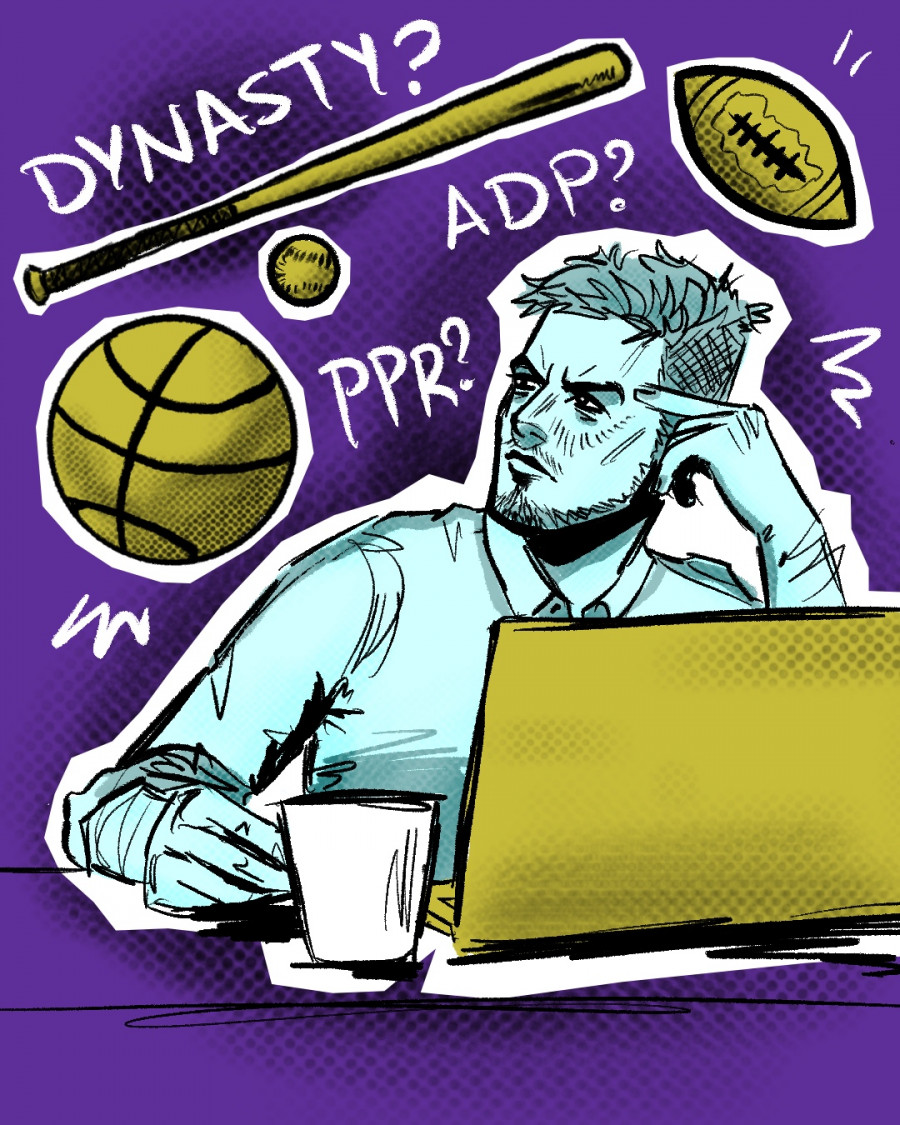
With fall quickly approaching, the NBA, NFL and NHL seasons are just weeks away. For millions of sports fans, this means that their respective fantasy sports leagues are starting soon, too.
Have you, a fantasy sports novice, recently been invited to a league? Don’t fret—The Link has got you covered.
Fantasy sports are meant to be played among friends. Many leagues add buy-ins, with the winner taking home the pot.
Just as important, though, are punishments for last-place finishers: the tried-and-true karaoke night, a loser-funded week of coffees, or even just changing your display name to something humiliating. You can always join online leagues, but you’ll surely miss out on some of the fun.
Once you’re in the league, it’s time to prepare for the draft. Most drafts are set as snake drafts: in round one, teams select their picks in a 1-10 draft order. In round two, the order “snakes,” sending the picking order back the way it came. This cycle continues until all roster spots are filled.
Many of the factors that determine a player’s performance can’t be predicted. However, there are some things you can look for. Are their past statistics consistent, or trending up or down? How many games did they play last season? You can compare your draft hopeful’s statistics from last year with those of players at the same position.
To maximize your team’s potential, you need a positionally diverse group of players. Draft too many of them at the same position, and you run the risk of benching some of your top players when they play the same night.
Depending on your sport, you’ll want to prioritize certain positions early in the draft. For example, in fantasy hockey, you’ll want to prioritize forwards early in the draft, because it’s harder to get high-value players at that position later in the draft. The same is true for centres in basketball, and running backs and wide receivers in American football.
Once the season begins, you just need to play your players. It’s a good idea to follow sports media pages to stay up to date on injuries. If someone on your team gets a long-term injury, you’ll have to assess if they’re worth keeping or if you’re better off dropping them in favour of another.
The waiver wire is a pool of undrafted players that can be dropped and picked up at will. It’s important to check the waivers as minutes shift throughout the year. Trades, injuries and suspensions mean that certain players can see a drastic rise or decline in production throughout the season.
A fair warning to the reader: following these guidelines will not guarantee success; they are simply a few tips to get you started. Fantasy sports are based heavily on luck because professional sports are unpredictable. As any sports fan will tell you, that’s what makes it worth watching.
So whether you’re vying for first place or just fending off last, remember to have fun.
This article originally appeared in Volume 46, Issue 1, published September 2, 2025.



4_600_375_90_s_c1.jpg)