
Social (Cult)ure: The return of the carnivore
From vegans to carnivores, diet trends mirror broader ideological swings
Got Listeria? You might if you keep drinking raw milk.
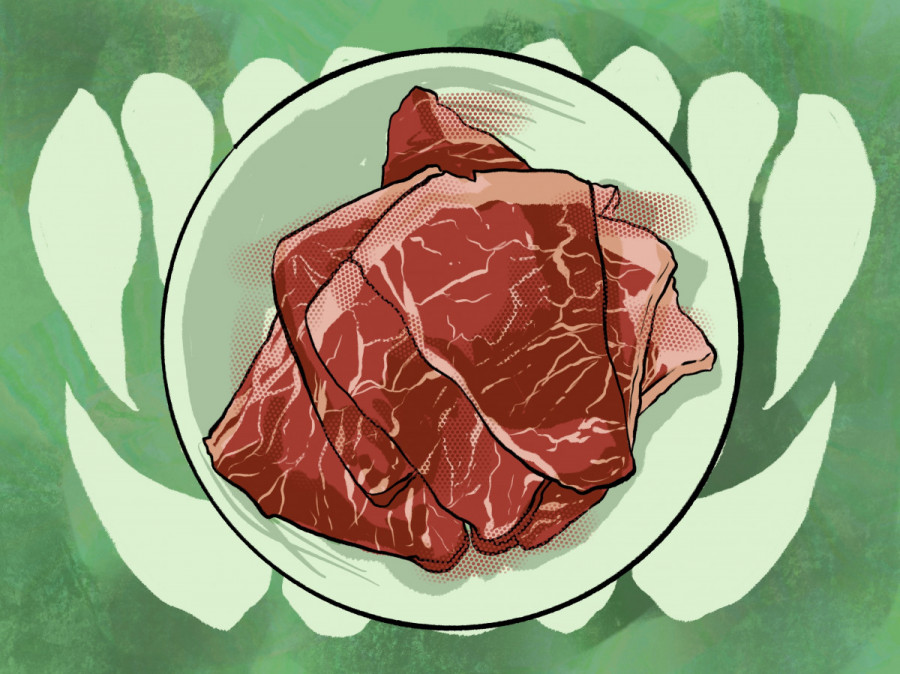
As Robert F. Kennedy Jr.’s influence becomes stronger in the U.S., communities online have begun promoting a diet that is unprocessed, organic and potentially an alt-right dogwhistle.
The political implications of an “all-natural” diet coincide unmistakably with the rise of right-wing ideology.
The modern carnivore movement represents a swing of the pendulum both politically and nutritionally. Carnivore-adjacent movements such as the Keto diet prioritize maximizing fat and protein intake while minimizing carb intake.
This presents a stark departure from the previous negative view on fat, which saw low-fat and fat-free products marketed as healthy alternatives to their full-fat counterparts.
Strangely, the carnivore movement bears a striking resemblance to the veganism of the 2010s. Both became lifestyle movements, rather than simple diets, framing eating as a moral project, a path toward “clean living,” self-improvement and social change.
What changes is the target: one rejects animal industries, the other rejects modern institutions and expertise.
The 2010 vegan drive towards culinary altruism reflected the day’s political climate, where pervasive liberal social values promoted a sense of optimism among the generation coming of age.
At the height of the movement, vegans were also often mocked as preachy or cultish; however, at the very least, their motivations were rooted in something bigger than personal gain.
And now, the social pendulum has swung back.
As the cultural mood turns more conservative, carnivorism has overtaken veganism as the trendy dietary movement.
And the social demographics participating in carnivorism tend to be very traditional and fundamentalist.
The aims of carnivorism come not from a place of rebellion against the mistreatment of animals, but a distrust of modern science that has flourished under the Donald Trump administration and RFK Jr., alongside the contemporary anti-vaccination movement.
The ethos of carnivorism is a return to nature, ironically perpetuated largely on social media, preying upon the health-conscious at an initially innocuous level.
Modern carnivores have traditional values that aim to rebel against the liberal social climate of the 2010s. It emphasizes a return to traditional gender roles and a disdain for scientific innovations, such as preservatives and, at the most extreme level, pasteurization.
Informed not by science but by a desire to rebel against the previously liberal status quo, carnivore diets can pose a real danger to public health.
When the U.S reframes its latest food pyramid as a green light to prioritize meat and dairy, it’s easy for people to read it as institutional validation.
But a quick search into these diets shows why medical experts remain skeptical: a keto diet can lead to nutritional gaps, increased cholesterol and risks that build over time, including kidney stones, gout, osteoporosis and impaired kidney function from extreme protein intake.
The parallels present in the vegan and carnivore movements trending alongside liberal and conservative social climates represent a common denominator between both pendulum swings: a desire for change caused by unsatisfactory circumstances.
Just as someone might turn to carnivorism after veganism doesn’t deliver results, a moderate voter might drift right when liberal politics stops meeting their needs.
The cult of the carnivore does not exist in a vacuum, but rather as a symptom and reflection of a desperate society switching between extremes in pursuit of satisfaction.






_600_375_90_s_c1.jpg)