
Montreal’s nightlife isn’t dead, it’s being killed
Noise complaints and weak policies are slowly drowning out Montreal’s music
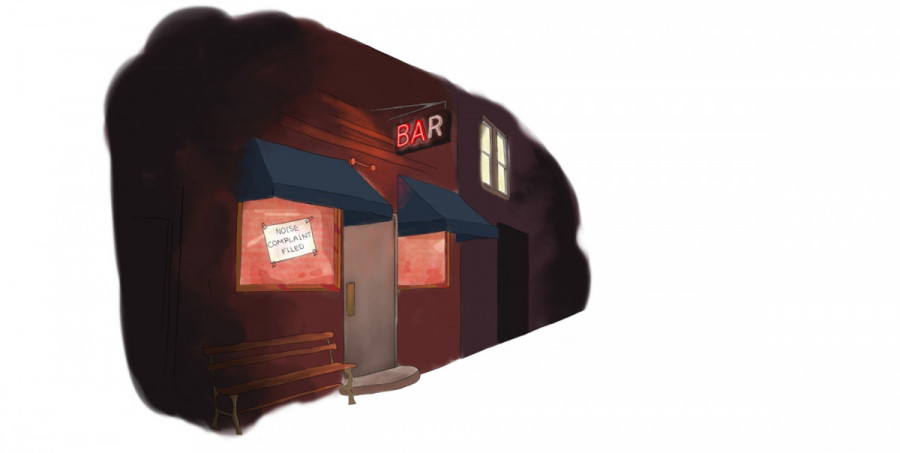
Saying that Montreal's nightlife is dead is like saying punk is dead—it’s not entirely true. It’s very difficult to kill a city's nightlife, but there seem to be some people who are trying pretty hard.
I moved to Montreal at the start of my first year of university, instantly enchanted by a city that seemed to never sleep, at least in comparison to Quebec City. Some bars and events catered to me in ways I never imagined. I found venues where I could be openly queer, listen to loud music and dance my little heart out.
I quickly found myself ingrained in Montreal’s nightlife, going to shows, becoming a regular at Emo Night at Les Foufounes Électriques and hosting trivia every couple of weeks at Champs Sports Bar.
It gave me a sense of fulfillment I could never quite find in the city I call my hometown. It wasn’t that I was out every night, partying my way through my freshman and sophomore years—it was simply that I could if I wanted to. And whenever I did, I was always left with a memory that would last me a lifetime, or a little bit less, depending on how inebriated I was.
I am marked specifically by a memory of Blue Dog, a bar that has sadly fallen victim to Montreal’s wave of venue closures.
It was the night before my 21st birthday. I was out with my partner, trying to find something to do in the minutes before midnight, waiting to celebrate my upcoming aging. We stumbled down the stairs of Champs and into Blue Dog, where a band neither of us was familiar with was playing. They were a mix of The Beach Boys and The Cramps, the perfect soundtrack to dance my way into a new year.
It made for one of the best starts to my birthday that I’ve ever had; little did I know that the bar would be permanently closed less than two months later.
It’s a problem that is becoming increasingly prevalent in cities far beyond Montreal, like Toronto. People move downtown for a taste of city life without realizing that the city does not abide by their sleep schedule.
In Montreal, noise complaints have forced the closure of beloved venues like La Tulipe and Divan Orange. Venue owners warn that proposed bylaws doubling or tripling fines for first-time noise offences could be “the nail in the coffin” for small to mid-sized spaces.
For lack of a more polite term, it boils down to entitlement and a level of ignorance that would put the biggest egos to shame. If you move to a neighbourhood known for its party scene, you take on the responsibility of managing your expectations and your reactions. No one should have the right to reshape a city’s nightlife over something as trivial as noise on streets built for bars and clubs.
I would go as far as saying that it’s embarrassing for the complainants. Whether it stems from a lack of research or, worse, a complete disregard for the people who actually live here, it’s nothing short of embarrassing.
It shows a blatant lack of empathy that has absolutely no place in Montreal—a city that thrives on noise, movement and the joy of being alive after dark.
This article originally appeared in Volume 46, Issue 4, published October 21, 2025.




_600_375_90_s_c1.jpg)