International sports federations must take a stand on Israeli athletics
It’s time for governing bodies to eliminate the international double standard and make a change
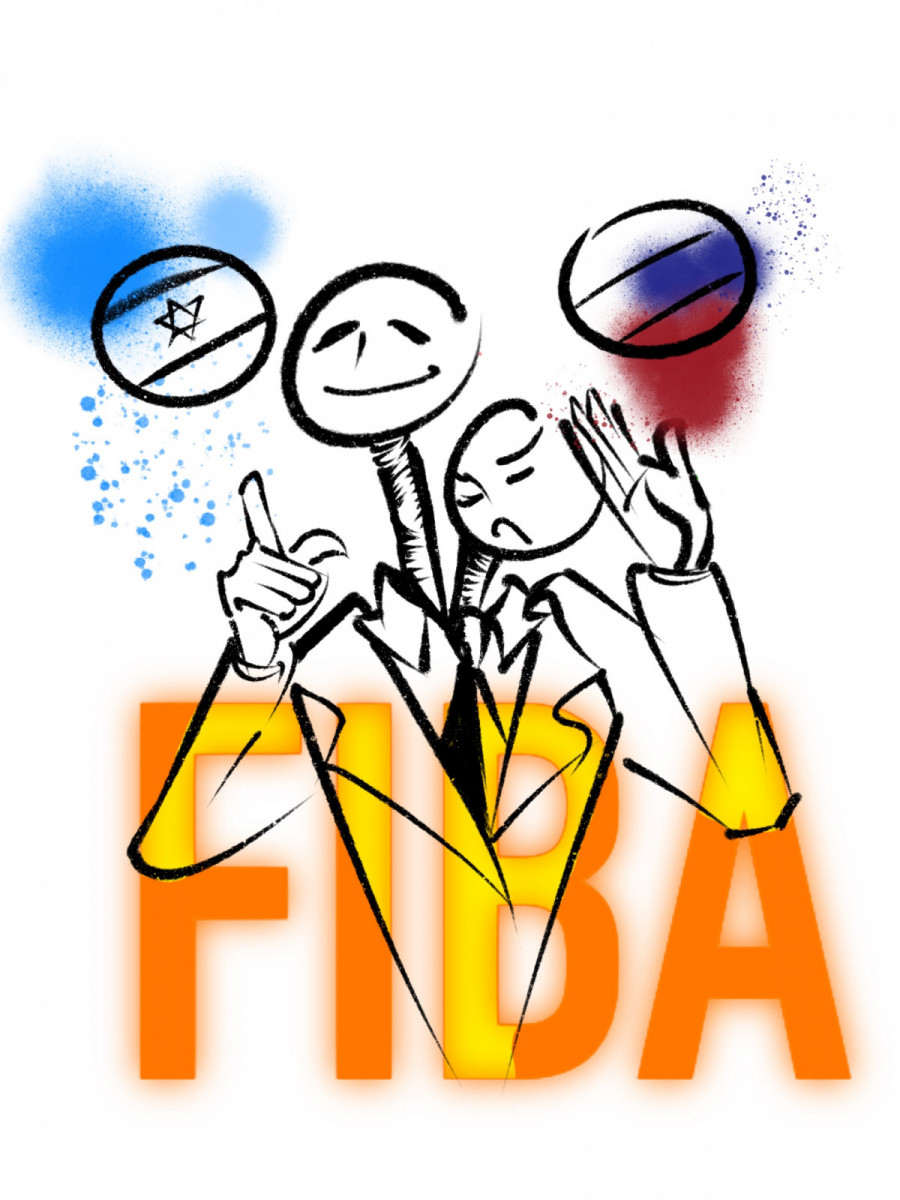
This August, 24 countries gathered in Cyprus, Finland, Poland and Latvia to compete for the 2025 EuroBasket championship. Among them, a questionable selection: Israel.
On the court, the Blue and Whites made relatively little noise. Outside of an upset win over European powerhouse France, Israel finished fourth in Group D, qualified for the knockout stage, and lost a close Round of 16 matchup with eventual semifinalists Greece. A solid, if not unspectacular, showing.
Yet off the court, sparks flew throughout Israel’s run. Polish and French fans booed the Israeli national anthem before matches against the two nations. Quotes from star forward Deni Avdija surfaced surrounding his enthusiasm for his service in the Israel Defense Forces.
And in the lead-up to that loss to Greece, head coach Ariel Beit-Halahmy proclaimed that the team would “need an M-16” to stop two-time NBA MVP Giannis Antetokounmpo.
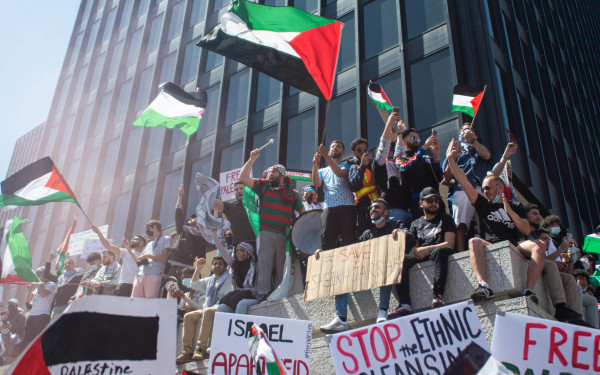
To many basketball fans and millions of people worldwide, Israel’s competition in EuroBasket represents just one of several missed opportunities to take a stand against the ongoing genocide Israel is waging against the Palestinian people.
The UN’s official declaration that Israel has committed genocide in the Gaza Strip, alongside 156 member states officially recognizing Palestine as a sovereign nation, has only added fuel to the fire.
So why hasn’t anything happened—and what could we look to for answers?
Israel’s representation in international athletics draws controversy regardless of the sport. Pressure from fans has pushed the Union of European Football Associations (UEFA) to consider eliminating Israel from World Cup qualification, but no concrete action has been taken yet.
Similar pressure still didn’t stop the Israeli national team from competing at the 2024 Summer Olympics in Paris. Even in Montreal, protests erupted at the 2025 Cycling Grand Prix over the inclusion of a professional Israeli team.
In Gaza, Israel continues to cripple the growth of Palestinian sports at every turn.
Israel’s sportswashing campaign has led to the destruction of stadiums and training areas and the restriction of the movement of Palestinian athletes between the West Bank and the Gaza Strip. Prominent Palestinian athletes such as soccer player Suleiman Obeid—nicknamed the “Palestinian Pele”—and basketball player Mohammed Shaalan represent just two of the 808 athletes and coaches murdered by Israeli forces since Oct. 7, 2023.
Yet up until now, Israel still competes in international events. Organizations like the Fédération internationale de basketball, Fédération internationale de football association and the International Olympic Committee continue to shuffle their feet on Israel’s inclusion in competitions such as EuroBasket, the World Cup and the Olympics, despite a near-unanimous call to action from the rest of the world.
It’s time to change that.
While athletes like Jordanian tennis player Abdellah Shelbayh—who refused to face an Israeli player at a tournament in Greece—display their bravery and integrity through their activism, athletes shouldn’t need to choose between competition and standing up for justice.
There’s a simple solution to this: ban Israel and Israeli teams from competition to send the message that the world will not tolerate genocide.
We can see examples of this ban’s application through a similar world conflict. Shortly after Russia’s invasion of Ukraine in February 2022, international organizations brought down the hammer, banning Russia from World Cup and European Championship matches and stripping St. Petersburg of the right to host the 2025 UEFA Champions League final.
In the case of Palestine, though, racism against those labelled as “Muslim” or “Arab” often leads Western actors to view the genocide as simply a tragic result of a war-torn region. This implicit discrimination and tendency to only humanize white victims constitutes a double standard and has led to the disparity in the response of sports organizations.
But Russia and Israel are both guilty of violating human rights—and if one is being penalized for it, then it only follows that the other is as well.
Spanish Prime Minister Pedro Sánchez fuelled these proposals after anti-Israel protesters disrupted the Vuelta a España cycling race on Aug. 27. The protesters called Israel’s genocidal campaign a “barbarity” and encouraged other nations to boycott Israel from international events.
Even Israel recognizes the writing on the wall, with an Israeli official stating on the website Mako, “We are one step away from reaching the situation of Russia.”
But “one step away” won’t solve this. We can’t stand for “one step away.” UEFA unveiled a banner reading, “Stop killing children, Stop killing civilians” at the 2025 Super Cup, but half-hearted offerings like this can't mark the end of the line.
The world’s governments need to take a hard stance on the genocide in Gaza and halt Israel’s sportswashing in its tracks.
Banning Israel and Israeli teams from international competition isn’t some revolutionary, unprecedented pipedream. It’s possible, backed up by evidence—and the only way forward.
This article originally appeared in Volume 46, Issue 3, published September 30, 2025.