‘Closer in Strife’ and the intimacy of silence
Alec Nikoghossian’s short film explores nostalgia, tension and loss
Born in Beirut, raised in the U.A.E. and now based in Montreal, Armenian-Lebanese filmmaker Alec Nikoghossian began exploring the concept of home during his time at Concordia University, examining what it encompasses, what holds it together and what it quietly absorbs.
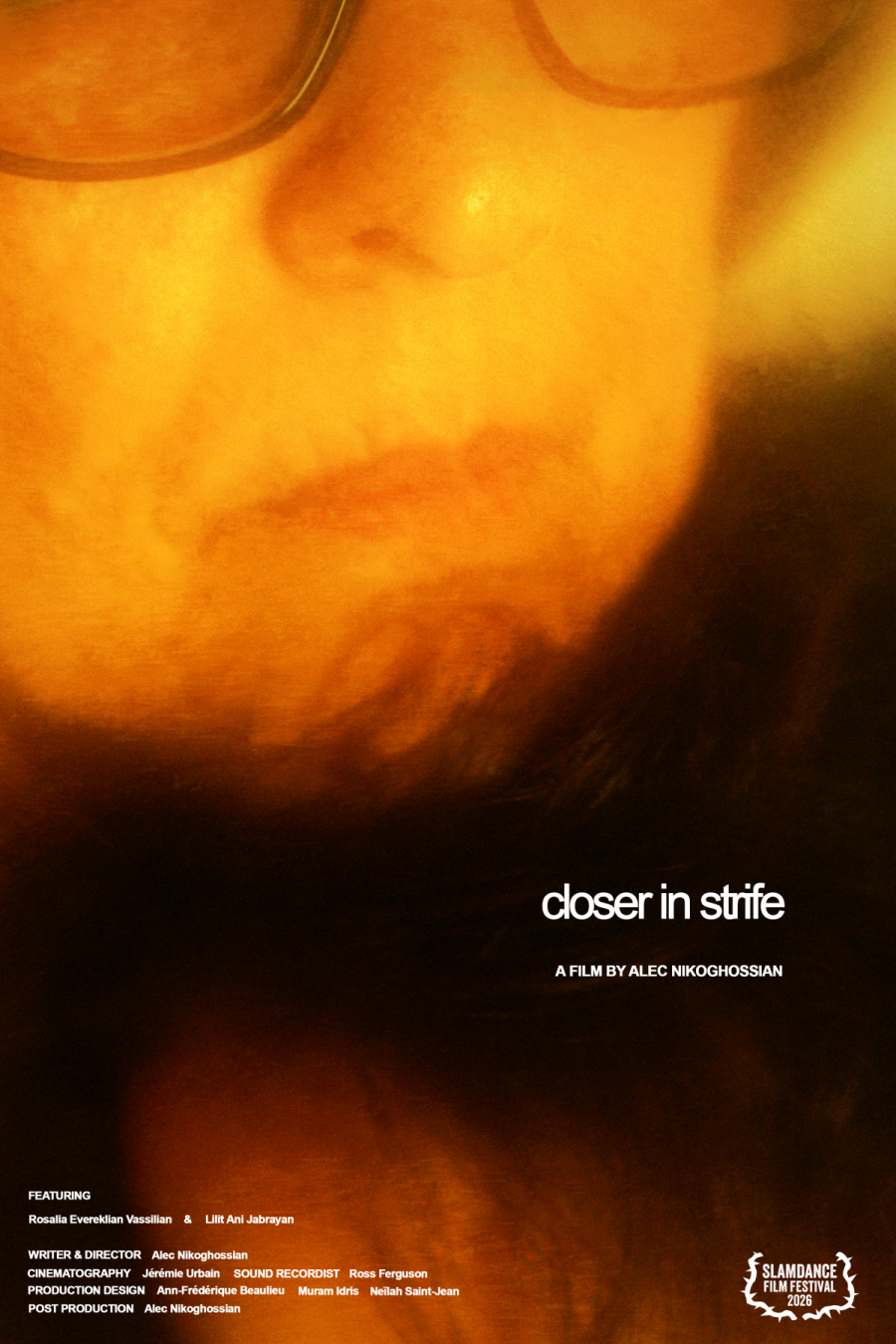
His latest short film, “Closer in Strife,” perfectly condenses those questions into 10 minutes of domestic intimacy, silence and tension, inspired by real family conversations and the 2020 Beirut port explosion.
Nikoghossian recently graduated from Concordia’s Mel Hoppenheim School of Cinema, but filmmaking has been part of his life far longer.
He began making videos as a child, initially for fun, before realizing in high school that film was something he wanted to pursue seriously. Still, he says it wasn’t until his second year at Concordia that his work began to take shape more deliberately.
“It was only up to two years ago when I started to really realize my style,” he said. “I kind of realized I had this attachment to home and my culture.”
That realization emerged gradually, through experimentation and reflection.
Like many Armenians and Lebanese individuals, Nikoghossian grew up with a strong sense of cultural pride, but also a lingering distance from the places and stories that shaped his family.
“No matter how close you are, there is always kind of this disconnect,” he said. “They grew up in a completely different time.” — Alec Nikoghossian
While "Closer in Strife" is a fictional narrative, it is closely informed by moments Nikoghossian has witnessed and conversations he remembers within his family home.
Set in Beirut in the lead-up to the 2020 port explosion, the film reflects how domestic life continues under the weight of an approaching rupture.
“Every piece of dialogue in that film is based on an actual conversation I’ve had,” he said, referring to exchanges with his family.
Rather than depicting the explosion itself, "Closer in Strife" centres on the emotional atmosphere that precedes it.
The film follows a grandmother and her young grandchild in the hours leading up to the blast, allowing tension to build through silence, routine and shared space. The catastrophe remains offscreen, but its inevitability shapes every interaction.
That grounding gives the film its emotional weight. Rather than dramatizing catastrophe, “Closer in Strife” explores how intimacy and distance coexist within families, especially across generations.
Nikoghossian points to the disconnect that often exists between grandparents and children—not necessarily because of a lack of love, but because of time, language and experience.
“No matter how close you are, there is always kind of this disconnect,” he said. “They grew up in a completely different time.”
Language plays a role in that distance as well.
Nikoghossian notes how English often overtakes mother tongues for younger generations, creating subtle barriers to communication. That tension is present throughout the film, not as conflict, but as quiet misalignment.
The decision to keep the film slow and largely silent was intentional. Nikoghossian wanted viewers to sit with discomfort as much as familiarity.
“I wanted it to feel nostalgic, but with a sense of mystery,” he said. “I didn’t want music. I just wanted silence.”
That silence mirrors the unpredictability of life in Beirut at the time.
“People were just going about their normal afternoons until suddenly everything flipped,” Nikoghossian said.
The film was made with a small, close-knit crew, mostly friends from university, which helped maintain the intimacy Nikoghossian was after. On set, there were rarely more than four to five people.
“Film sets tend to be very hectic,” he said. “I wanted this to feel as calm and intimate as possible.”
A key collaborator was cinematographer Jérémie Urbain, one of Nikoghossian’s closest friends. The two have worked together since their early university days, and their familiarity shaped both the process and the final look of the film.
Urbain remembers first discussing the project during a long subway ride.
“We straight up talked visuals, mood, colour and shots,” Urbain said. “It all organically came together.”
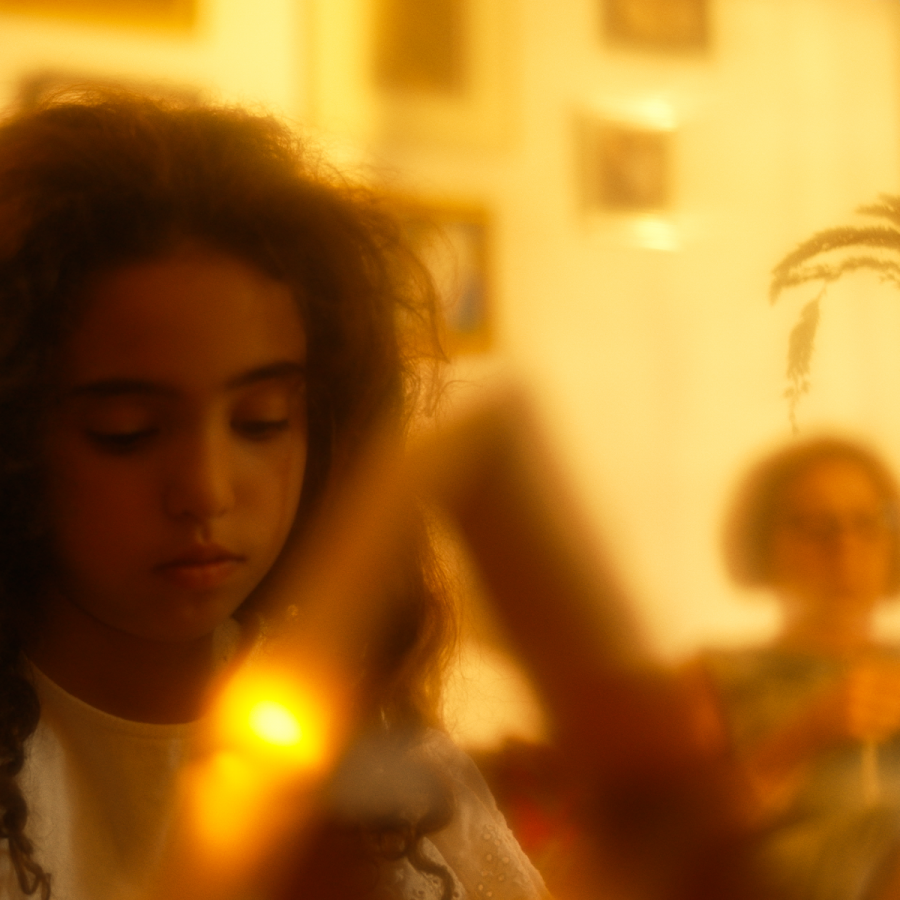
That collaboration extended into the film’s visual language. The camera stays close, often intruding into the living room space, emphasizing texture and detail over orientation.
“The shots needed to be extreme close-ups to immerse the audience in a different time and space,” Urbain explained.
Working in a tight apartment came with constraints, but those limitations encouraged creative solutions. Bright, almost comically yellow filters were added to set lights, and Vaseline was applied to the lens to create a softened image, giving the space a nostalgic, ethereal quality.
“That warmth was essential to creating the film’s nostalgic feeling,” Urbain said. “It helped us put the audience into a timeless Armenian-Lebanese apartment.”
At the emotional centre of "Closer in Strife" is the grandmother, played by Rosalia Evereklian Vassilian, an actress with over four decades of experience in Armenian theatre.
Vassilian grew up surrounded by performance, as her father was an actor and director, and she first stepped on stage at nine years old. Over the years, she has acted in comedies and dramas, and later took on directing roles herself.
When Vassilian read the script, what struck her was the character’s patience.
“The patience and the love of this grandmother for her granddaughter, going along with her silence without any remarks,” she said.
Nikoghossian's story resonated personally with her.
Having grown up in Lebanon during the civil war, Vassilian said she immediately understood Nikoghossian’s approach. She described the film as a courageous act, one that preserves family experiences shaped by instability and loss.
For Maria Azadian, Nikoghossian’s cousin, watching the film was both emotional and affirming. The two share the same grandparents, whose lives and home inspired much of the film. Seeing Armenian-Lebanese identity represented on screen felt significant.
“It felt validating to see their stories on screen,” Azadian said. “It reaffirmed that our stories are worth telling.”
Certain moments were instantly familiar, like a scene involving a tower of playing cards, which recalled childhood games. More broadly, Azadian connected to the film’s depiction of generational distance.
“Tragedy is often the trigger to building a closer relationship,” Azadian said.
She also emphasized the importance of situating Armenian life within Beirut itself.
Armenians have lived in the city for over a century, and their presence is deeply woven into its fabric. In her family’s case, the 2020 explosion caused severe damage to Azadian's grandparents’ home, only a few streets from the port.
Since its completion, “Closer in Strife” was screened in Beirut and at Armenian-focused film festivals, and will screen at the Slamdance Film Festival in Los Angeles as part of its Narrative Shorts program.
The film will have in-person screenings on Feb. 21 and Feb. 24, with virtual screenings available on the Slamdance Channel from Feb. 24 to March 6. A wider public online release is expected this summer.
For Nikoghossian, the recognition is encouraging, but the most meaningful responses remain personal.
“Anytime I hear it moved someone, it moves me too,” he said. “It kind of keeps you motivated to focus more on personal stories.”
Ultimately, “Closer in Strife” is less about depicting disaster than about observing what happens around it. The film lingers on the fragility of ordinary moments, reminding viewers how quickly the familiar can shift.
For Nikoghossian, that focus feels inevitable.
“You just never know what’s coming next,” he said. “So you just go for it.”
This article originally appeared in Volume 46, Issue 8, published January 27, 2026.




_600_375_90_s_c1.jpg)