A night out with Concordia intramurals
Recreation and Athletics enters the year with changes on the horizon
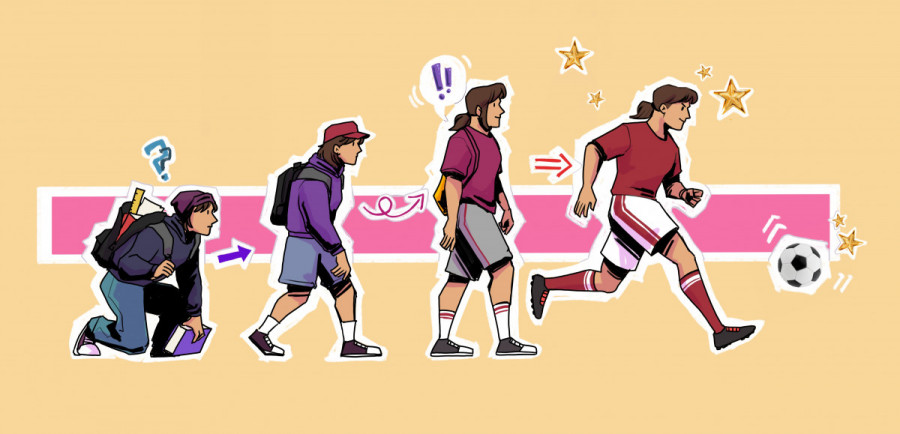
Oscar Horeau first heard about Concordia’s intramural sports leagues during his time in student residence. A message from his resident assistant convinced the second-year finance student to sign up for one of the university's weekly soccer leagues.
“When I heard about intramurals, and I didn't want to stop playing [soccer], I was like, ‘I have to get into it because I don't want to stop playing,’” Horeau said. “And also most of my friends were already signing up.”
The search for community pushed Horeau into competition, where the Paris native faced off against teams of students from different walks of school life.
“The people on my team were most of my friends from res, but I'd also meet other people from Concordia that I didn't know,” Horeau said. “I even got to meet people I knew from Paris that were in Concordia, and I didn't even know they were with me.”
Horeau’s experience reflects a larger trend surrounding Concordia’s intramural sports leagues. From top to bottom, the university maintains a focus on building relationships between students while also fostering competition and fitness.
Michelle Dodds is the manager of campus recreation for Concordia Recreation and Athletics (RA). The department runs intramural basketball, volleyball and hockey leagues in the fall and winter, as well as soccer and flag football when the Stinger Dome goes up during the winter.
Additionally, the RA features several other programs including fitness classes, campus gyms and youth and summer programs.
Dodds’ direction for the department aims to create a stronger campus environment for students who find themselves there every day. Through athletics, social events and even collaborations with student groups, she hopes to strengthen the Concordia community.
“If you participate, you can have a great experience. You'll meet new people,” Dodds said. “You'll have kind of a Concordia feel, not just come to school and go home.”
Horeau welcomed the opportunity to compete against his fellow students, especially amid the stress of the academic year.
“Having this break and this opportunity to play some sports just for fun with your friends at a low level helps you to forget about homework and assignments, and get a break from your studies one or two nights a week,” Horeau said.
Dexter Great, like Horeau, echoed the feeling of connectedness that comes from intramural sports. The business student joined the soccer league during his time in residence and immediately bonded with his new league mates, creating relationships he says wouldn’t have been possible without it.
“It's really interesting knowing that everyone's a Concordia student,” Great said. “And so there's sort of a sense of friendliness in the intramurals, which you don't really find in regular pickup recreational weeks.”
To promote fairness, organizers divide players and teams into multiple leagues based on skill level, allowing newcomers to compete and enjoy the experience while also allowing higher-level students to take games more seriously.
“Having this break and this opportunity to play some sports just for fun with your friends at a low level helps you to forget about homework and assignments, and get a break from your studies one or two nights a week.” — Oscar Horeau, Concordia student and intramural soccer league participant
Horeau, who played in the top intramural soccer league, understands the need for inclusion but also relishes the competition that comes with matchups against teams looking to win.
“We were playing, we were having fun, but the goal was also to win and to be able to win games and maybe a tournament,” Horeau said of his team. “So I enjoyed it for the fact that everyone can play. Whether you're really good, you're an athlete, or you're just starting, everyone gets the chance to play. But it's still really competitive.”
Great emphasized the university community as a catalyst for friendly competition. While he wants competition, he also understands the natural bond between students and how it affects games.
“I feel a lot safer playing a game of [soccer] against a Concordia student knowing that we go to the same school—you wouldn't want to hurt someone who goes to the same school,” Great said. “Whereas a McGill student or some random person might not really care if they tackle you and then you get hurt.”
Great, and other Concordia students will no longer have to worry about challenges from outside the university. Starting in the fall, intramural leagues will limit participation to Concordia students only, restricting access to external players who could previously join. This frees up space for students who may have lost out on spots to non-university participants.
These changes come in the wake of the winter semester vote that approved a fee levy increase for Concordia Recreation. Other changes include the introduction of flag football as an intramural sport and the freezing of student prices at the campus gyms.
With the increased funding, Dodds hopes to hear from students with ideas for new activities to make recreation more student-driven. If the programs accumulate enough interest, she says the department might even consider creating extra leagues.
“If soccer is super popular, we could offer a Friday daytime league, just looking at all of our facilities,” Dodds said. “And right now, also, once varsity is done, the evenings look like this: either campus rec or external renters—there's leagues that run the dome. If the volume was so high, we would be able to take back some of those times.”
Even those interested in finding work in sports can get in on the action. As teams become fully student-based, so will the referees and support staff that help run them. Dodds wants these opportunities to also be filled by Concordia students.
“We're going to be really tabling out in the community in September, looking for students that want to work, want to be referees, want to be timekeepers,” Dodds said. “We typically hire a lot of applied human science undergraduates, some of our athletes. But we're open to hiring students for sure.”
But more than anything, Dodds wants to hear from the student body. As the year gets underway, she hopes to position RA as a program open to changes and input from the Concordia community.
“We're willing to do more; we're willing to add programs if there's ideas for that,” Dodds said. “The goal is to provide things for them to find leisure in. If they already have something that they're keen about and it's doable, I'm willing to hear about it.”
Great won’t return to Concordia in the fall, ending his participation in the leagues, but he encourages everyone interested to join the program as a chance to compete and escape from studies.
“It's one of those things where once you try it, I can almost guarantee that you'll want to come back,” Great said. “[...] Even if you have just a couple of friends or if you don't have friends to play with and you just play with a drop-in team, the intramural leagues are the perfect place to enjoy and have a time to relax from your studies or whatever you're doing at Concordia.”
Registration for Concordia’s intramural sports leagues opens on Sept. 9, 2026, at 10 a.m. Students can register online using their Concordia email and student ID.
This article originally appeared in Volume 47, Issue 1, published September 8, 2026.



_600_375_90_s_c1.jpg)