
Who’s holding the matches?
Coping strategies cannot replace institutional accountability for burnout
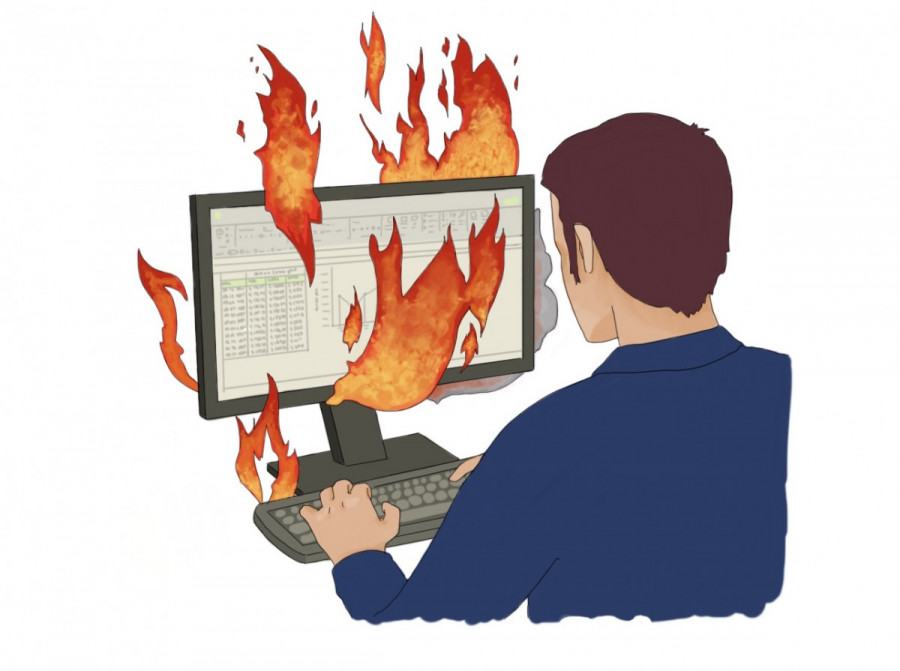
Burnout is no longer treated as a personal weakness. It’s openly discussed, acknowledged and even “normalized” in workplace culture. But recognition isn’t the same as responsibility.
In many workplaces, burnout is discussed in terms of coping. Employees are encouraged to set boundaries, manage stress and prioritize self-care. These strategies are not inherently wrong, but they become inadequate when framed as the primary solution.
Burnout is not simply a personal issue of resilience or time management. In many cases, it is the predictable outcome of workplace conditions.
A 2025 study conducted across Canada found that 47 per cent of professionals reported experiencing burnout, with 31 per cent reporting feeling more burned out than the previous year.
The effects extend beyond individual well-being.
In the same study, 24 per cent of businesses reported lost revenue, alongside broader declines in productivity. Burnout is widespread, escalating and costly. Yet responsibility for preventing it is still largely placed on the workers experiencing it.
This framing becomes difficult to justify when the reported causes of burnout are overwhelmingly institutional. Excessive workloads and long hours were reported as the leading cause by 39 per cent of respondents.
These are not problems employees can solve on their own. They are structural decisions shaped by staffing levels, workload expectations, workplace culture and management priorities. The top causes of burnout are largely out of workers’ control, yet burnout prevention efforts often ignore this imbalance.
Advice offering strategies to cope with burnout, published on Indeed, one of the most widely used employment platforms, acknowledges leading factors such as excessive workload and stressful environment.
Yet the burden of mitigation is still placed on employees: reach out for support, reduce stress and find coping strategies. This approach shifts responsibility away from the workplace conditions that created burnout in the first place.
That shift is deeply counterproductive, placing responsibility onto those with the smallest degree of control in the workplace and onto those who are already struggling with burnout due to excessive responsibility.
Additionally, much of the advice emphasizes the consequences of burnout on productivity, rather than personal well-being.
Why should employees invest energy and care to their own detriment into institutions that are unwilling to invest effort into creating conditions that do not actively harm their employees?
This reflects a broader cultural tendency to individualize systemic failures. When institutions create harmful conditions, the expectation is often that individuals adapt, cope and endure.
Over time, this deepens burnout. Workers spend energy trying to correct what they cannot control, only to return to environments that reproduce the same harm. In that sense, burnout becomes not just common but normalized.
At its core, this is a manipulative dynamic.
If workplaces want the conversation around burnout to mean anything, it must shift toward accountability. Addressing burnout requires institutional change: reasonable workloads, sustainable hours, adequate staffing and workplace cultures that do not reward exhaustion.
Burnout is not a personal failure in need of personal fixes. It is a workplace problem, and it must be addressed at its source.
This article originally appeared in Volume 46, Issue 8, published January 27, 2026.