When art and activism collide
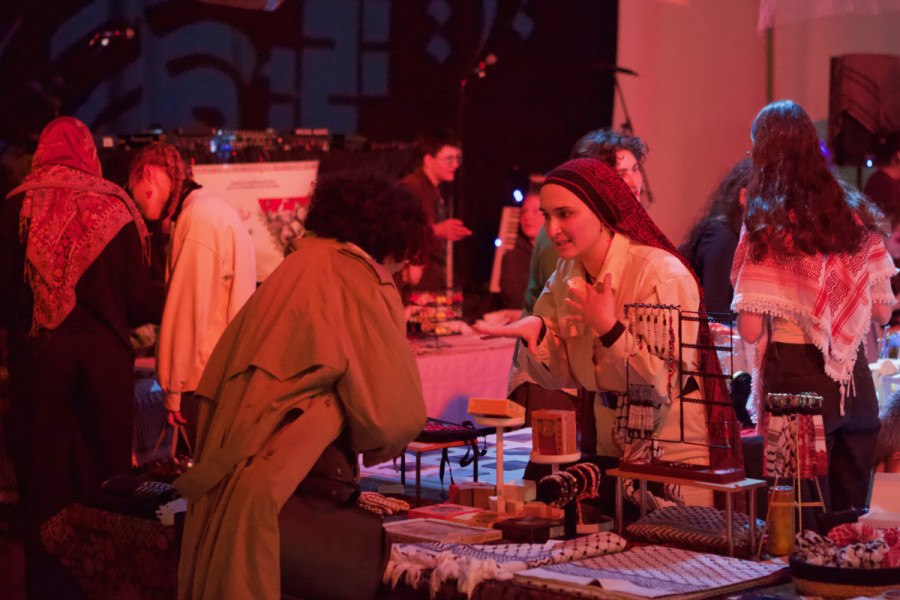
The collective Artistes contre le Génocide hosted the second edition of its multidisciplinary fundraising art night on Jan. 31.
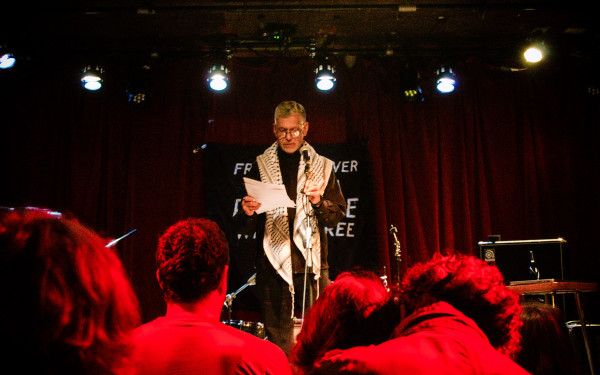
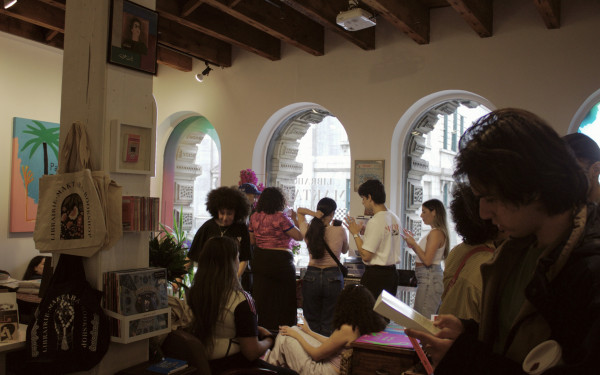
From 5 p.m. to 3 a.m., festivities were in full swing at the Maison France-Montréal in the Old Port. The night featured an exhibition, an art market, musical performances, Levantine food and community gathering spaces.
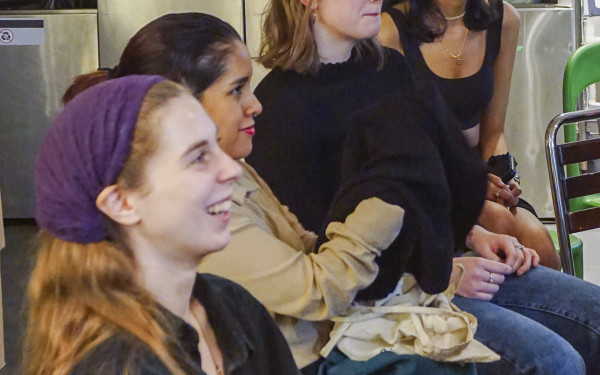
Hundreds of people attended the event, knowing that the money from their ticket would be redistributed to support victims of the ongoing genocides in Palestine and Sudan.
Behind the project is Valeriy Horomanskiy, the event’s coordinator and a graphic design student at Université du Québec à Montréal (UQÀM). He came up with the idea last year, shortly after the pro-Palestinian student encampments at UQÀM were dismantled.
Sensing what he describes as a “lack of momentum” in the movement, Horomanskiy sought to bring together committed artists from his university’s art faculties for an evening of exhibitions and performances.
The first edition of Artistes contre le Génocide took place on Feb. 1, 2025, raising $10,000 for the cause.
Nearly a year later, the event returned with a bigger budget and an equally resounding success.
“There was no good excuse to not do it again,” Horomanskiy said.
The event sold tickets on a pay-what-you-can basis starting at $12, with all proceeds going to the Palestinian Children’s Relief Fund and the Sudan Solidarity Collective. The two humanitarian aid organizations have been working on the ground to support people living in horrific conditions since 2023.
Horomanskiy said he created this event because he believes art can be a powerful tool for solidarity and unity.
“Art in all its forms […] forges emotional bonds between people from different backgrounds, bonds that last a long time,” he said.
With Artistes contre le Génocide, the aspiring designer values creating a space where everyone can gather for a common cause, feel less alone, and demonstrate resilience in the face of ongoing atrocities.
Participating artists share a similar vision.
Beatmaker William Lacroix, known as Nkusi, heard about the project through friends who performed at the first edition and decided to apply this year.
The Rwandan musician feels particularly concerned about issues of social justice, shaped by his experience as a genocide survivor and as a Black person living in Canada. Building on this perspective, he believes that when art and entertainment are experienced in the service of a greater cause, they can make “activism a bit more accessible for everyone.”
Echoing Horomanskiy’s view of art as a unifying force, Nkusi defined it as “a universal language.” He adds that it “connects us to other senses,” raising awareness in people through a more emotional, less intellectual dimension.
“In the media, the narrative of division is very strong,” he said. “But events like this are important to show that there is still a sense of community, activism, and togetherness.”
Poet, singer and autoharp player Ida Scarpino, also known as Tough Knit, performed at the event for similar reasons.
“When we organize political events and include art in them, [...] it's a way to come together to maintain solidarity, and above all, to not get discouraged,” they said.
That sense of community and togetherness was also felt by attendees like Skye Nahanni Long.
“There are way more people here than I thought, and far more things organized,” she said.
Long described artistic creation as a “sharing of emotions,” and believes art can make people feel things that words alone cannot express.
Organizers, artists and attendees alike seemed to all agree on one fundamental thing: unity is strength, and art has a unifying power.
“When we're fighting against a system that's much bigger than us, [...] coming together allows us to realize, ‘OK, I'm not alone in this fight,'” Scarpino said.
This year, Artistes contre le Génocide raised approximately $13,000 for Palestine and Sudan.