
The radical value of doing nothing
Why embracing boredom can be your greatest advantage
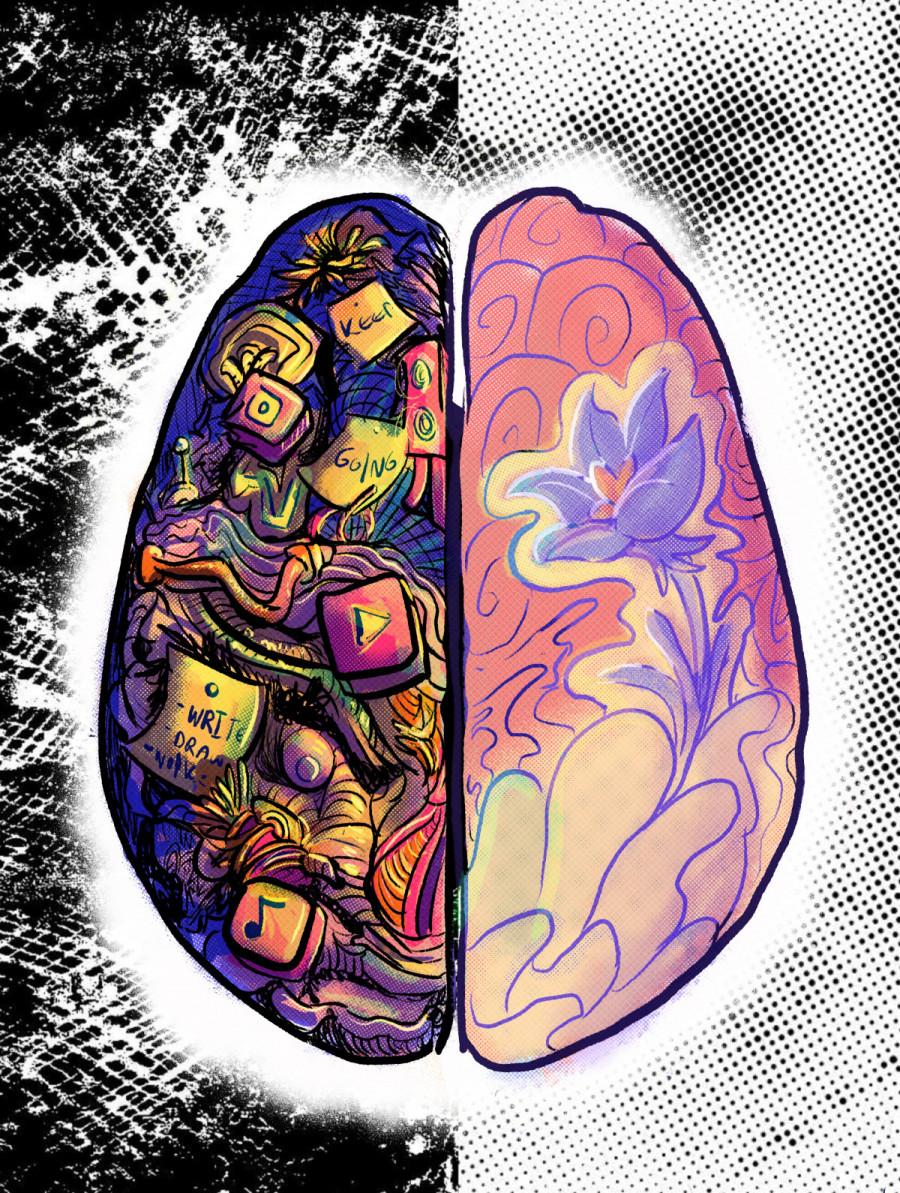
Boredom might be the most radical act of self-preservation we have left.
In waiting rooms, people rarely look up from their screens. On sidewalks, most walk with earbuds in. Even short elevator rides are consumed by quick glances at notifications. Every pause in the day becomes something to occupy, every gap smoothed over with stimulation.
We’ve been conditioned to treat boredom as a problem to fix.
If overstimulation is the tax of modern life, then boredom is the new currency. It signals freedom: freedom from the algorithm, from the grind, from the pressure to always be “on.” Having the time and mental space for boredom is a privilege.
For decades, productivity culture has insisted that every minute should be maximized. Tech companies profit off every scroll, workplaces stretch far beyond nine to five, and even hobbies are expected to be productive. That constant churn has turned attention into the most valuable resource of all.
Boredom isn’t emptiness—it’s incubation. Some of the best ideas arrive not while we’re at our work desks or refreshing our feeds, but in the moments where our minds are allowed to wander. Neuroscience backs this up: studies show that the brain’s “default mode network” activates when we daydream, connecting distant ideas in ways linear focus never could.
Yet most of us have forgotten how to sit with boredom. We panic at the thought of being unstimulated. People stream shows while brushing their teeth, scroll through emails on their commute and reach for their phones at any moment of pause.
Today, real privilege lies in having space to go offline—staring at the ceiling, walking without music or resisting the urge to capture every moment.
That privilege also has deep ties to inequality: people working multiple jobs rarely get the luxury of an idle afternoon. Boredom isn’t just a form of currency in the capitalist sense; it’s also unevenly distributed, signalling class and control.
But boredom doesn’t have to be exclusive. Anyone willing to resist the pull of constant distraction can reclaim it, bit by bit.
Meaningful unstructured time doesn’t have to be monumental. Even brief stretches of unoccupied time—pausing between tasks, letting your gaze wander or sitting in quiet—create mental space.
Boredom can seem uncomfortable, even unsettling. Still, carving out that space remains one of the simplest—and most radical—ways to preserve our freedom.
This article originally appeared in Volume 46, Issue 1, published September 2, 2025.



_600_375_90_s_c1.jpg)