
The case for getting involved
University doesn’t feel like a community until you start showing up beyond class
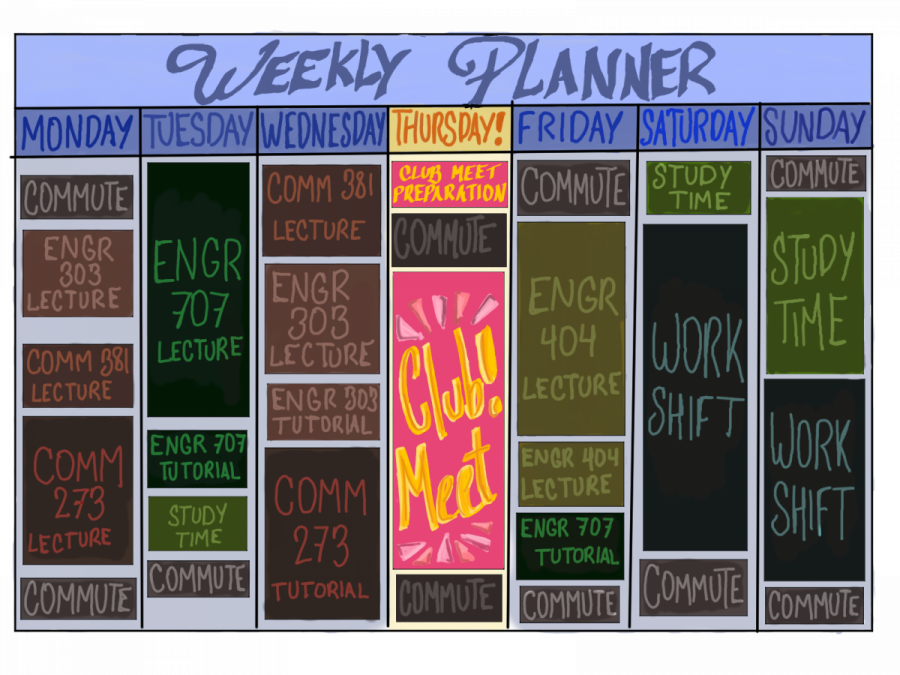
Extracurricular activities were always a part of my life.
Between violin classes, soccer practices, gardening club and cross-country running, I kept myself busy with activities offered at school or through my local library. The concept of “free time” never existed for me, and honestly, I’m grateful for that. Some of my best memories come from being part of things.
To put it simply, I liked to keep myself busy doing just about anything but sleeping.
In college, however, that all changed. COVID-19 shut down or disrupted most clubs and activities, which didn’t just affect my participation, but also the way I valued my time and energy. Suddenly, I fell into the mentality that for something to be worth my time, I should be able to make a profit. It couldn’t just be “for fun” anymore.
We are (for the most part) imperfect independent humans who need to make things happen for ourselves, and sometimes that thing is going to an event at school, even if you don’t have class that day. The minor inconvenience cannot replace the sense of community built through student-run events or the satisfaction of being part of a team.
That being said, it took a hot minute for me to figure out what clubs I would like to participate in, as adult responsibilities crept up on me. Between commuting, classes, assignments and juggling part-time jobs, did I really need to add yet another thing to my to-do list?
For my entire freshman year, the answer was no. School became something I had to get through, not something I was excited to be part of. I went to lectures, did the readings and questioned whether I had picked the right undergrad, but none of it felt meaningful.
That all changed in September 2024, when I ran into a college friend on the shuttle who was involved in student media. After catching up (and briefly spiralling over whether we were doing enough for our futures), she asked if I’d ever considered writing for a campus publication.
That conversation became the start of my extracurricular life, and the first time university felt like more than just classes.
The truth is, it doesn’t matter what your “thing” ends up being or how long you commit. What matters is joining something that’s actually well-run. A good club or association can make your university experience. A disorganized one will drain you.
Before you join, pay attention. Do the current members communicate clearly, support one another and seem like they know what they’re doing? Are people actually showing up and staying involved?
If the answer is no to more than three of these, run!
It’s also worth knowing the difference between clubs and student associations.
Clubs are meant to be fun, spaces to meet people, try new things and step outside of your routine without the added pressure. Student associations, on the other hand, require more time and responsibility, as elected members represent students, organize assemblies and act as the link between departments and their peers.
But you don’t need the most intense commitment on campus to get something meaningful out of it. Even one weekly meeting, one event or one small role can change how your whole degree feels.
So, log off LinkedIn for a second. Stop waiting for your life to “start” after graduation and start showing up now. Opportunities don’t appear out of nowhere; they follow the people who are already in motion.
This article originally appeared in Volume 46, Issue 8, published January 27, 2026.



_600_375_90_s_c1.jpg)
_600_375_90_s_c1.jpg)
_600_375_90_s_c1.jpg)