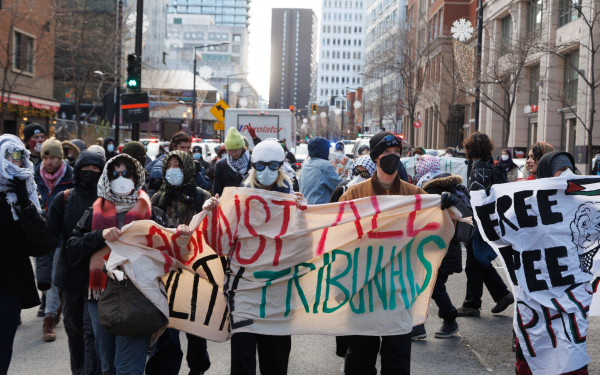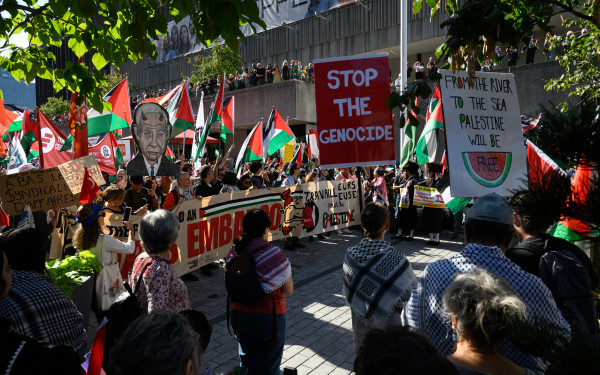
Pro-Palestine strikes at Concordia see two arrests and campus closure
Thousands of student protesters marched for Palestine on Oct. 7
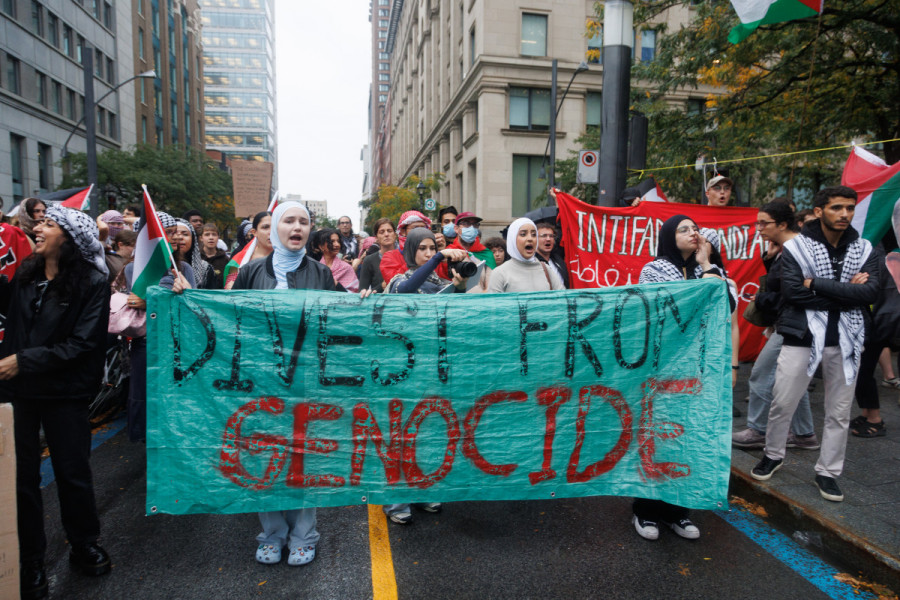
Wide-scale mobilization from students and community members occurred on Oct. 6 and Oct. 7 during official strikes for Palestine at Concordia University.
Two individuals involved in the strike efforts were arrested on Oct. 6 for mischief and assault of a security agent, according to the SPVM.
The strike action on Oct. 6 and Oct. 7 came after ten student associations voted to go on strike, demanding that Concordia divest from companies complicit in Israel’s genocide in Gaza.
After two years of persistent international outcry against Israel’s war crimes, a United Nations commission of inquiry reported on Sept. 16 that Israel has been committing genocide against Palestinians in the Gaza Strip.
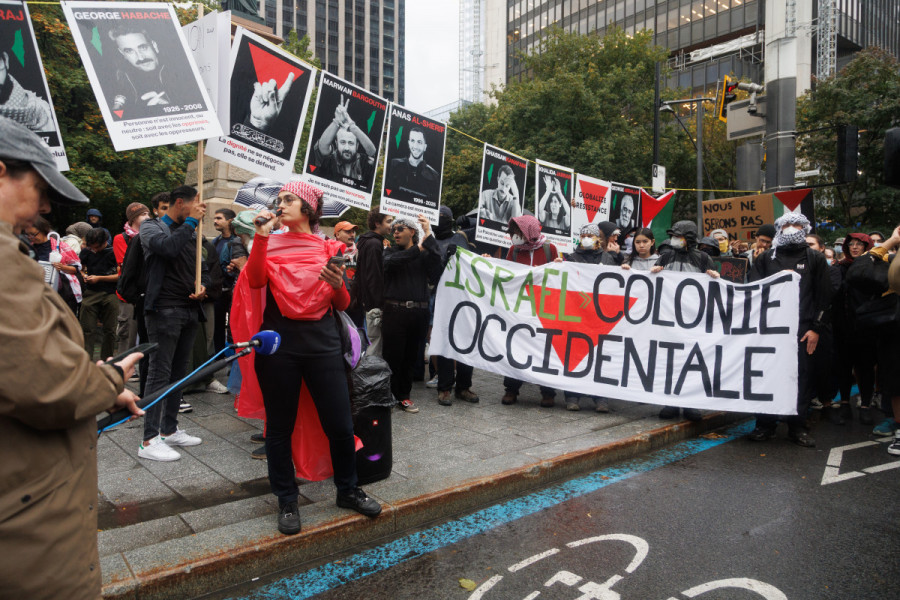
Other student associations from McGill University, Université de Montréal (UdeM), Université du Québec à Montréal, CEGEP Saint Laurent, Maisonneuve College, and CEGEP Marie Victorin were also on strike.
Across Montreal, over 80,000 students were officially on strike for Palestine on Oct. 7, according to Students for Palestine’s Honour and Resistance (SPHR) Concordia.
At 11:00 a.m. on Oct. 6, three Concordia security agents and six SPVM officers surrounded a group of protesters outside Le Frigo Vert. Tensions between the police and protesters were high, leading to the two groups pushing each other.
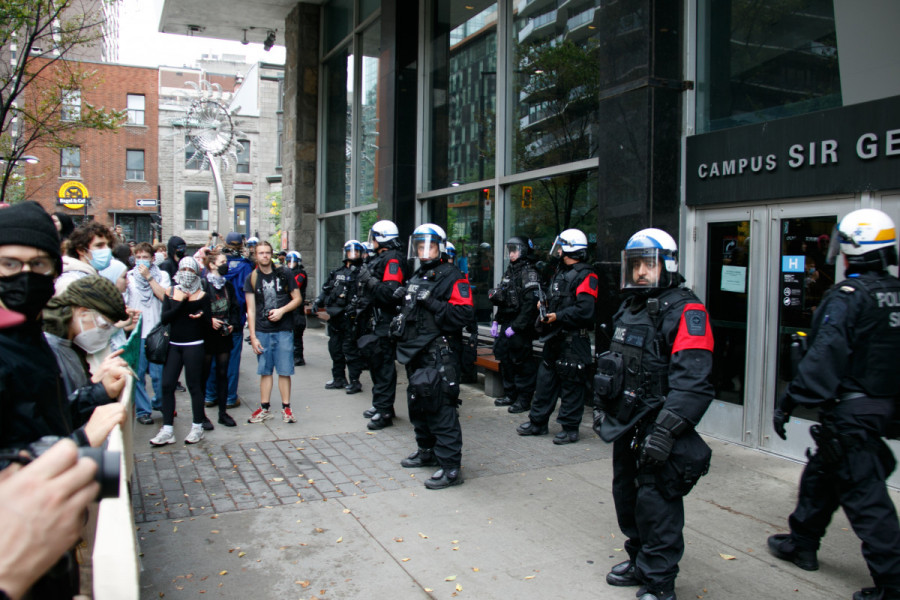
Another incident that day involved one Campus Safety and Prevention Services (CSPS) officer kneeling on a protester’s back, while another restrained them.
In a statement to the Concordia community, the university’s president, Graham Carr, claimed that the two protesters arrested were not “members of the Concordia community.” He alleged that one was in possession of a metal bar and “several incendiary devices.”
“When I came to the university yesterday morning, there was no place to park in front of the Hall Building because it was all police cars. I looked at those cars and I said, ‘This is how frightening students are. This is how frightening students standing up against genocide are.’” — Kevin Gould, Concordia professor
According to CTV News, the SPVM could not confirm Concordia’s allegations about the protester’s possession of “incendiary devices” or metal bars.
In an SPHR Concordia statement, the group accused the university and Carr of using an “accusatory tone” in his statement regarding the strikes and portraying Concordia’s students as dangerous.
Tensions between students and CSPS agents remained high throughout the entirety of Oct. 6, with agents arguing with students to deter and hinder their picketing of classrooms.
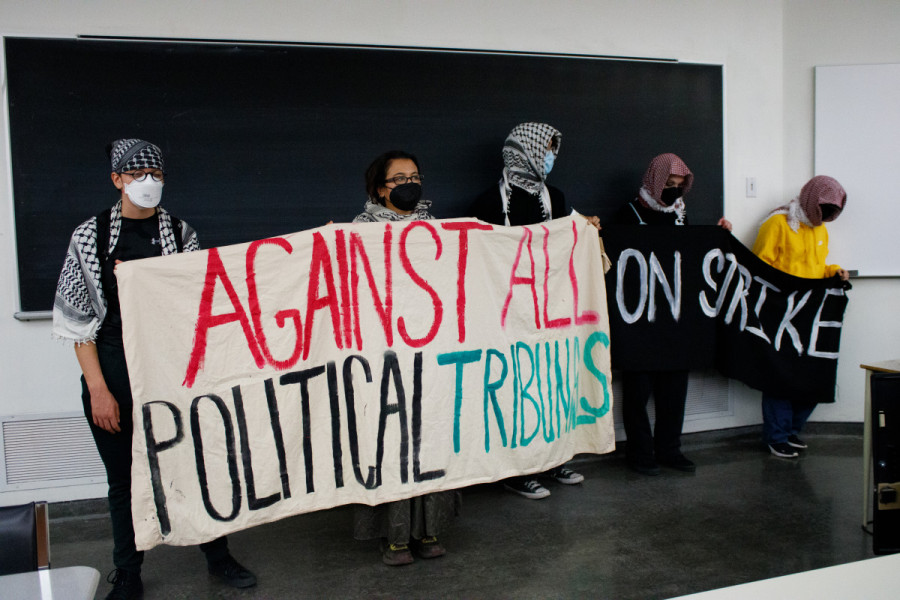
In an email to the student body on Oct. 1, Brad Nelson, Concordia’s Deputy Provost and Vice-Provost of student life and experience, informed students that blocking classrooms, entrances or exits is forbidden under the university’s Code of Conduct.
Although students have the right to strike, Concordia’s Code of Rights and Responsibilities says that members “are free to engage in peaceful and orderly protest, demonstration, and picketing that does not disrupt the functions of the University.”
Due to the code, hard picketing has been forbidden by the university. Hard picketing involves physically discouraging students from entering classrooms and disrupting classes if they were to continue.
Students, however, continued their strike actions and picketing of classrooms throughout the first day of strikes, with varying success rates. Some class pickets were overseen by CSPS officers, while others saw no intervention from agents.
In some cases, picketers were able to appeal to students, convincing many to leave class, while in others, no one exited the room. In one instance , following an interruption of an anthropology practice exam on the Hall Building’s eighth floor, hardly any students stayed for the lecture.
“If it weren’t for the exam today, I would have absolutely stayed off campus, and I plan to for the next two days,” said Saehee Yoon, a Concordia student who left their class following a picket. “The walk-in definitely triggered the guilt, which is the point.”
Police presence and student repression
A member of SPHR Concordia, who was granted anonymity due to fears of academic repercussions, said Concordia’s increased police presence on campus is concerning for student rights.
“Concordia is turning into a police state,” they said. “There is not just one police car, two police cars [...], this time there are bike cops, there are police cars, riot vans. It is very clear to see that Concordia has adopted a policy of becoming a police state against free speech on campus.”
Concordia saw a heavy police presence on Oct. 6 throughout the entire day, with a considerable number of police cars, vans, bikes, and officers on horseback surrounding the premises.
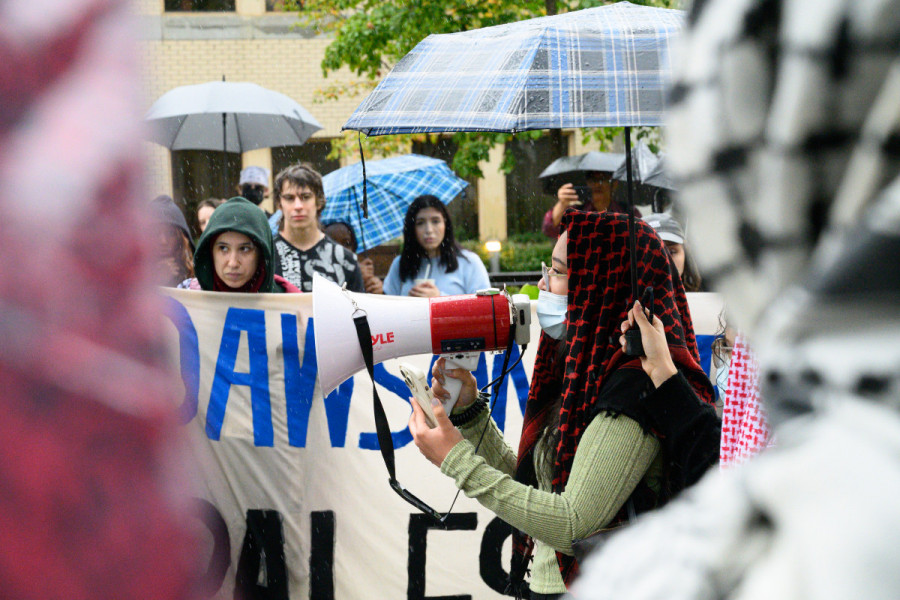
Julie Fortier, Concordia’s spokesperson, said the university did have an unspecified number of additional agents on campus as is “regular protocol,” but claims the university is not in charge of police mobilization.
“The SPVM decides where and how to deploy in the city streets,” Fortier said in an email to The Link. “It’s unfortunate, but likely due to criminal acts committed by protestors during past demonstrations that they determined they should be present in the vicinity of campus.”
Campus closure and student demonstrations
On the morning of Oct. 7, the university announced it would cancel all classes at its downtown campus as an “exceptional measure to protect our entire community” following the arrests made on campus the day before.
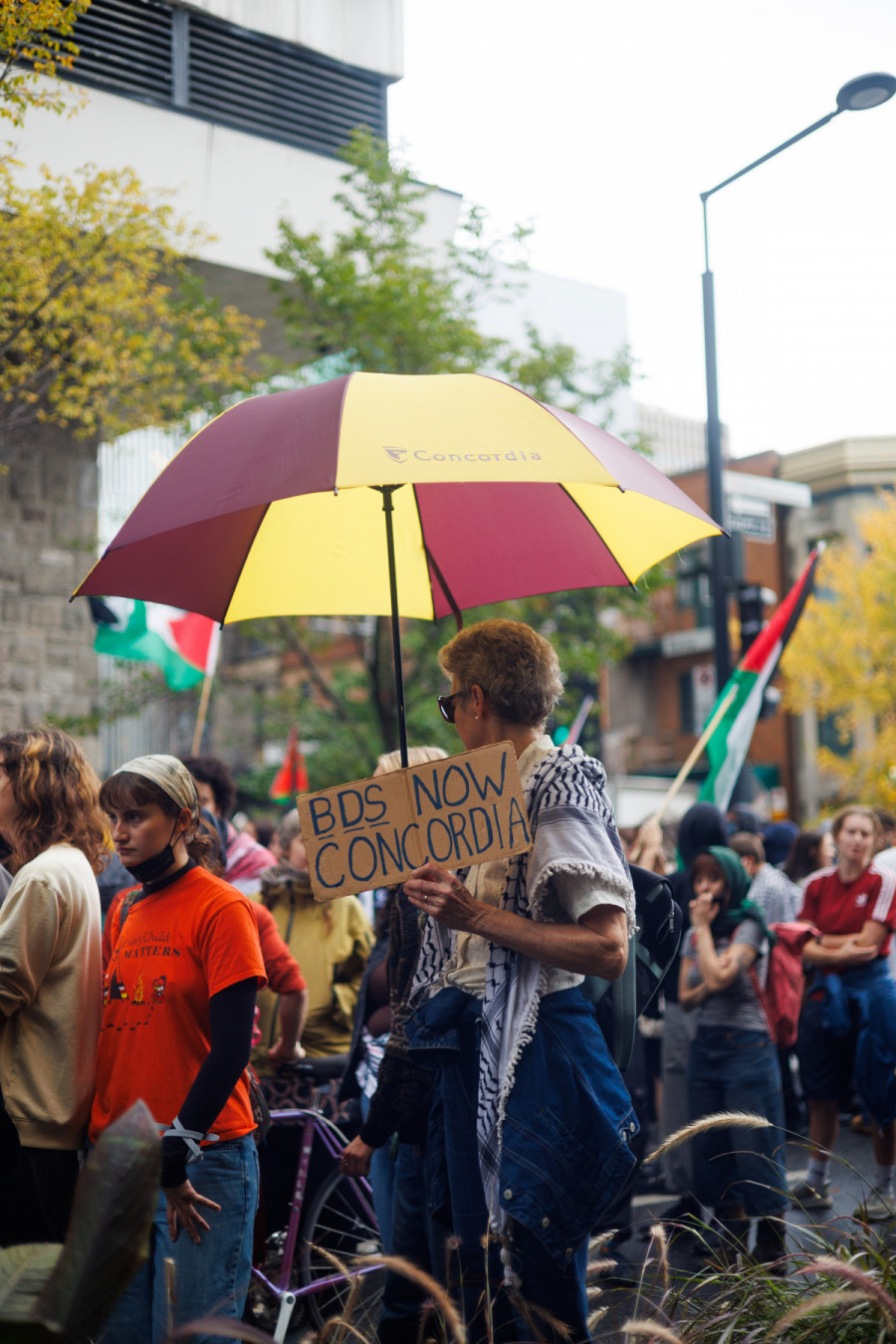
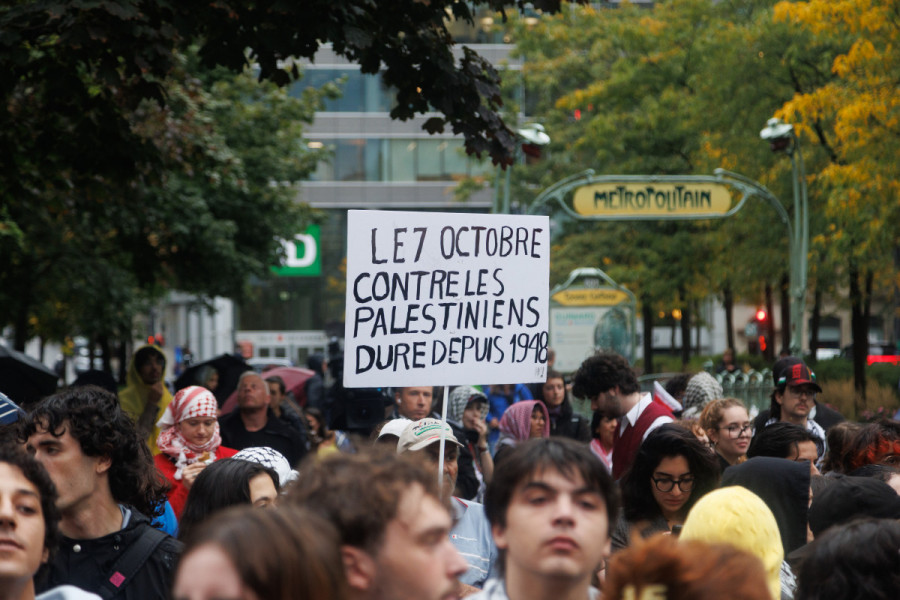
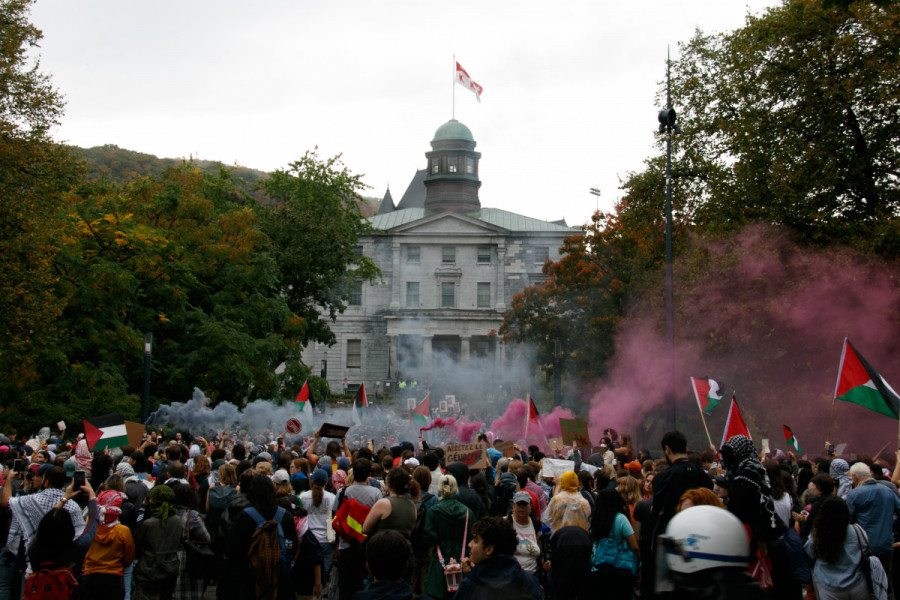
Despite the university’s downtown campus shutting down, thousands of students participated in an SPHR-organized demonstration that started in front of the Hall Building. McGill, Dawson College, and UdeM students also joined the demonstration soon after its start time.
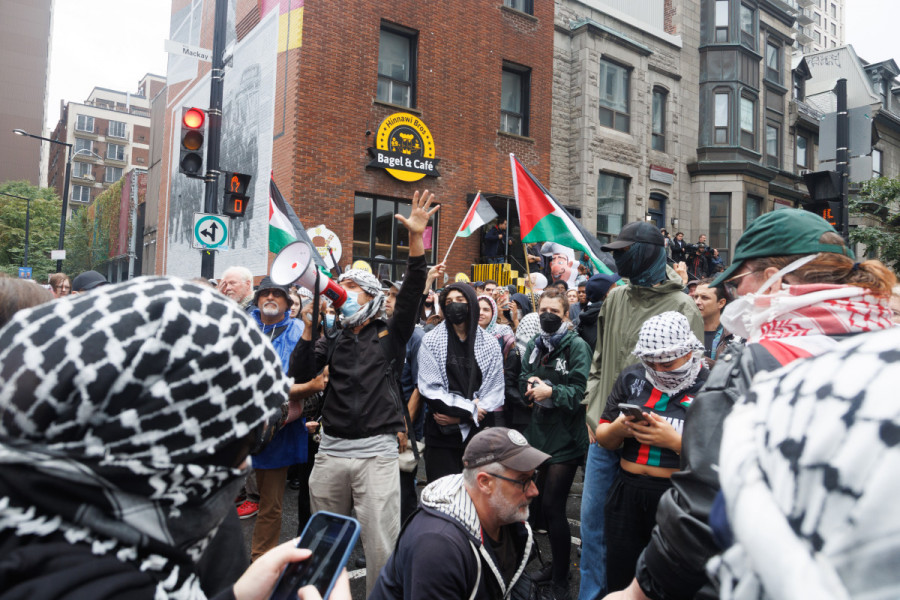
From the beginning of the demonstration at 1 p.m. until its end, demonstrators were surrounded by hundreds of SPVM officers, as well as Sûreté du Québec (SQ) officers.
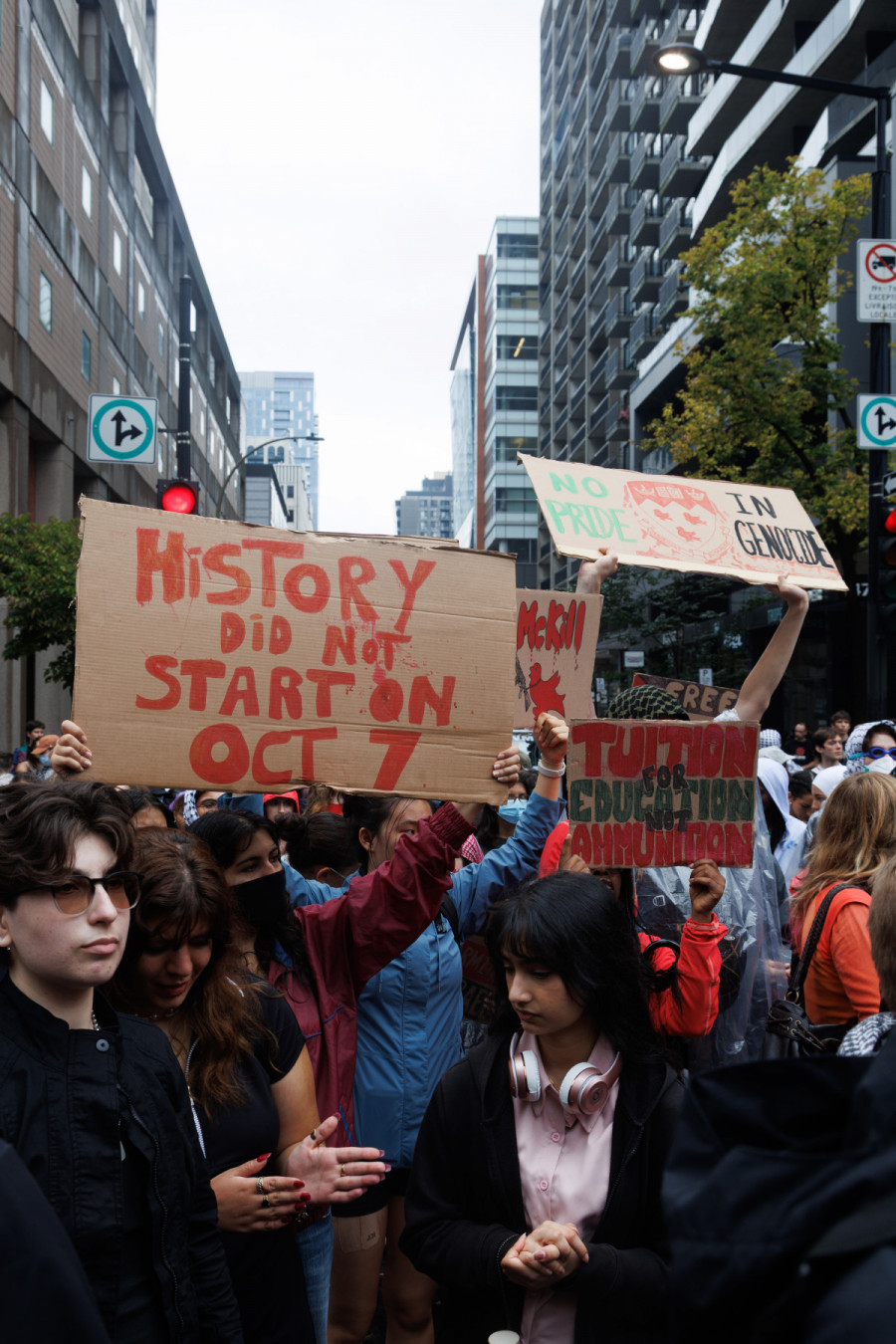
A number of professors also joined the students in solidarity.
McGill professor Daniel Schwartz gave a speech to students declaring the importance of protesting for Palestine.
“A lot of people ask me how I, as a Jew, can make this sort of speech on Oct. 7, and I say to them, as so many of you have said, that this genocide and ethnic cleansing of Palestinians did not start on Oct. 7,” Schwartz said. “Any day of the year is a good day to commemorate the Palestinian struggle.”
Schwartz thanked students for letting him be a part of the protest. He said students have faced repression from police and university administrations.
Kevin Gould, an associate professor at the Concordia department of geography, planning and environment, also stated the importance of the pro-Palestine student movement when speaking to The Link.
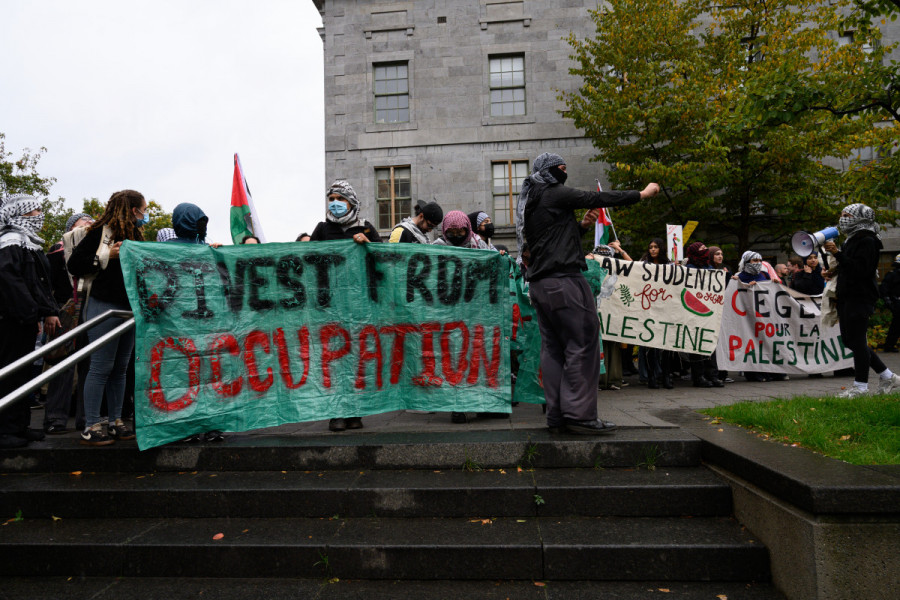
“This is an extremely important moment. Students have tremendous vision, insight, courage and empathy,” Gould said. “That’s why they are in the streets, even despite repression, people show up because we are in the midst of a genocide.”
Gould also stressed the increasing amount of police presence on campus.
“When I came to the university yesterday morning, there was no place to park in front of the Hall Building because it was all police cars,” he said. “I looked at those cars and I said, ‘This is how frightening students are. This is how frightening students standing up against genocide are.’”
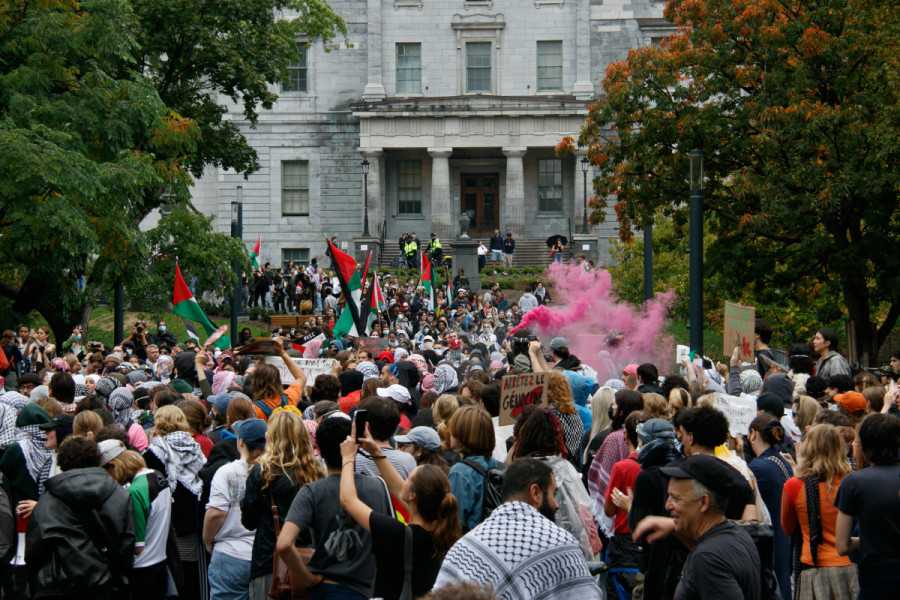
Around 45 minutes after the demonstration started, protesters began marching toward McGill. Protesters attempted to evade the police when they reached McGill by taking a side path where officers were not located. While running ahead to keep their lead, a protester threw a rock and broke a window of one of McGill’s buildings.
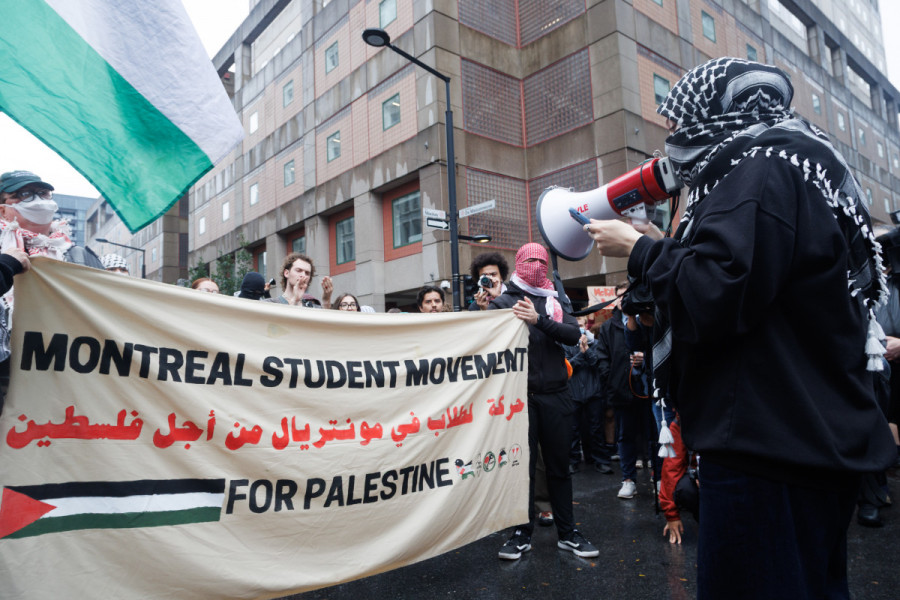
Despite this, for the majority of the march, the SPVM and SQ were either closely monitoring or walking beside protesters.
Soon after, students gathered to listen to more speeches from activists in front of McGill’s McCall MacBain Arts Building. Protesters lit smoke bombs in the colours of the Palestinian flag and set fire to an Israeli flag.
Victoria Metaj, a UdeM student, joined the march to protest two years of genocide.
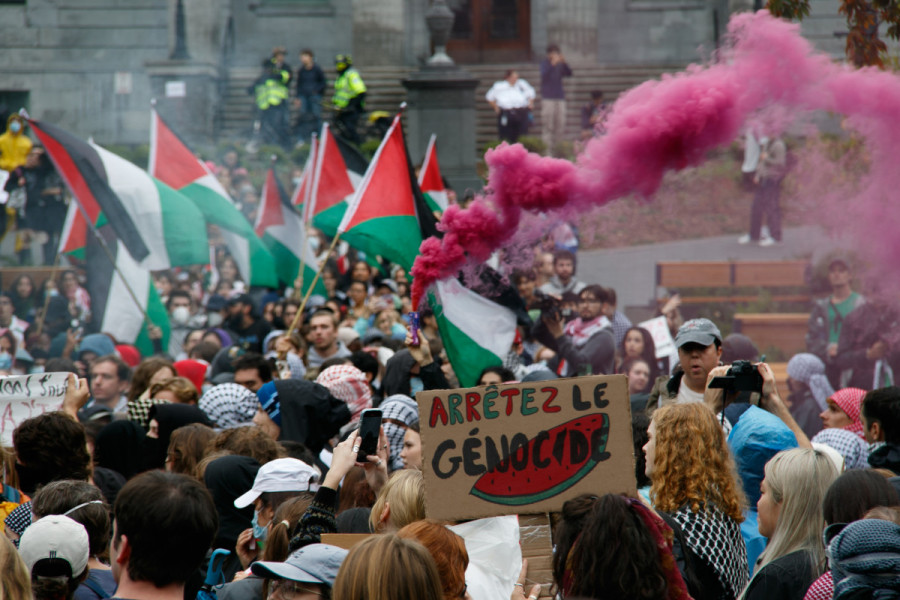
“We need to go out and protest,” Metaj said. “It’s great to see that people care [about Palestine].”
Tensions heightened around 20 minutes later as protesters began streaming out of the McGill campus. Over a dozen police officers advanced towards the crowd next to the Stephen Leacock Building while banging on their shields. No physical conflict arose, and the march continued down René-Lévesque Blvd. and back toward Concordia.
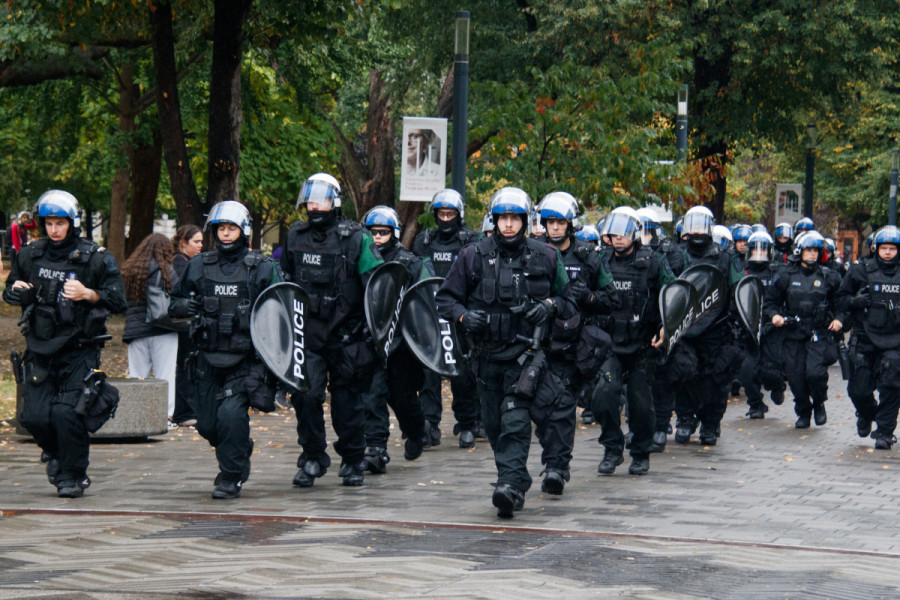
Around 30 minutes after returning to Concordia, the march continued toward Victoria Square to join a separate pro-Palestine demonstration there.
With files from Chantal Bellefeuille, Hannah Scott-Talib, Cedric Gallant, Ryan Pyke, and Dana Hachwa.
A previous version of this article stated that a protester assaulted a assault a police officer, instead of security agent. The Link regrets this error.