Montreal chose diversity. Will Quebec choose fear?
Quebec risks its future by restricting rights and limiting inclusion

On the Montreal Metro, French merges with Arabic, English flows into Persian, and Spanish drifts into Mandarin. The city pulses with diversity. Yet Quebec politics give way to a new refrain: diversity is only welcome if it conforms.
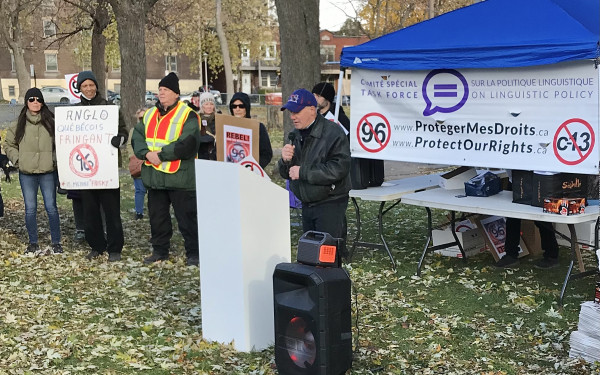
Montreal’s multiculturalism isn’t decorative—it’s foundational. In the 2021 Statistics Canada population census, nearly 40 per cent of residents identified as visible minorities. Many of those surveyed also spoke a mother tongue other than French. Yet laws such as Bill 96 and Bill 21 don’t nurture that tapestry.
Bill 96 forces businesses and public services to operate in French. It allows the government to override certain protections in Canada’s Charter of Rights and Freedoms through the notwithstanding clause, imposing what its opponents dread is a “Charter-free zone” across wide parts of civil life.
Meanwhile, Bill 21 bans public employees, like teachers or judges, from wearing visible religious symbols such as hijabs or turbans, sending a message that religious minorities are not fully welcome in public roles. Together, these laws impose strict controls over language and personal expression.
Anyone who calls Montreal home can feel this contradiction. Montreal thrives on openness, yet Quebec’s legal framework quietly insists: “You belong here, but only on our terms.”
Stakes climb as politicians grow bolder. The Quebec government recently floated a ban on public prayer, alarming civil rights groups who believe it disproportionately targets Muslim communities and undermines democratic freedoms.
Meanwhile, the Supreme Court of Canada has agreed to hear a landmark challenge to Bill 21, a ruling that could redefine the balance between rights and provincial powers. And abroad, the U.S. has now labelled Bill 96 a non-tariff trade barrier, accusing it of imposing costly burdens on transborder commerce.
Quebec's legislation no longer involves asserting provincial authority against the federal government or contrasting itself with English Canada; it's now affecting the province's reputation nationally and internationally.
We also need to acknowledge the fear motivating these statutes—here, the French language faces extinction. Preservation is necessary. But reflexive repression isn’t strength; it’s eradication.
If the province truly wants French to flourish, it should treat Francisation Québec, the government’s French-language program for newcomers, as an invitation, not a hurdle. All too often, these programs sit underfunded and rigid, with limited availability, long waitlists and class structures that don’t accommodate people balancing work, study or family responsibilities. Instead of supporting integration, they often leave newcomers frustrated and disconnected.
Envision an education system with flexible schedules, properly funded instruction and cultural programming that reframes francization as the key to inclusion rather than a symbol of exclusion. A strong province invests in the ability of its people to adopt its language—it doesn’t sanction them for not doing so quickly enough.
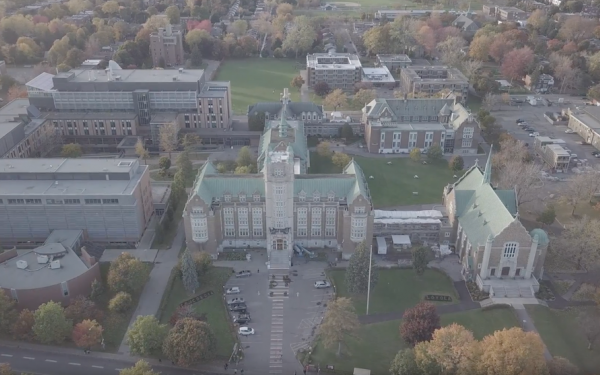
Montreal’s universities already show coexistence between rights and language. Concordia University actively promotes bilingualism through French courses, exchanges and community partnerships. Rather than presenting such institutions as threats, the government should view them as bridges connecting the world's talent with Quebec society, while fortifying the French language.
And if Quebec hopes to demonstrate confidence in its culture, it must look beyond bans. Stifling religious symbols or public prayer signals insecurity, not strength. Secularism constitutes the neutrality of the state—not the erasure of its citizens.
The paradox remains self-evident: for the sake of uniformity, not inclusion, Quebec risks its future. Montreal’s cultural heartbeat and global face prove that Quebec culture can thrive alongside diversity. Multiculturalism and our francophone culture can coexist, but fear directly opposes confidence.
Montreal has already chosen confidence over fear; now Quebec must decide whether it will do the same.
This article originally appeared in Volume 46, Issue 2, published September 16, 2025.