Concordia University collected millions in late fees and penalties from students
Too broke to pay tuition on time? Be prepared to cough up more
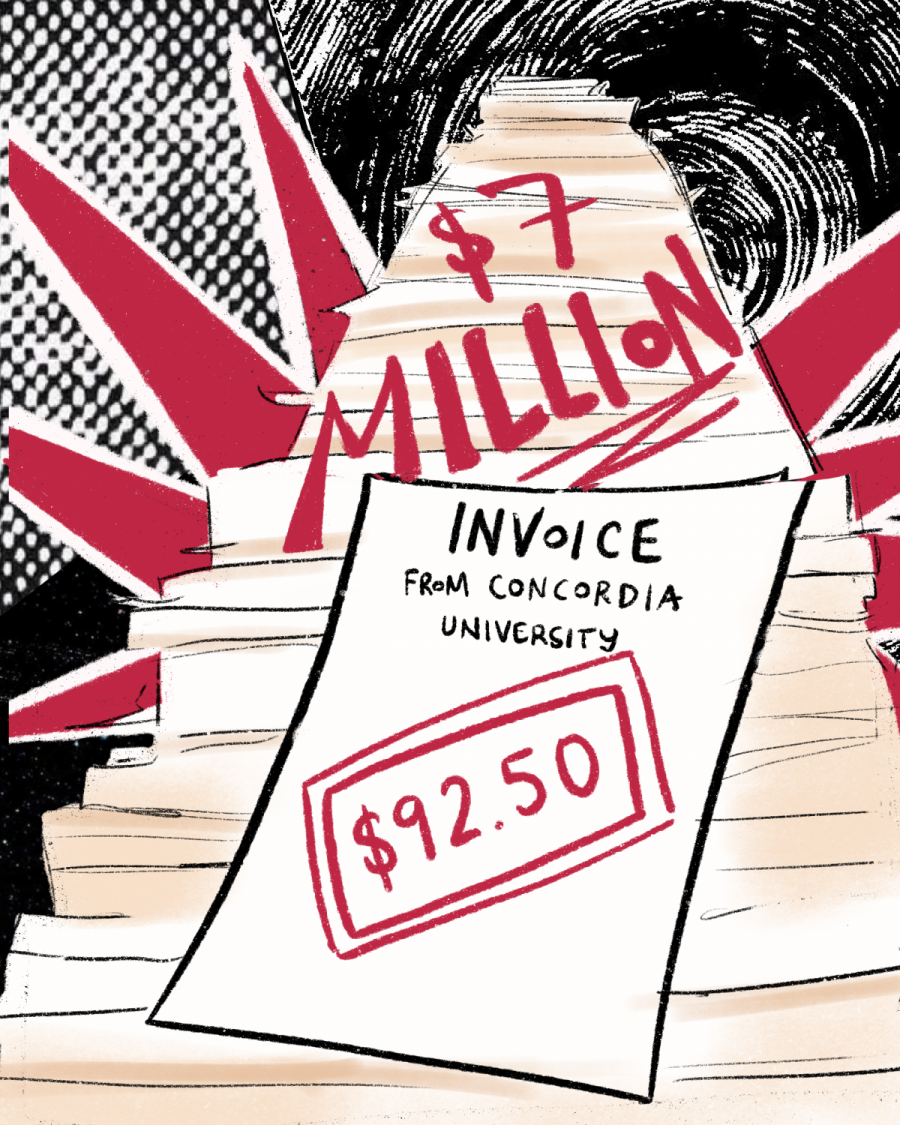
Concordia University collected over $7.2 million from students in late fees and other penalties from 2021 to 2024, according to data obtained through an access to information (ATI) request.
In that four-year period, the university charged over $4.5 million in late fees and collected about $4.3 million of that amount. It levied nearly $3.1 million in interest charges, of which $2.6 million was collected.
Meanwhile, penalties for insufficient funds —when a bank account doesn’t have enough money to cover a payment— totalled $48,345.
Overall, Concordia collected over 91 per cent of the various penalty charges assessed during the period.
The ATI also showed that the university uses a third-party collections agency to recover money owed to it. It declined to disclose the contract or provide data on how much was collected through the agency, however, citing exemptions for “industrial secret” under the ATI law.
Shakya Don, a second-year international student at Concordia, paid the fees for the summer 2025 semester a week after the deadline. He said he was worried not only about the penalties, but also whether the late payment would affect his course registrations.
“I was definitely a bit scared because already it's a big price to pay, and on top of that, I was a bit worried about having to pay even an additional amount,” Don said.
Late fees of $92.70 are applied if a student doesn’t pay their fees within 30 days of the start of a semester, according to the university's policy outlined on its website. The university also charges interest on any unpaid balances at a rate of 8 per cent annually, which gets compounded monthly.
In addition to penalties, the policy states that students with outstanding balances cannot register for additional courses or graduate.
Concordia Student Union (CSU) councillor Nathanael McCooeye said that while he believed some penalty was justified, the $92.70 late fee was steep.
“Students are typically not among the most affluent or autonomous of demographics to be drawing resources from,” McCooeye said.
Another ATI request showed McGill University charged over $6.4 million in late fees and interest on outstanding balances during the same period. However, the school didn’t specify how much of this was collected.
Concordia had a total enrolment of 45,445 students compared to McGill’s 39,380 in 2023, according to their respective websites.
The period covering the information requests, 2021-2024, also saw some of the highest inflation rates in decades in Canada, while Montreal’s housing costs surged as vacancy rates dropped to a historic low of 1.5 per cent in 2023.
Youth unemployment also remained high, with Statistics Canada reporting a 14.1 per cent joblessness rate among those aged 15 to 25 in July 2025—more than double the overall rate of 6.9 per cent.
At the same time, the university has also faced cuts in government funding and declining enrolment rates, putting pressure on its finances.
Concordia spokesperson Julie Fortier said that, like any organization, the university enforces deadlines and late fees.
“Ensuring we get the revenue we have budgeted has been especially crucial during the period [from 2021 to 2024] since we have faced a deficit for the past few years,” she said in an email to The Link.
McCooeye said it would be problematic if the university relied on these penalties as another source of revenue. However, he doubted that was the case, given the amount was small relative to the university’s budget.
“If what they are saying is, ‘In a difficult economic time, Concordia cannot afford late payments,’” he added. “I think this is understandable.”
Fortier said that the university may offer a payment agreement to students facing financial difficulties in some cases, if they are unable to pay their outstanding balance. This would remove any holds on their account and allow them to register for classes.
McGill did not provide comment in time for the publication of this article.
This article originally appeared in Volume 46, Issue 1, published September 2, 2025.