Bikers for Palestine carries the Gaza Sunbirds’ legacy forward
Monthly bike protests add momentum to Palestinian solidarity
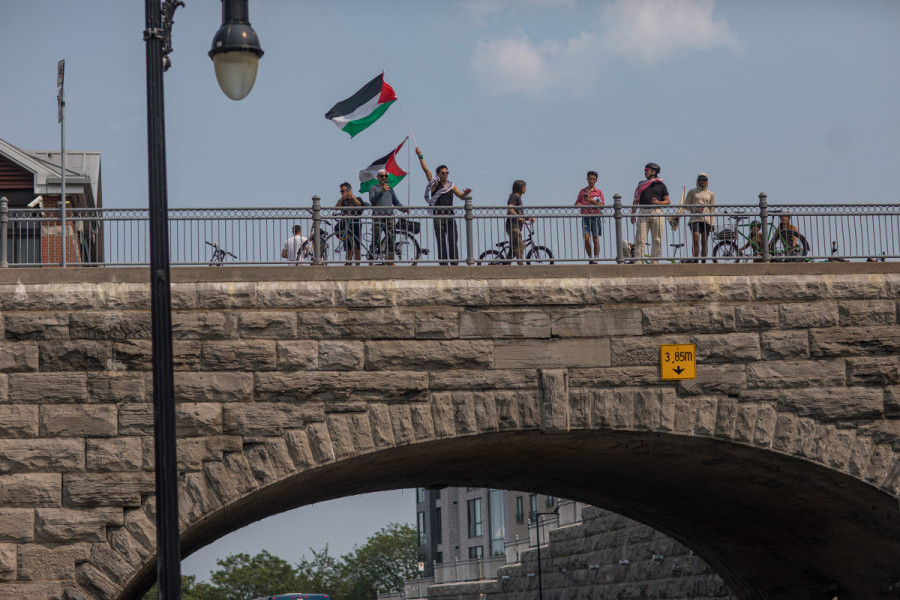
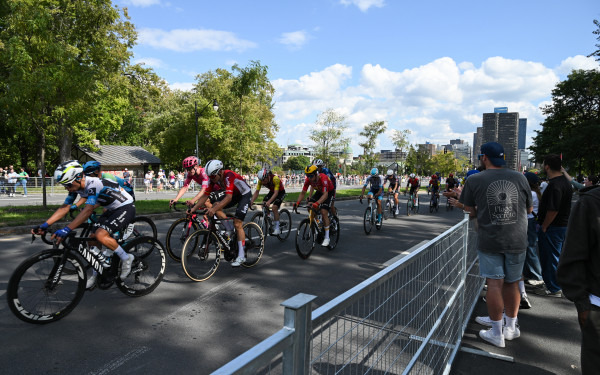
When Minza Haque saw a bicycle protest for Gaza for the first time in her Plateau-Mont-Royal neighbourhood, it surprised her.
She was surprised not only because they were on bikes, but also because the protesters had come to her neighbourhood to begin with.
Haque, who has been going to monthly marches in support of Palestine since 2023, says the bike protests allow participants to cover more ground compared to protests on foot, resulting in them visiting areas that most demonstrations don’t typically frequent.
“The marches are good, but it’s always the same route that you take,” she said. “It’s always within the same perimeter, near downtown. With the bike protests, it’s very different. Being on a bike is a very freeing experience.”
Haque, who had always been curious if there were other ways to mass mobilize, has been participating in the rides ever since she first saw them in the street.
Damarice, Bill and Aymen, granted last-name anonymity for safety reasons, organize the events for Bikers for Palestine. The initiative got its start in October 2024 to draw attention to the war in Gaza through public rides.
After discussing with each other and other participants, the organizers recognized a clear community interest in continuing the bike protests on a more regular basis.
In the spring of 2025, they launched the initiative once again, this time with the idea of it becoming a monthly event.
However, Bikers for Palestine was not the first group to pursue this initiative.
In 2018, an Israeli sniper shot Palestinian cyclist Alaa al-Dali in the leg during the Great March of Return.
Al-Dali had hoped to achieve his goal of representing Palestine at the 2018 Asian Games in Indonesia, but had the lower half of his right leg amputated due to the injury. His dream now unattainable, he formed a para-cycling team called the Gaza Sunbirds with 18 other members who experienced similar injuries to al-Dali’s.
Today, the para-cycling team has dedicated its resources to providing aid to Gaza.
They formed the Great Ride of Return, a global, non-violent, family-friendly movement in support of Palestine. The campaign unites communities from 35 countries. Their medium? Bike protests.
Bikers for Palestine has a simple mission in Montreal: draw public attention to the situation in Gaza.
“It is something that is relevant to cyclists,” organizer Bill said, “and you can’t talk about cycling in Gaza without talking about occupation, you can’t talk about it without talking about the Great Ride of Return, and you can’t talk about it without talking about the siege.”
He explained that the rides are not only about visibility, but also about accountability.
“You can look at it as an anti-racist form of cycling advocacy that looks at the ways Canada would be complicit in the hardships that people are facing in Gaza,” Bill added.
Damarice explained another reason why the bike connection comes so naturally to these protests.
“Gaza is not a place that feels so different and backwards; they literally bike just like us,” she said. “For me, it's important that we're using a medium that is one of their mediums too.”
Although protesting on bicycles carries symbolic meaning, it also brings a distinct atmosphere. According to Bill, passers-by engage more with the bike protests, and he even finds the ambiance joyous.
“A lot of us are horrified watching what’s happening in Gaza, and sometimes it’s almost like there’s a sense of guilt that comes from just simple things,” Bill said. “So, it’s nice to have an act of joy, but it’s not the kind of joy where you're sticking your head in the sand and trying not to deal with reality.”
The bike protests also differ in the amount of territory they can cover.
“We can cover way more streets in Montreal and go places where protests don’t usually go,” Aymen said, referencing the Rosemont and Plateau-Mont-Royal neighbourhoods.
“People are surprised, and a lot of people film us,” Aymen added. “They're happy to see us, and they're happy to see us in places where they don't really expect us.”
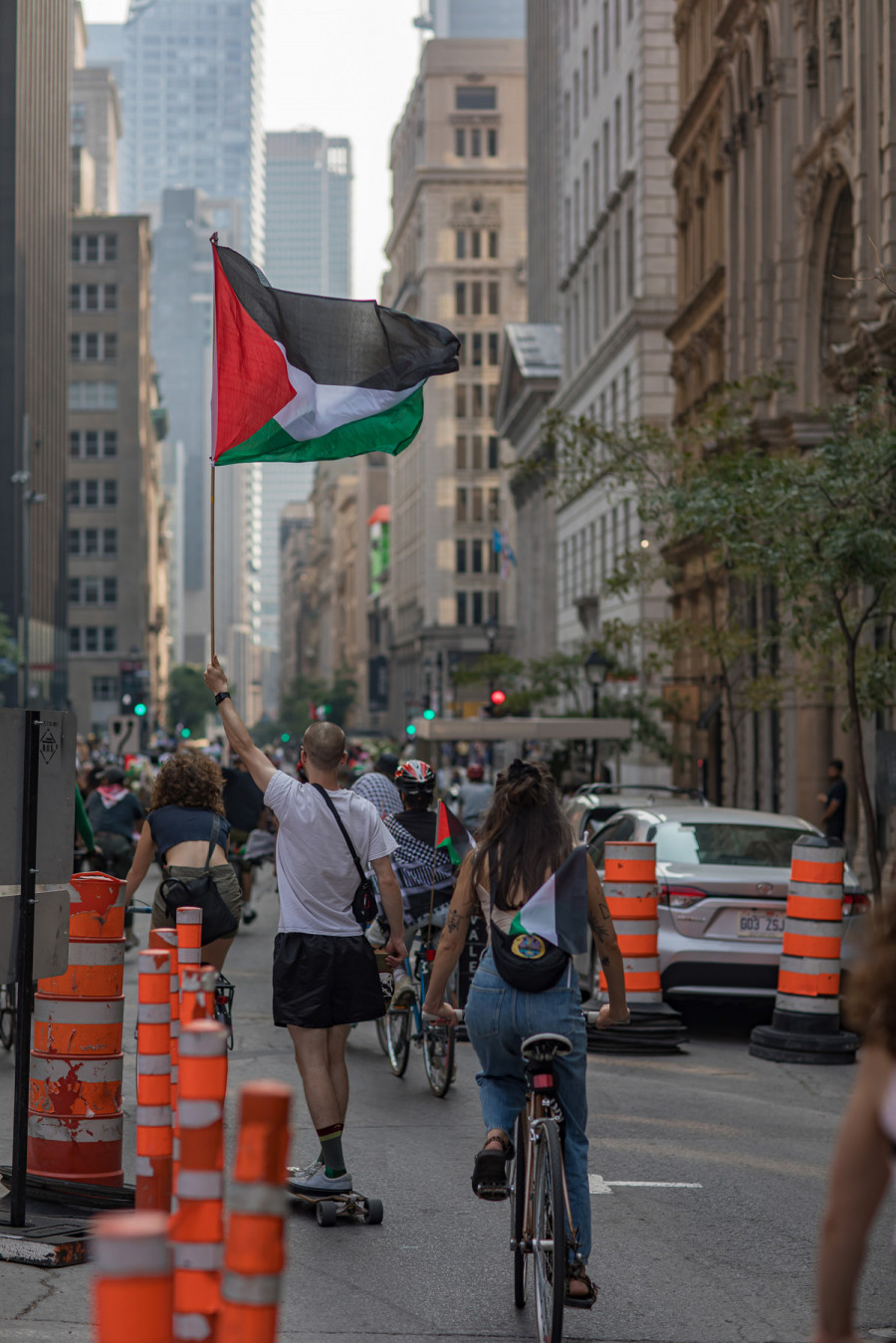
Despite having longer routes than traditional protests, Bikers for Palestine designs theirs to be inclusive for people of all skill levels and of all ages. Many people also use different mediums, such as skateboards, rollerblades and even wheelchairs.
Mechanics also maintain a presence during the protests to help anyone who may encounter bike issues during the ride.
Damarice says the bike protests provide a great opportunity to meet new people.
“During the two hours of the protest, you're going to be next to literally every person in the ride,” she said. “So, you do kind of have funny encounters, and we stop, and we chant, and we clap, and then suddenly there's someone new next to you.”
Haque witnessed this sense of solidarity firsthand during one of her first rides. The flag attached to her bike got caught in her back wheel, and she had to stop. Fellow protesters quickly came to her aid.
“It happened so fast, someone pulled out one tool, the other person pulled out another tool, they took my wheel apart and did everything,” Haque said. “Within a couple of minutes, I was back in the protest. I know those people now, and they're my friends.”
However, Bikers for Palestine’s story doesn’t always revolve around the bikes, but about raising awareness about the situation in Gaza.
“The Gaza Sunbirds have become a symbol of steadfastness and resistance,” Aymen said. “They use cycling to amplify the voices of athletes with disabilities, but also the voices of the people of Gaza in general. And that's a bit of what we're trying to do.”
Haque agreed.
“The bikers in Montreal are not the story,” Haque said. “The story is that people come out in very large numbers to mass mobilize because there is an ongoing genocide and most of us can’t sit and watch it.”
The next bike protest will be held on Friday, Sept. 6, at 1 p.m. and will depart from the George-Étienne Cartier statue in Mount Royal Park.
“We're going to keep doing this until Palestine is free,” Bill said. “And I feel happy and confident knowing that there's going to be one day in my lifetime when I'm not going to have to come to this ride anymore.”
This article originally appeared in Volume 46, Issue 1, published September 2, 2025.