A run for Montreal’s identity as a nightlife hub
Engineer-turned-musician Vincent Stephen-Ong says he joined Transition Montréal to protect Montreal’s nightlife
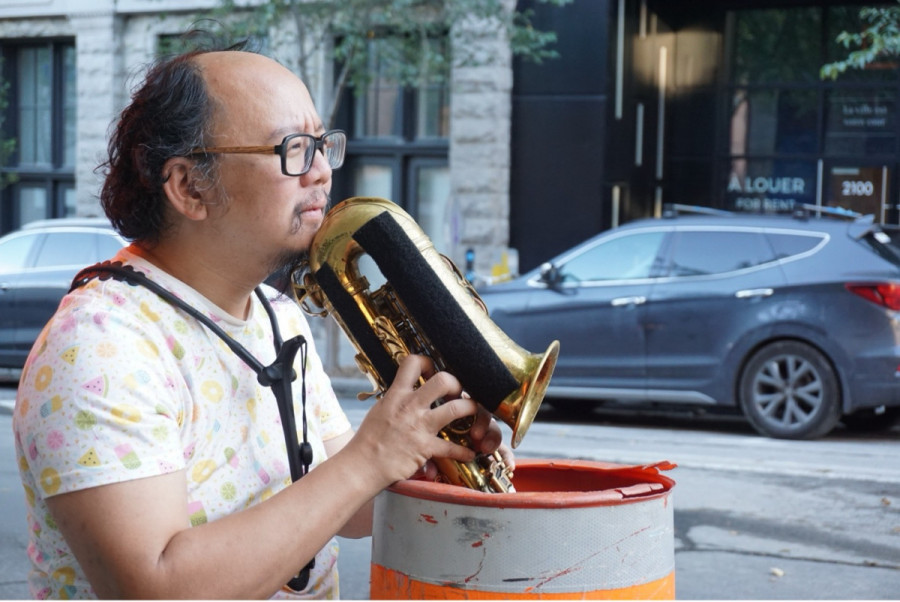
On a cool October evening in 2013, Vincent Stephen-Ong was performing with his band, Kalmunity, at Les Bobards on St. Laurent Blvd. when the police entered the venue.
The Afrofusion improv band was filling the airwaves of the popular live music venue that night, just as it had done every Tuesday night for over two years.
It was just before midnight, and the band was performing their second set when the police arrived, in response to a noise complaint, and put an end to the show.
“My beef is that people move to the Plateau because it’s the hip and trendy area of town. [But] now they don’t want any of the things that made the Plateau hip and trendy in the first place,” Stephen-Ong said in a YouTube video posted at the time. “It just doesn’t make any sense to me at all.”
In the video, he called on Montrealers to write to then-borough mayor Luc Ferrandez, as part of the #SaveThePlateau social media campaign, to intervene and change the noise bylaws that allow police to fine venues up to thousands of dollars.
Two years later, in October 2015, Les Bobards shuttered its doors after 26 years in business.
It was a part of an early wave of closures of popular venues like Le Divan Orange, Le Cagibi, La Tulipe and Nouvel Établissement, etc., that Montreal has seen over the past decade.
According to Les SMAQ, the city’s association of venue owners, these closures are due to gentrification, hefty fines from noise complaints and rezoning commercial spaces into residences.
Exactly 10 years after the curtains fell over Les Bobards, after years of advocating for reforms, Stephen-Ong is running for borough councillor in the Jeanne-Mance district of Plateau-Mont-Royal, with a promise to protect the city’s vibrant nightlife.
The 49-year-old says he made the decision in August, after Transition Montréal leader Craig Sauvé reached out to him on Instagram.
Stephen-Ong had first heard about Sergio Da Silva's decision to run as city councillor with Transition Montréal. Da Silva, co-owner of downtown music venue Turbo Haüs and a well-known figure in the nightlife scene, has been vocal about venue closures for years. The two have known each other professionally and have sat on panels about nightlife.
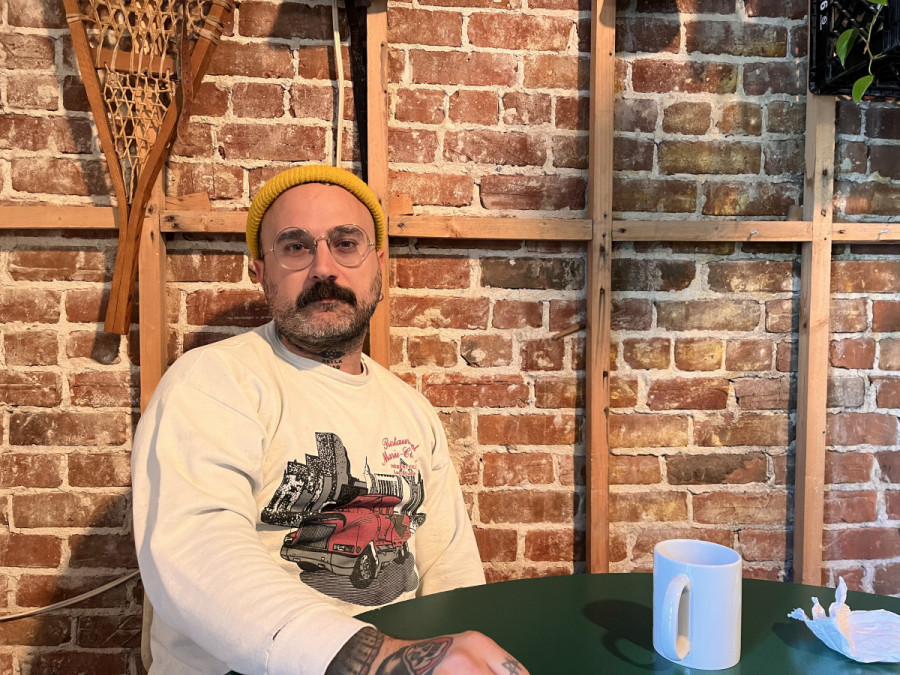
Stephen-Ong says the situation must be dire for venue owners to have thrown themselves into politics over it.
“This might be the last, or one of the last, good chances to actually fix this problem once and for all,” Stephen-Ong told The Link.
Da Silva says he entered the race for city councillor of the Saint-Jacques district in Ville-Marie after seeing how politicians treat nightlife as a “nuisance” and hold it to different standards.
“We look the other way when a school is noisy. We look another way when there are church bells going off in the old port at 6 a.m.,” Da Silva says.
For historian Matthieu Caron, the issue of noise is not new. Caron recently published the book Montreal After Dark, which traces the transformation of the city after World War II under Jean Drapeau.
He says the city’s earliest noise laws came in the early and mid-20th century to regulate train sounds or construction projects after residents complained.
In an interview, Caron says that the urban environment of any city, including Montreal, means that people are coming together from different backgrounds, and thus have different interests and priorities.
“They are all looking to enjoy themselves or to have tranquillity and rest,” Caron says.
For Da Silva, it’s troubling that on top of city regulations, the Quebec liquor board, Régie des alcool, des courses et des jeux, can also fine or suspend liquor licenses at venues in case of noise complaints.
“Montreal needs to be able to legislate, and Montreal needs to be able to enforce its own laws based on its own needs,” Da Silva says. “I don't need the province of Quebec telling us what has to happen in Montreal.”

Caron says the tension between local and provincial laws also has historical precedence. In the 1960s, the City’s anti-mingling law that prohibited bar and club employees from socializing with patrons—presumably to prevent prostitution—was challenged in the courts for lacking jurisdiction over alcohol-serving establishments regulated by the province.
“This struggle between powers, between federal, provincial, and municipal powers, is really at the heart of nighttime regulation in so many ways, and I see it historically from the mid-20th century up until today,” Caron says.
Stephen-Ong believes Transition Montréal’s promise to appoint a “nightlife mayor” in charge of the sound and morality policing issues is the way forward.
“We're like, ‘OK, this is what we want to do. Now, how do we do it?’ That requires going to Quebec. That requires working with the city,” Stephen-Ong says. “The nightlife mayor [...] will be the main point of contact.”
Both Stephen-Ong and Da Silva say they would be up to play the role.
Stephen-Ong, a son of immigrants of Chinese descent, grew up in the Notre-Dame-de-Grâce neighbourhood. He became aware of his musical intuition in elementary school, when he was able to sing on-key even when the piano scales were changed.
When he was 10 years old, he started to teach himself to play the piano at home. But after a while, he asked his parents to take lessons.
“So kind of backwards from a lot of Asian families where you're starting at age three,” he says.
Throughout high school and college, Stephen-Ong pursued music as a serious hobby, but never considered it as a possible profession. After graduating with a computer science degree from McGill University, he found a job developing software during the dot-com boom.
The financial success from his technology career gave him confidence. But it was a weeklong trip to New York City, where he immersed himself in the jazz clubs and jam sessions, that inspired him to take the plunge into music full-time.
That was more than 20 years ago, and since then, he has played saxophone and keys in almost every venue in Montreal, as well as starting and joining many bands performing various genres including hip hop, reggae, jazz, etc.
Fast forward two decades, and it's an unusually warm October Sunday.
Stephen-Ong stands in front of the Mont-Royal Metro station. With a wispy moustache and a goatee, he flags people down with a smile as they exit the station, hoping to talk to would-be voters.
There is no coercion when people ignore him.
“It's like cold calls. So, you're going up to people and asking them, ‘Oh, who are you gonna vote for?’” says Stephen-Ong, whose political debut is only a couple of months old.
It’s the third weekend, and the first since the campaign officially began, that Stephen-Ong and colleagues running in the Plateau have done the “meet the candidates” outreach. They had better luck meeting people at other times, he says.
After a lull, Verdun resident Mike Skolnik stops by to pick up some flyers and ends up talking to Stephen-Ong for the next half hour. The exchange is more like a conversation between engineers than a political pitch.
While housing is the biggest concern for Skolnik, he says nightlife was also important.
“The city having its distinct culture and being an environment for artists to come up in is important for the overall vibe,” says the 40-year-old software engineer.
Skolnik says he liked what he heard, but has yet to make up his mind.
Stephen-Ong knows that his victory is a long shot. Less than a week before the Nov. 2 election day, Transition Montréal is polling in fourth place behind Projet Montréal, Ensemble Montréal and Action Montréal.
“If I don't get voted in,” Stephen-Ong says, “I'm drawing attention to this issue. Other people are seeing what I'm doing.”
Stephen-Ong might be making his electoral debut, but as a musician, he has been preparing for this moment for a long time.
“With hip-hop specifically, you cannot help but be telling people about what's around you, what you're dealing with,” he says. “If you're talking about what's happening around you, it is by its nature going to be political.”