Fueling the game starts outside the arena
Athletes turn to smarter nutrition to boost performance
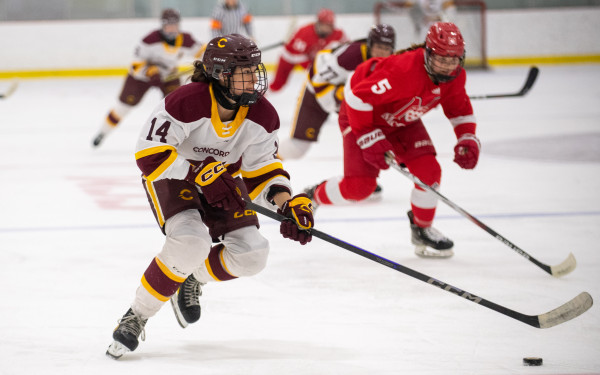
Jordyn Verbeek’s experience with sports nutrition began in high school. As the Stingers women’s hockey goaltender’s athletic dreams took shape, she quickly realized how much nutrition impacted her performance.
“My last few years of high school, my first few years of university, it really became something that I added on top of training in hockey,” Verbeek said. “It was an additional aspect that would allow me to perform at my highest level.”
Verbeek’s realization marks a turning point familiar to many young athletes. As they begin to seek out higher-level opportunities, nutrition and diet take on a larger role in their lives. But in a world full of misinformation, how do athletes sift through the noise to make meaningful change?
For dietitian Annyck Besso, this thought process led to her founding Sööma, a practice that specializes in eating disorders as well as sports nutrition. Besso, a former competitive runner, places particular focus on the overlap between athletic performance and disordered eating.
“Nutrition plays a really important role in sports performance, but I think that sometimes the sports world can encourage disordered behaviours,” Besso said. “So, the goal of our mission is how can we educate athletes, how can we optimize their nutrition, but in a way that's also considering their health and long-term well-being.”
Due to their unique needs, athletes present a distinct challenge in terms of their nutritional requirements. Besso prioritizes a holistic approach to the changes athletes make to their nutritional routines.
“Different sports obviously have different energy demands,” Besso said. “The first thing that we would do with athletes is go over their typical day. We really do a very detailed recall of their training, their sport, but also their lifestyle.”
Oriana Bellissimo, dietitian and nutritionist at Concordia University’s School of Health, faces similar challenges. She works one-on-one with students to improve their eating habits and dietary progress. She noted that the individuality of each athlete can get lost in the shuffle when discussing everyday nutrition.
“Every person is different,” Bellissimo said. “The performance plate is different for their sports, but then each individual also has different needs. And that's what I think can get lost when I talk to a big group.”
Verbeek experienced the influx of information when she first began exploring the world of nutrition. She explained that the specific needs of her sport helped her structure the changes to her diet and routine.
“It was a lot of learning, learning what we need to have,” Verbeek said. “Before games, I need to eat this, because it's helped me perform. Or right when I get off the ice, I need carbs and protein. I was learning what works best and what's going to make me perform at my best.”
Misperceptions around nutrition in sports can fuel harmful habits. In the era of social media, dieting fads and misinformation about nutrients can spread to even the most dedicated athletes.
Besso pointed to protein overconsumption as a clear example of harmful nutrition myths.
“[Many of our athletes believe] carbs are bad and we need to optimize protein as much as possible,” Besso said. “I would say typically a lot of our athletes are over-consuming protein and under-consuming carbohydrates.”
Bellissimo takes an additive approach when helping athletes adjust their meals.
“Someone tells me for breakfast they eat a bowl of cereal with milk,” she said. “And they're trying to bulk. Well, what's something in that meal that I can help with? Maybe instead of regular milk, we'll do high-protein milk. I always find that adding is easier than subtracting.”
When working with clients, Besso doesn’t discourage the consumption of their favourite foods. Rather than restricting certain foods, she focuses on education. This way, they can make their own informed decisions when faced with questions about their diet.
“My goal in working with athletes is that they understand the ‘why’ behind the recommendation,” Besso said. “Let's say an athlete is travelling to Cuba on vacation and they're at an all-you-can-eat resort—they understand how to make choices and they don't feel like they're failing because the dessert there looks good.”
Verbeek takes the time to make meals enjoyable, sharing food with the people in her life.
“It can be just fun meals with the girls on the team,” Verbeek said. “With my roommate, I might do Taco Tuesday, for example, and just keep it fun, light and easy. I’m making sure I'm managing my time well and preparing my meals in advance.
Another area that Bellissimo emphasizes is the preparation of food. For athletes living alone for the first time, cooking and nutrition can be intimidating to tackle, so she makes sure to provide them with tips for efficiently preparing meals.
“I talk about bulk dinners, if they can meal prep,” Bellissimo said. “And if they have access to a Bulk Barn, that’s also something that I like to recommend. You get your grains or nuts in an amount, and you can explore the different options.”
For Verbeek, nutrition’s role in sports boils down to the understanding of how foods enhance performance. And she hopes to inform young athletes about their own choices in diet.
“You train your body in the gym, you train your mind. And nutrition is just another aspect of that,” Verbeek said. “It's going to help you to recover, and it's going to help you perform at your best.”
This article originally appeared in Volume 46, Issue 4, published October 21, 2025.