Fifty years since Quebec’s first modern Indigenous treaty
Inuit and Cree fought tooth and nail for this agreement, but at what cost?
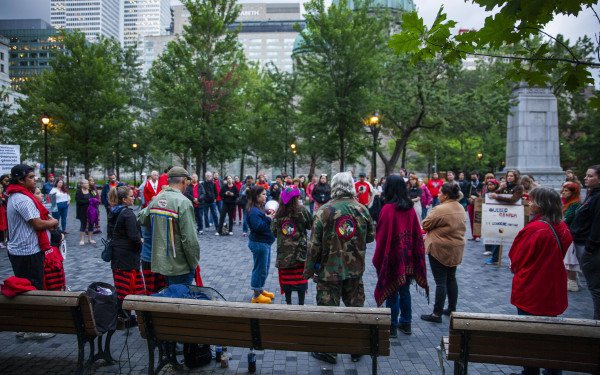
Fifty years ago, on Nov. 11, 1975, lives were changed forever after the Cree and Inuit of Quebec signed the James Bay and Northern Quebec Agreement (JBNQA).
The document was the first modern treaty between Canada and Indigenous nations, and set the tone for every agreement that came after.
In the early 1970s, Quebec announced its “project of the century,” which was a $13.7 billion hydroelectric dam project stretching from the La Grande-1 dam to the Caniapiscau Reservoir. That amounts to 800 kilometres in length.
The Cree, who have lived in this region of Quebec for thousands of years, were not notified that this project was going forward. They knew all too well the damage that would ensue: flooding of traditional hunting grounds and mass displacement of ecosystems and people.
The Inuit joined in the conversation, knowing that the Caniapiscau Reservoir eventually feeds the Koksoak River, a major travelling and hunting river for Inuit living near the Ungava Bay.
Land defenders from both Indigenous communities, led by a group of young advocates, brought the Quebec government to court.
In a landmark 1973 decision by Quebec Superior Court Judge Albert Malouf, the Cree and Inuit won against the Government of Quebec. Not a week later, Quebec’s Court of Appeal suspended the ruling, but enforced that the government sit down with both Indigenous groups to negotiate.
The project continued, and its feared environmental damages became reality. The dam would flood an area of 11,500 square kilometres and force the displacement of 2,300 people living in the village of Fort George.
Only after Malouf's decision did both Indigenous groups enter the negotiation table, advocating for better health care, better education and establishing reliable services in the region, but the Government of Quebec made sure there was a cost to that.
Provision 2.1 of the JBNQA states that the Inuit and the Cree of Quebec needed to “cede, release, surrender and convey all their Native claims, rights, titles and interests” of their territory, Eeyou Istchee and Nunavik, to Quebec and Canada.
This one provision became the standard in modern treaty agreements.
Since then, Canada and its provinces have signed 26 agreements with Indigenous communities. They have used similar language to extinguish Indigenous rights to their land up until 2005, with the Labrador Inuit Land Claims Agreement.
The JBNQA established local governing agencies in the Grand Council of the Crees and the Kativik Regional Government, and in their regional health boards and school boards. Many questions remain about whether the agreement had a positive or negative impact on the self-governance capacities of the 25 Indigenous communities it represents.
The source for all context and information within this brief can be found at https://nunatsiaq.com/virtual/2025-11-07_JBNQA/mobile/index.html.
This article originally appeared in Volume 46, Issue 6, published November 18, 2025.