
Editorial: Whose body counts?
_(1).png)
Every body tells a story—but not every story is heard.
Some bodies are visible only in crisis: when they’re detained, denied or dissected by policy. Others are celebrated until they challenge comfort. Some are flattened into headlines or hashtags, others erased entirely. The body should be personal, but it’s never just ours. It’s the first site of power, politics and perception—the terrain where we assign value and negotiate the difference.
Across systems, bodies are ranked and regulated. Immigration policies decide which ones are “skilled.” Borders decide which ones can move. Workplaces decide which ones are productive. Police decide which ones are suspicious. Healthcare decides which ones are worth saving. Every institution carries a standard—an unspoken image of the “acceptable” body—and they punish every deviation from it in ways both loud and silent.
Some bodies are deemed valuable. Others are treated as disposable.
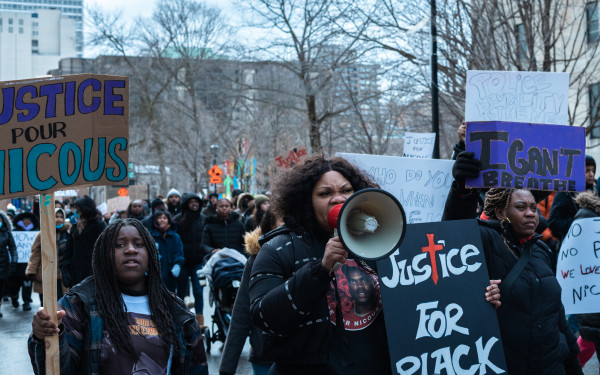
White bodies are protected and centred. Brown and Black bodies are policed, displaced or killed. Indigenous bodies continue to face systemic neglect—denied adequate healthcare, justice and safety. Police continue to target minorities, their victims momentarily acknowledged before they push them out of the news cycle. Unhoused people die in the cold every winter as cities shuffle them out of sight, their suffering framed as an inconvenience instead of a failure of policy. The trans community still fights for the right to healthcare while provinces consider restricting gender-affirming care.
Immigrants are used as political chips, welcomed when they fill labour shortages, but left without protection when they face racism and exploitation in their workplaces and communities, and are forced to jump through hoops to obtain permanent residency.
In Canada, this logic plays out in both immigrant-heavy workplaces and public infrastructure. In Quebec, for instance, workers at Amazon’s warehouse network lost their jobs in May 2024 when Amazon shuttered all seven of its Quebec facilities, a move widely seen as anti-union retaliation.
South of the border, Immigration and Customs Enforcement (ICE) detention centres hold record numbers of immigrants, many with no criminal record, where reports of medical neglect, heat exposure and abuse against detainees continue to surface. These centres disproportionately target visible minorities, turning racialized bodies into symbols of state control. These bodies, like so many others, become bargaining tools in political games that trade humanity for headlines.
Disabled bodies are treated as burdens, with city designs remaining inaccessible. Fat bodies are mocked and medicalized, told to slim down to deserve care.
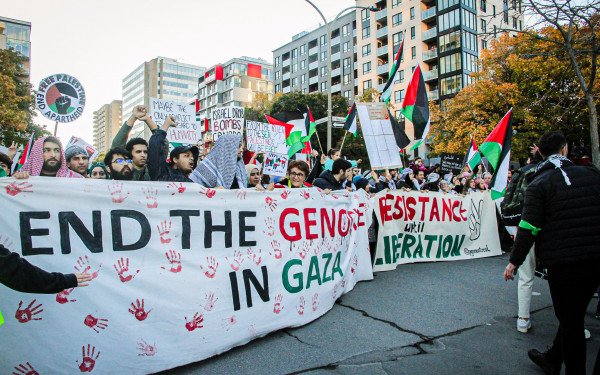
This hierarchy of worth extends globally. The ongoing genocide in Gaza has turned Palestinian men, women and children into statistics, stripped of names and context. In Sudan, mass displacement and famine are met with silence. In the Congo, children mine the minerals that power our devices, their suffering reduced to the cost of convenience. Each crisis exposes the same truth: the world has decided which bodies matter, and which can be sacrificed.
Even our language reveals this logic. Words like “fit,” “normal,” “passing,” “professional” or “safe” disguise centuries of control. A trans body is questioned; a fat body is ridiculed; a disabled body is treated as second-class. A racialized body is expected to educate others on its pain while performing resilience. A poor body is criminalized simply for existing in public space. These contradictions pile up until existence itself becomes labour.
Capitalism thrives on that exhaustion. On how much we can endure before collapsing. The system depends on bodies it can overwork and replace. The suffering of some becomes a political spectacle, while others aren’t even valuable enough to view. When people die in shelters, detention centres or police custody, we treat them not as tragedies but as numbers, proof that some lives are simply expected to end quietly.
And yet, there is resistance in the body. In queerness that refuses definition. In immigrant joy that persists. In fatness that takes up space without apology. In disability that refuses pity. In transness that exists without permission. These are not side notes to survival; they are the centre of it.
The Link attempts to confront that hierarchy head-on through our ongoing reporting. We examine the systems that decide whose lives are liveable, and remind readers that these struggles are connected. From the streets of Montreal to picket lines, from hospitals to refugee camps, from vigils to protests, the fight remains the same: every body deserves dignity.
Through reporting, art and testimony, The Link works to challenge the systems that decide whose stories are told—and to amplify those too often forgotten. Because when the world treats some bodies as disposable, resistance begins with remembering they never were.
This article originally appeared in Volume 46, Issue 4, published October 21, 2025.



_2_600_375_90_s_c1.jpg)
