
Combating ableism through education
How post-secondary institutions can help students with disabilities in career development
Canadian youth currently face the highest unemployment rates since the 1990s, a crisis that especially affects the 20.1 per cent of Canadian youth who experience some form of disability, according to Statistics Canada.
A new research project by the Canadian Council on Rehabilitation and Work (CCRW) shows how post-secondary institutions can better help students with disabilities to enter the job market after graduation.
The study reports that these institutions can provide specific career services such as cover letter reviews, interview preparation and access to recruitment and networking events. They can also provide free or low-cost career counselling services for students after graduation.
Vanessa Sinclair, the director of research and evaluation at CCRW, co-authored the research project. She believes that one of the main issues facing universities is their lack of collaboration with disability advocacy groups.
“I think that institutions could expand their partnerships with community organizations like CCRW or other similar community disability focused organizations to kind of broaden the disability-specific resources that they have available,” Sinclair said.
CCRW offers digital resources and employment coaches for students and youth with disabilities. It offers virtual reality training that can help youth with disabilities navigate challenging workplace interactions in a safe environment.
Sinclair also emphasized that universities should partner with employment centres and employers to destigmatize common ableist attitudes that some employers have.
These attitudes and assumptions represent common experiences that some students have when trying to find work.
Gowrish Subramaniam, a second-year political science student at Concordia University, is visually impaired. He said he has encountered issues with employers making assumptions about his abilities and questioning his disability.
“I'm anxious if they're going to be judgmental on assuming what I can and cannot do,” Subramaniam said. “Then the employer is also anxious, as well, because they have never met somebody who is visually impaired.”
The CCRW research report highlights the necessity for universities to help students with disabilities in self-advocacy. Only about 35 per cent of workers with disabilities request reasonable accommodations, even though employers have a legal duty to provide them, according to the report.
Post-secondary institutions can provide proactive training through workshops, role-playing simulations and mentorship programs to boost students’ confidence. But they also equip them with practical strategies when facing workplace barriers and advocating for their needs.
“I think some of the things that can help build those skills […] is giving folks a safe place to practice having those conversations,” Sinclair said.
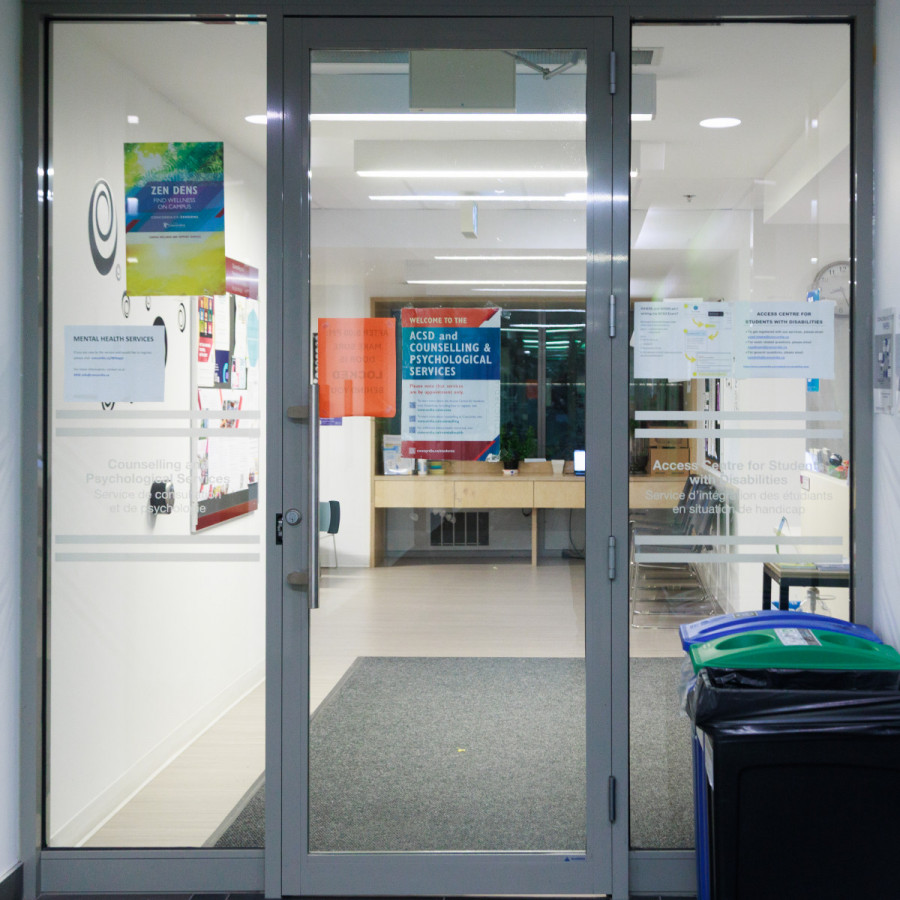
Concordia’s Access Centre for Students with Disabilities (ACSD) offers workshops and resources for students with disabilities.
“I've heard that the number one skill that is important is the ability to really articulate what your accommodation needs are and to be able to explain what those are to the people around you,” said Adelina Feo, manager at the ACSD.
On one hand, students with disabilities should advocate for their needs, but on the other, there is a legitimate fear that employers will discriminate against them, Subramaniam said.
He expressed worries about how much people expect those with disabilities to advocate for themselves when, in reality, the employer should take the time to understand the resources available to them.
“To what extent can a person living with a disability go to satisfy an employer's perhaps lack of knowledge?” Subramaniam said. “I could educate them on the resources, the funding, the technology that I have available, and [...] disclose my disability and how that does not affect one's duties.”
The research project indicates that post-secondary institutions can combat this lack of education by developing educational material and tools that career counsellors can share with employers. This would help in demystifying accessibility and accommodations, and help promote the value of youth with disabilities in the workplace, according to the project.
The ACSD attempts to fight this issue by hosting a job fair every year in collaboration with Career Advising and Professional Success.
“The employees that are there are actually looking for inclusive employment opportunities and are reaching out specifically to students with disabilities,” Feo said.
Still, some students think that the resources given to them are limited.
“I think we really need more advisors, 100 per cent, because we have a lack of funding,” Subramaniam said.
The ACSD employs just six advisors for the roughly 4,500 students registered with them, according to Feo.
Concordia is once again projecting a deficit for the 2025-26 fiscal year, with the provincial government freezing operating grants and enrollment declining among international students.
According to Feo, that does not mean that the ACSD will stop trying to help its students.
“We see everybody, we have a duty to accommodate students who present with disability documentation,” Feo said. “So, we see everybody, no matter the volume of students that require our service.”
This article originally appeared in Volume 46, Issue 5, published November 4, 2025.




__600_375_s_c1.png)

_(1)_600_375_s_c1.png)