Books and belonging at La Courtepointe
The Villeray bar hosts its first Leftist Book Fair, celebrating books, dialogue and community
On Nov. 8, what felt like the last sunny day of fall, La Courtepointe bar filled with conversation, the clinking of coffee cups, and the rustling of books being placed onto tables.
Located on the corner once home to the historic Miss Villeray bar, the year-old La Courtepointe has quickly become a neighbourhood fixture of its own.
For Simon Bilodeau and Jeanne Laporte, part of the team behind the bar, the goal has always been to keep the space accessible and welcoming. It seeks to fill the shoes of a beloved local spot while steering clear of the snobby energy new bars can sometimes bring.
“We didn’t want to just be another trendy bar,” Bilodeau said. “Our idea was to be a place people could call the neighbourhood bar, somewhere people feel comfortable coming back to.”
Their approach is simple: open the doors to everyone. From trivia nights and comedy clubs to this month’s first Leftist Book Fair, La Courtepointe is carving out a reputation as a place where community takes the spotlight.
“We try things out and see what the neighbourhood wants,” Laporte said. “We’ve had plenty of events, so the book fair didn’t feel out of place.”
By noon, the fair was in full swing.
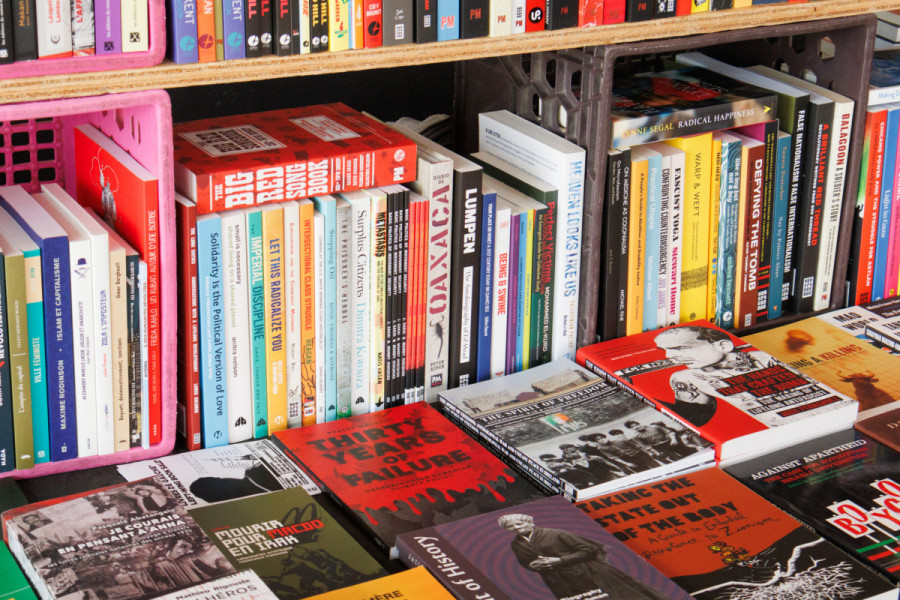
Exhibitors lined the bar with books, zines and magazines spanning several languages, movements and eras. Classics by authors like bell hooks and Vladimir Lenin sat beside contemporary authors, local publications like Liberté, and works exploring topics ranging from Palestine to labour, feminism and community organizing.
Many tables offered both English and French titles, reflecting the fair’s commitment to accessibility and dialogue across languages.
“We started doing something small, inviting friends, reaching out to people we heard of,” Bilodeau said. “And all of a sudden it got caught up in the noise.”
“The event was surprisingly shared so widely,” Laporte added. “After we posted about it on Instagram, people kept reposting it, messaging us, expressing excitement or asking if they could set up a table.”
There’s a lot of fairly significant changes happening in the world, and it’s not that these books have all the answers, but they let people join conversations that others have had in the past.”
Seeing the fair listed on Résistance Montréal’s community calendar felt like a milestone for the pair.
“It meant it reached even more people than we thought,” Laporte said. “It made us feel like we were doing something right.”
Indeed, attendees like Clara Machile, a resident of Milton Parc, discovered the event through Résistance Montréal.
“I wanted to branch out, meet people in a different neighbourhood,” Machile said, smiling. “I came for the books and left with a few new Instagram mutuals.”
Throughout the afternoon, people drifted in and out, picking up zines, chatting with vendors and sipping coffee at the bar. The room carried a steady rhythm: moments of quiet browsing punctuated by laughter and conversation.
One of the tables that stood out belonged to Left Wing Books, a Montreal-based distributor that has published and circulated radical literature for more than 25 years. Their setup was among the most intricate, with stacks of books alongside board games and colouring books all centred on leftist themes and political education.
For Kay Kersplebedeb, who works with Left Wing Books, events like these centre around education and connection.
“It’s about meeting people face to face and having conversations that don’t happen online,” Kersplebedeb said.
Without a physical storefront, gatherings like the one at La Courtepointe allow Left Wing Books to stay rooted in the city.
“It’s an important time for books like these,” Kersplebedeb added. “There’s a lot of fairly significant changes happening in the world, and it's not that these books have all the answers, but they let people join conversations that others have had in the past.”
Beside their table sat illustrator and labour organizer Tricia Robinson, her table lined with zines and stickers merging art and activism.
“People come up and start telling me about their workplaces or their unions,” Robinson said. “Sometimes they just need to feel heard.”
Robinson said there was a time she didn’t mix her art and politics, but that didn’t last long.
“You can’t really separate the two,” she said. “So I decided to combine my art, my work and my ideas. It’s how I connect with people.”
As the day continued, attendees browsed, lingered and talked with one another. Some reconnected with familiar faces, others discovered the bar for the first time.
Both Bilodeau and Laporte agreed that seeing people connect, buy books and feel at home in the space made the day a success.
“Seeing everyone here today made us want to do it again, maybe even twice a year,” Laporte said. “If people tell us they felt something here, that’s enough.”