
A win for data centres
Quebec Superior Court refuses Hydro-Québec’s proposal to increase the price of electricity for data centres
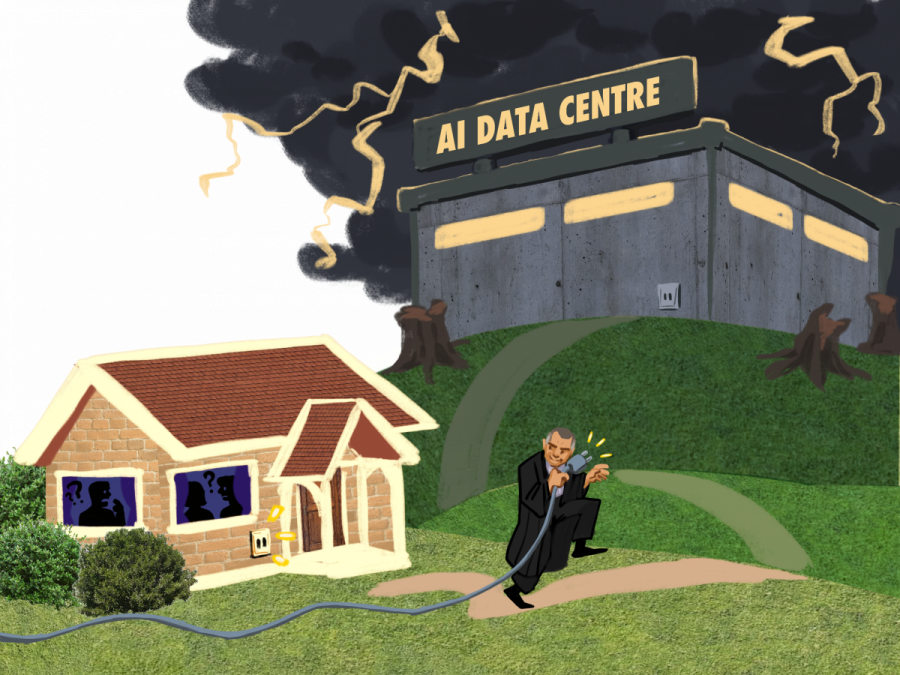
The Quebec Superior Court has denied Hydro-Québec’s proposal to increase energy rates for data centres.
Data centres are opening across the country, and due to their high energy demands, Hydro-Québec submitted a number of proposals to increase the price of electricity for these projects to 13 cents per kilowatt-hour, double the standard rate. Data centers dedicated to blockchain purposes faced a proposed rate increase to 19.5 cents per kilowatt-hour, pending approval from the Régie de l’énergie.
On Oct. 26, a Superior Court ruling denied Hydro-Québec's proposal, stating that the organization overstepped by attempting to directly influence the Régie de l’énergie, which sets the official rates for electricity and natural gas in Quebec.
“Our case is still ongoing; we're still positive that it has merit. The reason why we're proposing this new rate for data centres is to actually have this new rate reflect the impact on electricity in Quebec. We strongly believe this would reflect the value of renewable electricity,” Hydro-Québec spokesperson Cendrix Bouchard said.
Data centres are becoming very demanding on Quebec's electrical infrastructure and have filed requests for 2,500 megawatts from Hydro-Québec, roughly 5 per cent of Quebec's estimated generating capacity.
The province has recently become a popular location for creating and developing data centres, as well as the blockchain industry. Currently, Quebec has 71 active data centres, according to recent data from Le Collectif Numérique Responsable et Soutenable, a Quebec-led research initiative.
“We have very competitive rates compared to other jurisdictions. Also, there's the weather. We're in a cooler environment that makes it attractive for them to be in Quebec, because they don't need to use as much electricity for cooling down their equipment,” Bouchard said.
“Our case is still ongoing; we’re still positive that it has merit. The reason why we’re proposing this new rate for data centres is to actually have this new rate reflect the impact on electricity in Quebec. We strongly believe this would reflect the value of renewable electricity,” — Cendrix Bouchard, Hydro-Québec spokesperson
The Quebec government has also previously encouraged increased development of information and communications infrastructure, including data centers, with $73.3 million in funding planned to be given over 2026-2027.
These investments come as corporate interest grows in developing Canada's digital sovereignty. A recent Royal Bank of Canada initiative promised $1.4 billion in investments for Canadian technology companies, many of which specialize in Artificial Intelligence (AI) and blockchain infrastructure development.
Simon Enoch, a senior researcher at the Canadian Centre for Policy Alternatives, said that data centres need new energy generation, new transmission lines and upgraded substations, all of which increase costs.
“What we've seen in other jurisdictions that have experienced large buildouts of data centres is the potential for electricity rates to rise. [Costs] tend to be generalized amongst all ratepayers,” Enoch said.
To offset the rapidly growing cost to Quebec citizens of sustaining data centre infrastructure, the government published two “decrees of concern” highlighting potential changes in electricity rates in the Quebec Gazette and submitted them to the Régie de l'énergie for review.
The two decrees, titled 88-2026 and 89-2026, aimed to give the Régie de l’énérgie the ability to set new rates if a client's business had considerable economic, social and environmental impacts.
In July 2026, data centre companies Hive, Keel Infrastructure and Énergie Flumen brought a legal challenge against Hydro-Québec. They filed the case because Hydro-Québec's proposals operated as instructions for the Régie de l’énergie to follow regarding energy pricing and undermined blockchain businesses.
“What we’ve seen in other jurisdictions that have experienced large buildouts of data centres is the potential for electricity rates to rise. [Costs] tend to be generalized amongst all ratepayers,” — Simon Enoch, Canadian Centre for Policy Alternatives senior researcher
The Superior Court of Quebec ruled that while Hydro-Québec's “decrees of concern” overstep, they can still be reviewed by the Régie de l'énergie and are currently pending approval.
Many Quebec residents living near data centres are urging elected officials to take a firm stance against the building of AI and blockchain infrastructure. Protesters in Sherbrooke oppose the building of a new data centre near a residential neighbourhood, citing concerns about data centres’ environmental impacts and the harm of noise pollution.
Despite growing public concern, data centre projects are still being carried out and have not been cancelled.
“Politicians are very reluctant to impose any sort of constraints or costs on what can be multi-billion-dollar investments. There's a real fear that if they impose any sort of undue regulations on a data centre developer, they'll just go somewhere else,” Enoch said.
Sherbrooke Mayor Marie-Claude Bibeau promised to place a temporary pause on the planned construction of Keel Infrastructure’s megaproject as of Nov. 3. However, the city council has yet to do so, saying it needs more time to consider a moratorium on the project.
This hesitation stems from pre-established interests in developing Quebec's digital sovereignty alongside the potential revenue from selling electricity to the data centre.
A petition created by Sherbrooke citizens calling on the city to postpone the construction indefinitely has gained over 12,000 signatures.
“What we’re seeing today is a massive pushback against data centres, and I think we need to seize this opportunity to rethink our priorities in terms of technologies. Are we willing to pay the social and environmental costs?” — Morgan Mouton, Institut national de la recherche scientifique professor
Morgan Mouton, an associate professor of urbanism at the Institut national de la recherche scientifique, urged government officials to consider community voices when making decisions surrounding centres.
“What we're seeing today is a massive pushback against data centres, and I think we need to seize this opportunity to rethink our priorities in terms of technologies,” Mouton said. “Are we willing to pay the social and environmental costs?”
The government of Canada remains committed to investing in AI research and infrastructure as part of its Pan-Canadian Artificial Intelligence Strategy. This follows the government of Canada's recent $1.6 billion investment to support Canadian multinational technology and AI company Cohere.
According to Canadian government research, the Canadian AI industry is projected to grow 33.9 per cent annually from 2023 to 2028. Many Canadian communities, especially rural ones, are not expected to see any positive changes in household income or unemployment rates following the construction of a data centre.
“It's a question of how we want our cities to be. What kind of resources we want to put towards new projects and what benefits they might bring. And that's the problem with data centres: the costs are well documented, and they're quite high,” Mouton said. “But the benefits are harder to find.”
This article originally appeared in Volume 47, Issue 5, published November 10, 2026.